Products
Features
YouTube Video Summarizer
Summarize YouTube videos
Web & PDF Highlighter
Highlight web pages & PDFs
Chat with PDF
Ask any PDF questions with AI
Ask AI Clone
Chat with your highlights & memories
Audio Transcriber
Transcribe audio files to text
Glasp Reader
Read and highlight articles
Kindle Highlight Export
Export your Kindle highlights
Idea Hatch
Hatch ideas from your highlights
Integrations
Obsidian Plugin
Notion Integration
Pocket Integration
Instapaper Integration
Medium Integration
Readwise Integration
Snipd Integration
Hypothesis Integration
Apps & Extensions
Chrome Extension
Safari Extension
Edge Add-ons
Firefox Add-ons
iOS App
Android App
Discover
Discover
Ideas
Discover new ideas and insights
Articles
Curated articles and insights
Books
Book recommendations by great minds
Posts
Essays and notes from readers
Quotes
Inspiring quotes collection
Videos
Curated videos and summaries
Explore Glasp
Glasp Newsletter
Weekly insights and updates
Glasp Talk
Interview series with great minds
Glasp Blog
Latest news and articles
Glasp Use Cases
Learn how others use Glasp
Build & Support
Glasp API
Access Glasp's API for developers
MCP Connector
Connect Glasp to Claude & ChatGPT
Community
Glasp Reddit Community
Students
Student discount and benefits
FAQs
Frequently Asked Questions
AboutPricing
DashboardLog inSign up

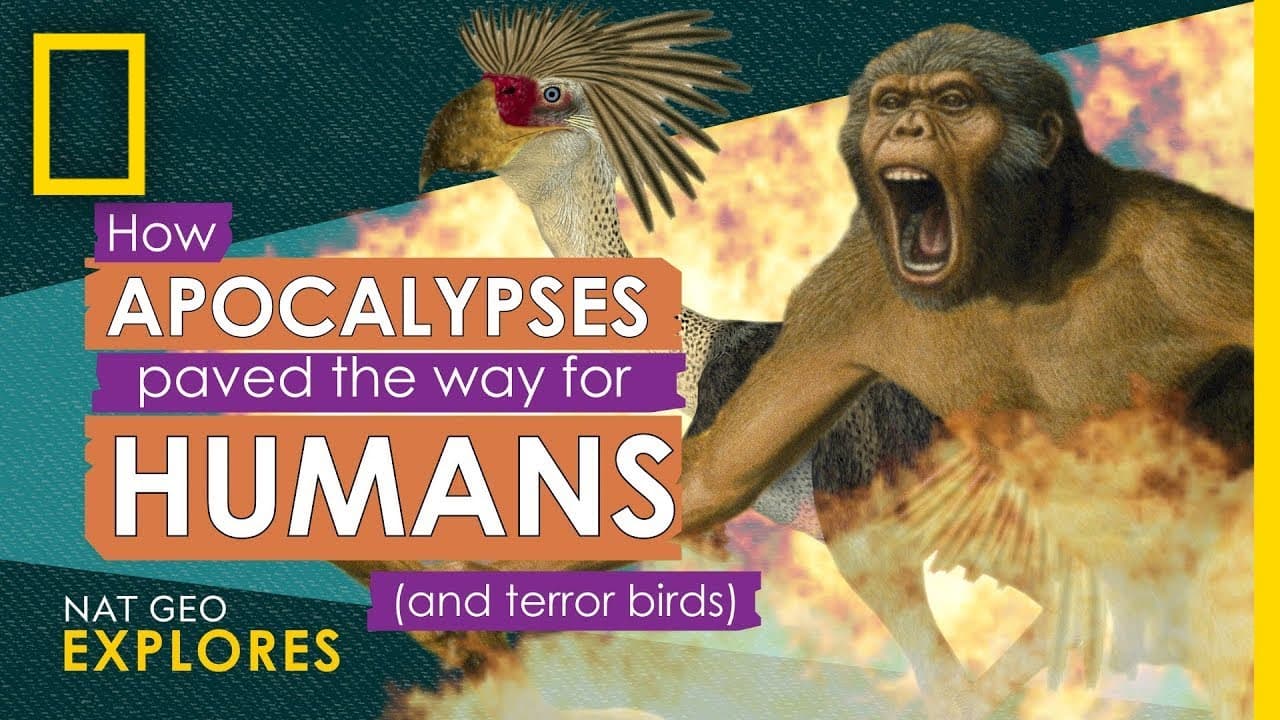
How Apocalypses Paved the Way for Humans (and terror birds) | Nat Geo Explores
76.1K views
•
September 17, 2020
by
National Geographic
YouTube video player
How Apocalypses Paved the Way for Humans (and terror birds) | Nat Geo Explores

TL;DR

Mass extinctions clear ecological space, allowing for new life to diversify over millions of years, impacting biodiversity significantly.

Transcript

everybody thinks mass extinctions are a bad thing and for some yeah they were literally the worst but they also show how nature can bounce back in fact while extinctions are like a large scale delete button they're also a way to trigger some new amazing life there's been a lot of speculation about the evolutionary role of mass extinctions and i thi... Read More

Key Insights

  • 🤗 Mass extinctions open up ecological opportunities for new species.
  • 💆 The "Big Five" mass extinctions were caused by volcanic eruptions, climate changes, and asteroids.
  • ✋ Widespread species have a higher chance of survival during mass extinctions.
  • 👶 New species diversified and evolved over millions of years after mass extinctions.
  • 💆 Understanding past mass extinctions can help us prepare for future environmental challenges.
  • ❓ Humans have spread widely, increasing their chances of survival.
  • 💆 Quality of life post-mass extinction events and coexistence with other species is an intriguing question.

Install to Summarize YouTube Videos and Get Transcripts

Explore YouTube Video Summarizer or Get YouTube Transcript Extractor

Questions & Answers

Q: How do mass extinctions impact biodiversity?

Mass extinctions clear ecological space, allowing new species to diversify and evolve over millions of years, leading to increased biodiversity.

Q: What caused the "Big Five" mass extinctions?

The "Big Five" mass extinctions were caused by factors like massive volcanic eruptions, climate changes, and apocalyptic asteroids.

Q: Why do widespread species have a higher chance of survival during mass extinctions?

Widespread species are more likely to survive mass extinctions as they are geographically spread out, reducing the risk of extinction in a single area.

Q: How can understanding mass extinctions help us today?

Studying mass extinctions and how species recovered can provide insights into biodiversity, helping us understand how ecosystems respond to stress and potential future scenarios.

Summary & Key Takeaways

  • Mass extinctions are like a large-scale delete button that opens up ecological opportunities for new life.

  • The "Big Five" mass extinctions, caused by volcanic eruptions, climate changes, and asteroids, led to significant species loss.

  • These events allowed for new species to evolve and diversify over tens of millions of years.


Read in Other Languages (beta)

English

Share This Summary 📚

Summarize YouTube Videos and Get Video Transcripts with 1-Click

Download browser extensions on:

Try YouTube Summary with ChatGPT & Claude or YouTube Transcript Generator

Explore More Summaries from National Geographic 📚

Where Your Cat Goes May Blow Your Mind | National Geographic thumbnail
Where Your Cat Goes May Blow Your Mind | National Geographic
National Geographic
Stuffing Dead Pets | Taboo: Pets thumbnail
Stuffing Dead Pets | Taboo: Pets
National Geographic
Horseshoe Crabs Mate in Massive Beach "Orgy" | National Geographic thumbnail
Horseshoe Crabs Mate in Massive Beach "Orgy" | National Geographic
National Geographic
Mitigation and Adaptation: Human Stories of Hope | Explorers In The Field thumbnail
Mitigation and Adaptation: Human Stories of Hope | Explorers In The Field
National Geographic

Summarize YouTube Videos and Get Video Transcripts with 1-Click

Download browser extensions on:

Try YouTube Summary with ChatGPT & Claude or YouTube Transcript Generator

Apps & Extensions

  • Chrome Extension
  • Safari Extension
  • Edge Add-ons
  • Firefox Add-ons
  • iOS App
  • Android App

Key Features

  • YouTube Video Summarizer
  • Web & PDF Summarizer
  • Web & PDF Highlighter
  • Chat with PDF
  • Ask AI Clone
  • Audio Transcriber
  • Glasp Reader
  • Kindle Highlight Export
  • Idea Hatch

Integrations

  • Obsidian Plugin
  • Notion Integration
  • Pocket Integration
  • Instapaper Integration
  • Medium Integration
  • Readwise Integration
  • Snipd Integration
  • Hypothesis Integration

More Features

  • APIs
  • MCP Connector
  • Blog & Post
  • Embed Links
  • Image Highlight
  • Personality Test
  • Quote Shots

Company

  • About us
  • Blog
  • Community
  • FAQs
  • Job Board
  • Newsletter
  • Pricing
Terms

•

Privacy

•

Guidelines

© 2026 Glasp Inc. All rights reserved.