How Reductionism Uncovered Secrets of Long-term and Short-term Memory | Eric Kandel | Big Think
TL;DR
Dr. Eric Kandel's path to understanding memory through reductionism and Aplysia research.
Transcript
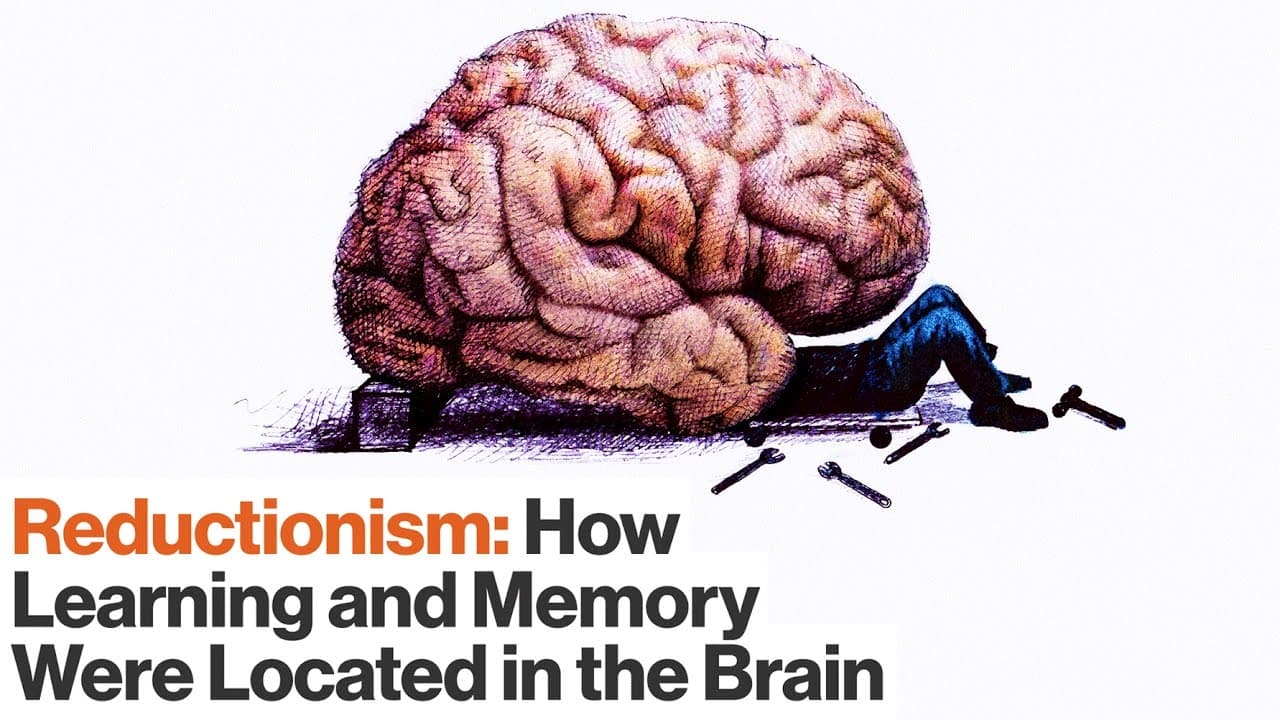
What reductionism allows you to do is to take a complex problem and focus on one component of it and try to understand it in some detail. And sometimes you can just do it by focusing on one component, other times it requires selecting a particular biological system if you're working in biology, in which that component is prominent or easy to study.... Read More
Key Insights
- 👻 Reductionism allows for in-depth study of complex problems by focusing on specific components, as seen in Dr. Kandel's research on memory storage.
- 🥺 Transitioning from psychoanalysis to neuroscience, Dr. Kandel's passion for understanding the brain led to groundbreaking research in memory.
- 😟 Aplysia's simple nervous system structure provided a unique model for studying synaptic plasticity and learning processes.
- 💁 Synaptic plasticity is central to memory formation, with different forms of learning leading to either an increase or decrease in synaptic strength.
- 🍉 Short-term memory involves functional changes in synapses, while long-term memory results in anatomical changes through the growth of new synaptic connections.
- 👨🔬 Dr. Kandel's research with Aplysia and the hippocampus revealed fundamental principles of memory storage and synaptic plasticity.
- 🥺 The reductionist approach allowed Dr. Kandel to simplify the study of memory through Aplysia, leading to significant insights in neuroscience.
Install to Summarize YouTube Videos and Get Transcripts
Explore YouTube Video Summarizer or Get YouTube Transcript Extractor
Questions & Answers
Q: How did Dr. Kandel transition from psychoanalysis to neuroscience?
Dr. Kandel's interest in the brain sparked during a five-month elective in brain science in medical school, where he discovered his passion for doing scientific research.
Q: What led Dr. Kandel to choose Aplysia for his memory research?
Aplysia's simple nervous system composition and distinctive nerve cells made it an ideal model for studying memory and synaptic plasticity, leading to fundamental insights in learning and memory processes.
Q: What were the key findings of Dr. Kandel's research on memory storage?
Dr. Kandel discovered that different forms of learning involve changes in synaptic strength, with short-term memory reflecting functional connections and long-term memory indicating anatomical changes in synapses.
Q: How did Dr. Kandel's research on Aplysia contribute to our understanding of memory?
By studying the withdrawal reflex in Aplysia, Dr. Kandel demonstrated how synaptic plasticity plays a crucial role in various forms of learning and memory.
Summary & Key Takeaways
-
Dr. Kandel's journey from psychoanalyst to neuroscientist began with a pivotal elective in brain science during medical school.
-
His groundbreaking research on memory storage in the hippocampus and Aplysia revealed the plasticity of synapses and different forms of learning.
-
The reductionist approach allowed him to study memory by focusing on simplicity rather than complexity.
Read in Other Languages (beta)
Share This Summary 📚
Summarize YouTube Videos and Get Video Transcripts with 1-Click
Try YouTube Summary with ChatGPT & Claude or YouTube Transcript Generator
Explore More Summaries from Big Think 📚


Summarize YouTube Videos and Get Video Transcripts with 1-Click
Try YouTube Summary with ChatGPT & Claude or YouTube Transcript Generator