Mastering Ship Movement in Blood & Plunder
TL;DR
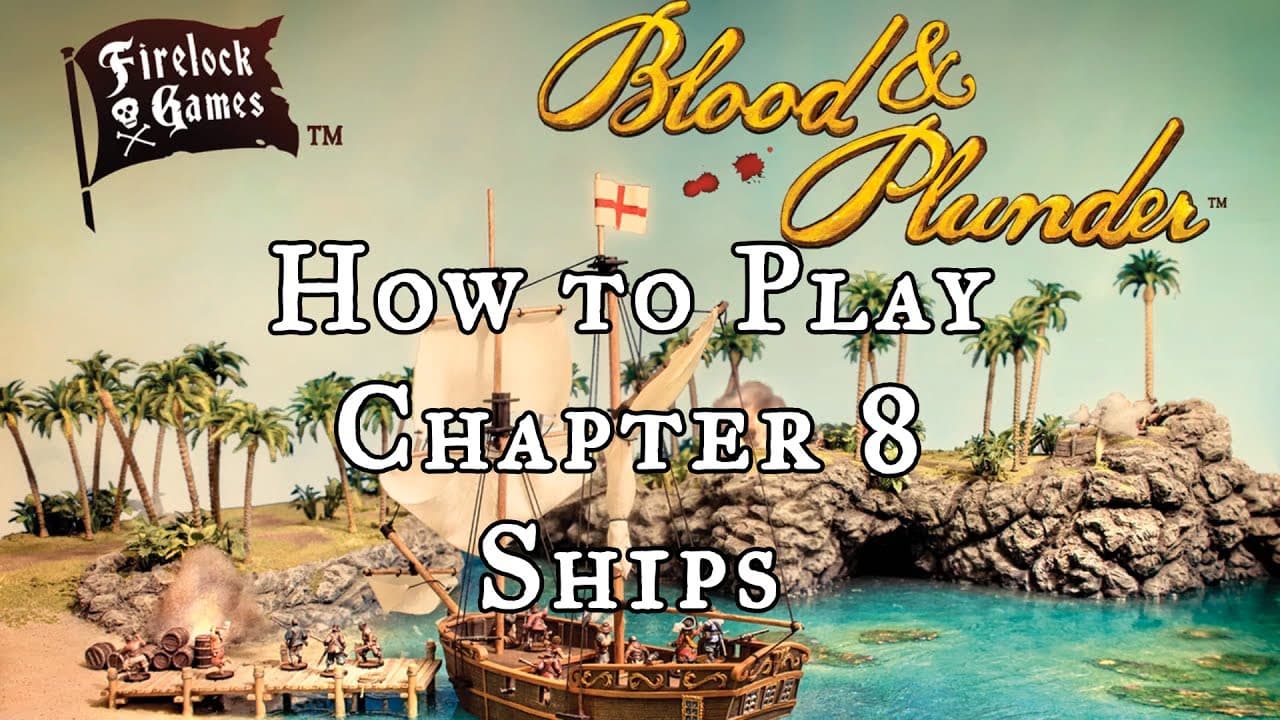
Understanding ship mechanics in Blood & Plunder is crucial for effective gameplay. Ships act as structures with distinct hull and rigging elements, requiring strategic movement three times per turn based on sail settings and wind direction. Master advanced maneuvers like tacking and box hauling to navigate challenges while managing combat tactics on the high seas.
Transcript
hi everybody this is Fred again and this is the next video in our series to explain the rules to blood and plunder to you if this particular video is on chapter 8 ships this is our last video in this series and it's a doozy it's all about using ships in blood and plunder this will likely be a long video so to make your life easier when you need to ... Read More
Key Insights
- Ships in Blood & Plunder are treated as moving structures with two main components: hull and rigging. The hull houses the crew and artillery, while the rigging is responsible for propulsion.
- Ship movement is mandatory three times per turn, influenced by sail settings, wind speed, and ship orientation. Movement can be forward, backward, or involve turns.
- Advanced maneuvers like box hauling, tacking, and wearing require successful sailing tests, allowing ships to perform actions not typically possible under sail.
- Collisions between ships or with stationary objects can cause damage to the hull or rigging, and may result in ships becoming fouled or running aground.
- Ships can be grappled to other ships or objects, creating a single structure that drifts together. Grapples can be released by a unit action unless enemy units are present.
- Ranged combat on ships involves targeting the hull or rigging, with special considerations for raking shots and the limitations of small arms and swivel guns.
- Boats, being smaller and lighter, have unique rules, such as not affecting the movement of larger ships when grappled, and being able to be towed by ships.
- Combat on ships follows similar rules to structures, with boarding actions requiring ships to be connected by grapples or fouled rigging.
Install to Summarize YouTube Videos and Get Transcripts
Explore YouTube Video Summarizer or Get YouTube Transcript Extractor
Questions & Answers
Q: What are the main components of a ship in Blood & Plunder?
In Blood & Plunder, a ship is composed of two primary components: the hull and the rigging. The hull is the main body where the crew and artillery are located, divided into decks. The rigging consists of sails, lines, and beams, serving as the ship's propulsion system. These components have distinct roles and rules for movement and damage in the game.
Q: How is ship movement determined in the game?
Ship movement in Blood & Plunder is determined by sail settings, wind speed, and ship orientation. Ships must move three times per turn, with movements occurring at specified times during a player's turn. Movement can be forward, backward, or involve turning, and players must manage these movements strategically to avoid obstacles and position their ships advantageously.
Q: What are advanced maneuvers and how are they executed?
Advanced maneuvers in Blood & Plunder, such as box hauling, tacking, and wearing, allow ships to perform actions not typically possible under sail. These maneuvers require a successful sailing test, which involves a dedicated action by a unit on the ship. The target number for the test varies, with a lower number if the unit has the sailors special rule. Successful tests enable specific movements, while failures can have negative consequences.
Q: What happens during a ship collision?
During a ship collision, the moving ship stops immediately, and both ships may take damage to the hull or rigging based on the size of the other ship. The ship that was hit moves three inches away from the point of collision. If rigging becomes fouled, the ships are treated as a single structure until they are separated by a repair action. Boats, being smaller, take more damage in collisions with larger ships.
Q: How are grapples used in ship interactions?
Grapples are used to connect ships or ships to objects, allowing them to be treated as a single structure. A unit can throw grapples as a standard action if the target is within three inches. If successful, the ships or objects are pulled together. Grapples can be released by a unit action, provided there are no enemy units present. Grappled ships drift together unless one is immobile.
Q: How does ranged combat work with ships?
Ranged combat on ships involves targeting the hull or rigging. Cannons can damage the hull, while small arms and swivel guns can target the rigging. Raking shots, which occur when a shot travels down the centerline of a ship, are particularly devastating, doubling the damage and reducing the hull's fortitude. The rigging can also be targeted, but small arms are less effective, requiring two hits to count as one.
Q: What are the unique rules for boats compared to ships?
Boats, being smaller and lighter, have rules that differ from larger ships. They cannot be targeted in the same way, with no damage to their rigging from advanced maneuver failures. Boats do not affect the movement of multi-deck ships when grappled and can be towed by larger ships. Collisions with larger ships result in more damage to boats, and they have separate critical damage tables.
Q: How is combat conducted on ships?
Combat on ships in Blood & Plunder follows similar rules to combat in structures. Boarding actions, or melee combat, require ships to be connected by grapples or fouled rigging. Ranged combat involves targeting specific parts of the ship, such as the hull or rigging, with unique rules for damage and hits. Understanding these mechanics is crucial for effective ship-based combat strategies.
Summary & Key Takeaways
-
This video provides a comprehensive explanation of ship mechanics in the Blood & Plunder game, focusing on movement, combat, and advanced maneuvers. Ships are treated as structures with distinct hull and rigging components, each with specific rules for damage and movement.
-
Ship movement is a critical aspect of gameplay, requiring strategic sail settings and awareness of wind direction. Players must manage three mandatory movements per turn, which can include advanced maneuvers like tacking and box hauling to navigate challenging scenarios.
-
Combat on ships involves both melee and ranged attacks, with unique rules for targeting the hull and rigging. Boats have separate rules due to their smaller size, allowing them to be towed or used for specific tactical advantages in shallow waters.
Read in Other Languages (beta)
Share This Summary 📚
Summarize YouTube Videos and Get Video Transcripts with 1-Click
Try YouTube Summary with ChatGPT & Claude or YouTube Transcript Generator