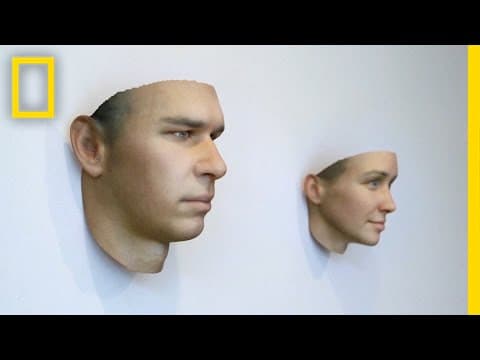
Artist Makes 3-D Portraits From DNA Found on Gum, Cigarette Butts, and Fingernails | Short Film
TL;DR
Using genetic artifacts, artist raises privacy concerns and calls for DNA counter surveillance against discrimination.
Transcript
so it all started with wondering what I could learn about someone from that little piece of themself that they left behind a walk around the city and everywhere you see these genetic artifacts little clues that could tell you something about a person and I wanted to create these portraits of total strangers using tools at a community laboratory str... Read More
Key Insights
- 👾 Genetic artifacts in public spaces can reveal personal information.
- 🤨 Genetic surveillance raises concerns about discrimination and privacy violations.
- ❓ Legislation may not offer sufficient protection against genetic discrimination.
- 🪜 Individuals can be added to DNA databases without having committed a crime.
- ❓ Minority populations are disproportionately represented in genetic databases.
- 🧬 DNA counter surveillance products are necessary to protect privacy.
- 💁 Artist advocates for individuals' control over their genetic information.
Install to Summarize YouTube Videos and Get Transcripts
Explore YouTube Video Summarizer or Get YouTube Transcript Extractor
Questions & Answers
Q: How does the artist use genetic artifacts to create portraits of strangers?
The artist collects genetic remnants like cigarette butts and hair found in public spaces to create portraits, highlighting the personal information that can be inferred from these artifacts.
Q: What are some concerns regarding genetic surveillance discussed in the content?
The content addresses concerns about potential discrimination against individuals with genetic diseases, as well as the issue of genetic databases where individuals can be included without having committed any crime.
Q: Why is it important to develop DNA counter surveillance products?
DNA counter surveillance products are crucial to protect individuals' privacy rights and ensure that they have control over who can access their genetic information, preventing potential misuse or discrimination.
Q: How does the artist hope to contribute to the field of DNA counter surveillance?
The artist aims to inspire the development of new technologies like DNA counter surveillance products, such as "invisible," to empower individuals to protect their genetic privacy in the face of increasing genetic surveillance.
Summary & Key Takeaways
-
The artist collects genetic artifacts found in cities to create portraits, sparking privacy and surveillance questions.
-
Concerns about genetic surveillance's implications on individuals with genetic diseases and potential discrimination.
-
Calls for the development of DNA counter surveillance products to protect privacy.
Read in Other Languages (beta)
Share This Summary 📚
Summarize YouTube Videos and Get Video Transcripts with 1-Click
Try YouTube Summary with ChatGPT & Claude or YouTube Transcript Generator
Explore More Summaries from National Geographic 📚


Summarize YouTube Videos and Get Video Transcripts with 1-Click
Try YouTube Summary with ChatGPT & Claude or YouTube Transcript Generator