How planets form | Konstantin Batygin and Lex Fridman
TL;DR
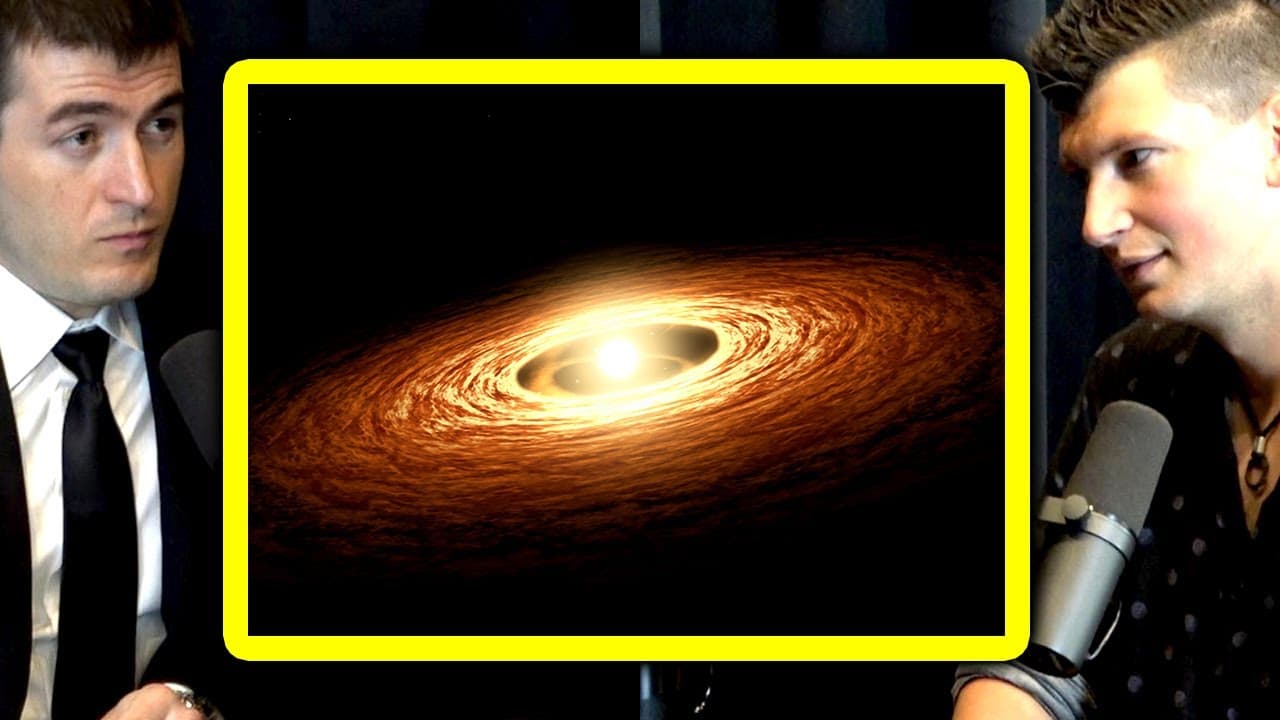
Astrophysical disks are common in the universe and span a wide range of sizes, from small objects like asteroids with rings to massive structures like the rings of Saturn. These disks form through gravitational forces and serve as the birthplace of planets.
Transcript
that's fascinating by the way the astrophysical disks how what are they how broad is this definition okay so astrophysical disks span a huge uh huge amount of ranges they start maybe at the smallest scale they start with actually kuiper belt objects some kuiper belt objects have rings okay so that's maybe the smallest example of an astrophysical di... Read More
Key Insights
- 💽 Astrophysical disks are highly common in the universe, appearing on various scales.
- 💁 The formation of astrophysical disks is driven by the rotational forces and gravitational interaction of matter.
- 😮 Solid particles in these disks aggregate and collapse under their own weight, giving rise to the formation of planets and asteroids.
- 🖐️ Simulations play a crucial role in studying the process of planet formation and understanding its intricate details.
- 💁 While the overall process is complex, the qualitative formation of the first building blocks of planets follows a similar sequence to the formation of stars.
- 🫢 Solid components in astrophysical disks minimize their aerodynamic interaction with gas, leading to the formation of clouds that eventually collapse.
- 💁 The diversity of astrophysical disks offers scientists opportunities to explore and study various aspects of planet formation.
Install to Summarize YouTube Videos and Get Transcripts
Explore YouTube Video Summarizer or Get YouTube Transcript Extractor
Questions & Answers
Q: What are astrophysical disks and how do they vary in size?
Astrophysical disks are structures found in the universe that span a wide range of sizes. Examples include Kuiper Belt objects with rings, the rings of Saturn, and even the entire solar system during its formation.
Q: What composes the material in astrophysical disks?
The composition of the material in these disks can vary, including gas, solid particles, and even icy matter like the rings of Saturn. Initially, the material around the sun was predominantly hydrogen and helium gas.
Q: How do astrophysical disks lead to the formation of solid objects?
Through simulations, it has been discovered that solid particles in these disks start to hide behind one another, forming clouds. These clouds grow until they collapse under their own weight, ultimately creating the building blocks of planets and asteroids.
Q: Can the formation of astrophysical disks and the birth of planets be simulated?
Yes, it is possible to simulate the formation of these disks and the subsequent birth of planets. Scientists actively carry out calculations and simulations to understand the complex dynamics of this process.
Summary & Key Takeaways
-
Astrophysical disks exist on various scales, ranging from small objects like Kuiper Belt objects with rings to massive structures like the rings of Saturn.
-
These disks are formed due to the rotation and gravitational forces in the universe, allowing for the accumulation of gas, solids, and other materials.
-
The formation of solid objects in such disks occurs through the gravitational collapse of clouds of particles, leading to the birth of planets and asteroids.
Read in Other Languages (beta)
Share This Summary 📚
Summarize YouTube Videos and Get Video Transcripts with 1-Click
Try YouTube Summary with ChatGPT & Claude or YouTube Transcript Generator
Explore More Summaries from Lex Clips 📚




Summarize YouTube Videos and Get Video Transcripts with 1-Click
Try YouTube Summary with ChatGPT & Claude or YouTube Transcript Generator