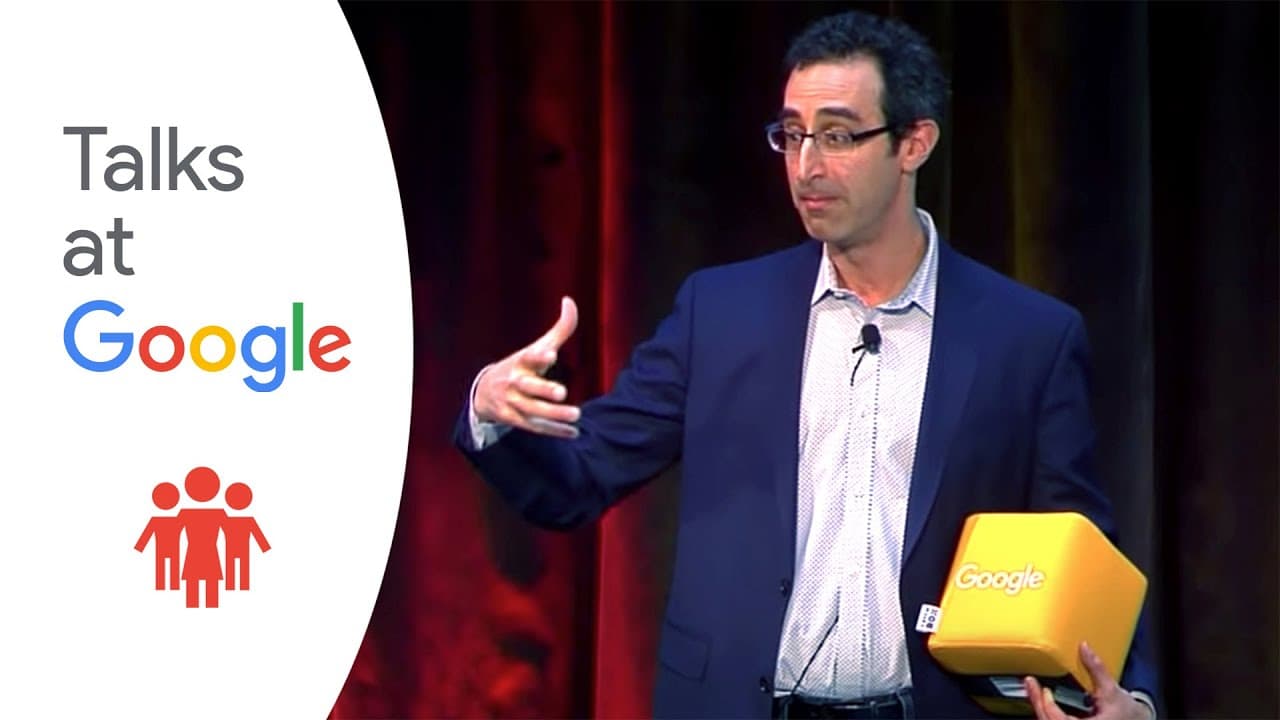
Building The Schools of The Future | Jeff Wetzler | Talks at Google
TL;DR
Rethinking traditional education models through innovative and student-centered approaches.
Transcript
[MUSIC PLAYING] JEFF WETZLER: I want to start by showing you a few images that have nothing to do with education. If you were to enter some keywords into Google-- for example, if you were to enter, "surgery in the early 20th century," you might see an image like this one here. And if you were to then say, "What about the 1950s?" you might see an im... Read More
Key Insights
- 🧍 Current education systems exhibit long-standing unchanged features that restrict adaptability and innovation.
- ❓ Traditional models prioritize conformity, passive learning, and standardized outcomes, hindering diverse skill development and individual growth.
- 🧑🎓 The need for student-centered approaches and personalized learning experiences is crucial to prepare for future demands.
- 🌉 Transitioning towards innovative education models can bridge the gap between traditional practices and evolving workforce requirements.
- ♻️ Collaborative networks, inclusive environments, and holistic skill development are essential for creating transformative learning experiences.
- 🧑🎓 Addressing societal norms, promoting diversity, and nurturing curiosity can enhance educational outcomes and student engagement.
- 🎓 Integration of innovation, technology, and social-emotional learning can redefine education paradigms and foster personal and professional success.
Install to Summarize YouTube Videos and Get Transcripts
Explore YouTube Video Summarizer or Get YouTube Transcript Extractor
Questions & Answers
Q: What are the key observations from the interactive discussions regarding unchanged features in classrooms over time?
The discussions revealed consistent features such as desks, one-to-many teaching, lack of space for group interaction, same-aged groupings, and limited diversity.
Q: How is the current education system designed to achieve conformity and passive learning?
The system is structured to socialize students to conform, follow authority, and act passively to receive information rather than generate or question it.
Q: What outcomes and societal norms are reinforced by the current education system design?
The system aims to create individualistic competition, standardized job roles, and maintain the status quo in societal structures and power dynamics.
Q: How does the innovative model showcased in the video promote student-centered learning and self-discovery?
The model empowers students to set goals, lead discussions, receive feedback, explore personal strengths, and engage in meaningful relationships, fostering individual growth and acceptance of diversity.
Summary & Key Takeaways
-
Traditional education models are compared to advancements in other sectors like medicine, media, and transportation, highlighting the need for change in education delivery.
-
Interactive discussions with educators and students reveal the unchanged features in classrooms across different time periods.
-
Challenges are identified in the current education system, aiming to achieve conformity and passive learning, which contrasts with the dynamic needs of the future.
Read in Other Languages (beta)
Share This Summary 📚
Summarize YouTube Videos and Get Video Transcripts with 1-Click
Try YouTube Summary with ChatGPT & Claude or YouTube Transcript Generator
Explore More Summaries from Talks at Google 📚
Summarize YouTube Videos and Get Video Transcripts with 1-Click
Try YouTube Summary with ChatGPT & Claude or YouTube Transcript Generator