What Is a Multimeter and How Does It Work?
TL;DR
A multimeter is a versatile electrical instrument that measures voltage, current, and resistance in one device. It consists of sections for AC and DC measurements, including voltmeters, ammeters, and ohmmeters. Understanding the circuit design and individual components, like rectifiers and potentiometers, is crucial for accurate and efficient measurement.
Transcript
hi everyone in this video we will see the multimeter concept so by this lecture matrix concepts will be over in the next video onwards you will see signal generators so till now we have seen ammeters voltmeters ohmmeters and in the voltmeters there are two types of voltmeters we have seen dc voltmeters and ac voltage materials what is the differenc... Read More
Key Insights
- 💄 Multimeters streamline multiple measurement functions into a single device, making them a staple in electrical testing.
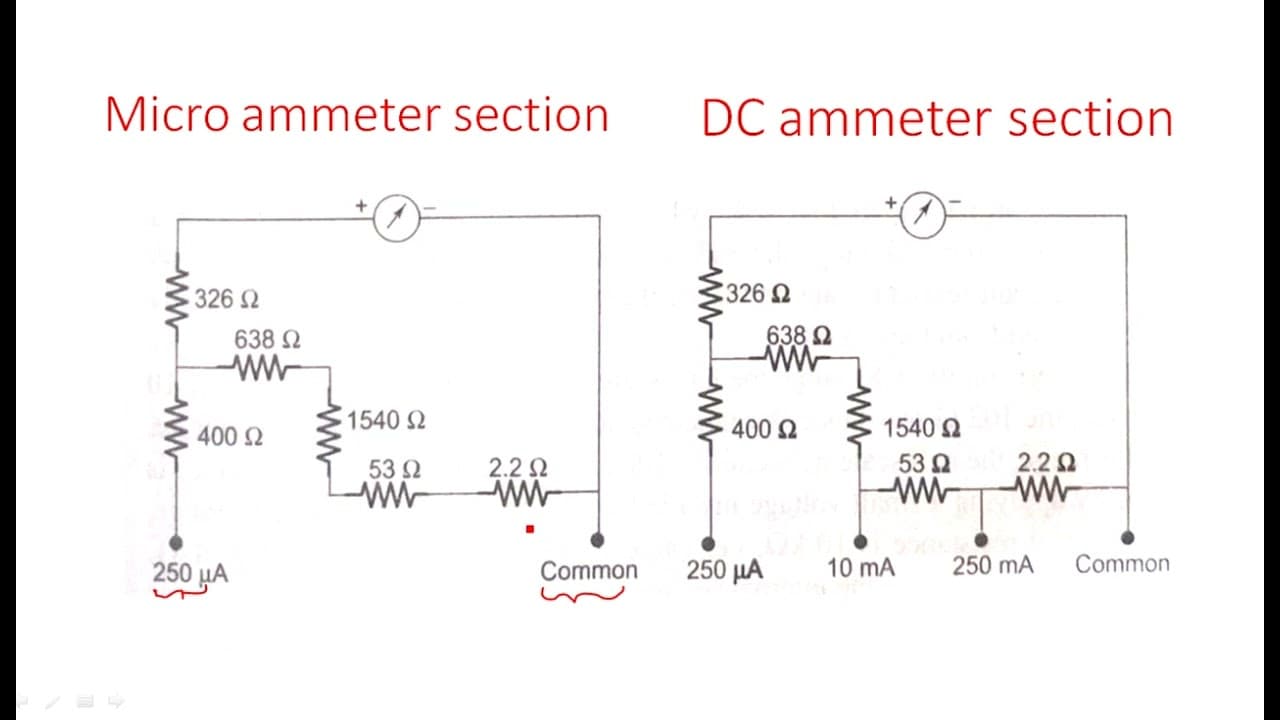
- 🔙 They feature specific sections for AC and DC measurements, with accompanying circuit diagrams detailing component arrangements.
- ⚡ The measurement ranges for both AC and DC voltages typically extend from 10 volts up to 1000 volts, catering to various electronic applications.
- 🎨 Circuit design complexity can be simplified by understanding individual sections like the voltmeter, ammeter, and ohmmeter.
- 📁 Rectifiers, used within AC voltmeter sections, enable the conversion of alternating current into a direct current for accurate measurement.
- 🖐️ Common resistors and components play a critical role in maintaining the multimeter's shared measuring functionality across different modes.
- 🎨 The design includes features such as a potentiometer to ensure zero adjustability for more precise resistance measurements.
Install to Summarize YouTube Videos and Get Transcripts
Explore YouTube Video Summarizer or Get YouTube Transcript Extractor
Questions & Answers
Q: What are the primary functions of a multimeter?
A multimeter is an essential tool in electronics, serving multiple functions including measuring voltage (both AC and DC), current (micro and milliamp ranges), and resistance (ohm measurements). This versatility allows users to diagnose electrical problems and ensure proper operation in various circuits.
Q: How does the multimeter differentiate between AC and DC voltages?
The multimeter can differentiate between AC and DC voltages using specific internal components such as rectifiers (diodes) which convert AC signals to DC for measurement. The design allows for different ranges and settings that correspond to the voltage type being measured, making the multimeter adaptable for various scenarios.
Q: What is the importance of the common point in the multimeter circuit?
The common point in a multimeter circuit serves as a reference terminal for all measurements, ensuring that both current and voltage readings can be taken accurately. This design facilitates seamless transitions between different measurement types (voltage, current, resistance) while maintaining a stable and reliable reference for operations.
Q: How is resistance measured using a multimeter?
To measure resistance, the multimeter applies a known voltage from a battery in the circuit, allowing it to determine the current flow through the unknown resistance. Using Ohm's Law, the device then calculates resistance based on the measured current. A potentiometer is often included to calibrate or zero the reading for accuracy.
Summary & Key Takeaways
-
The video covers the comprehensive concept of multimeters, highlighting their ability to measure various electrical parameters like voltage, current, and resistance in one device.
-
Detailed explanations are provided regarding different sections of the multimeter, including AC and DC voltmeters, microammeters, and ohmmeters, along with their circuit diagrams.
-
The importance of the common point in the multimeter circuit is emphasized, showcasing how it integrates various measurement functions for efficiency and accuracy.
Read in Other Languages (beta)
Share This Summary 📚
Summarize YouTube Videos and Get Video Transcripts with 1-Click
Try YouTube Summary with ChatGPT & Claude or YouTube Transcript Generator