Dr. Joe Dispenza - How to Literally Clean Your Mind
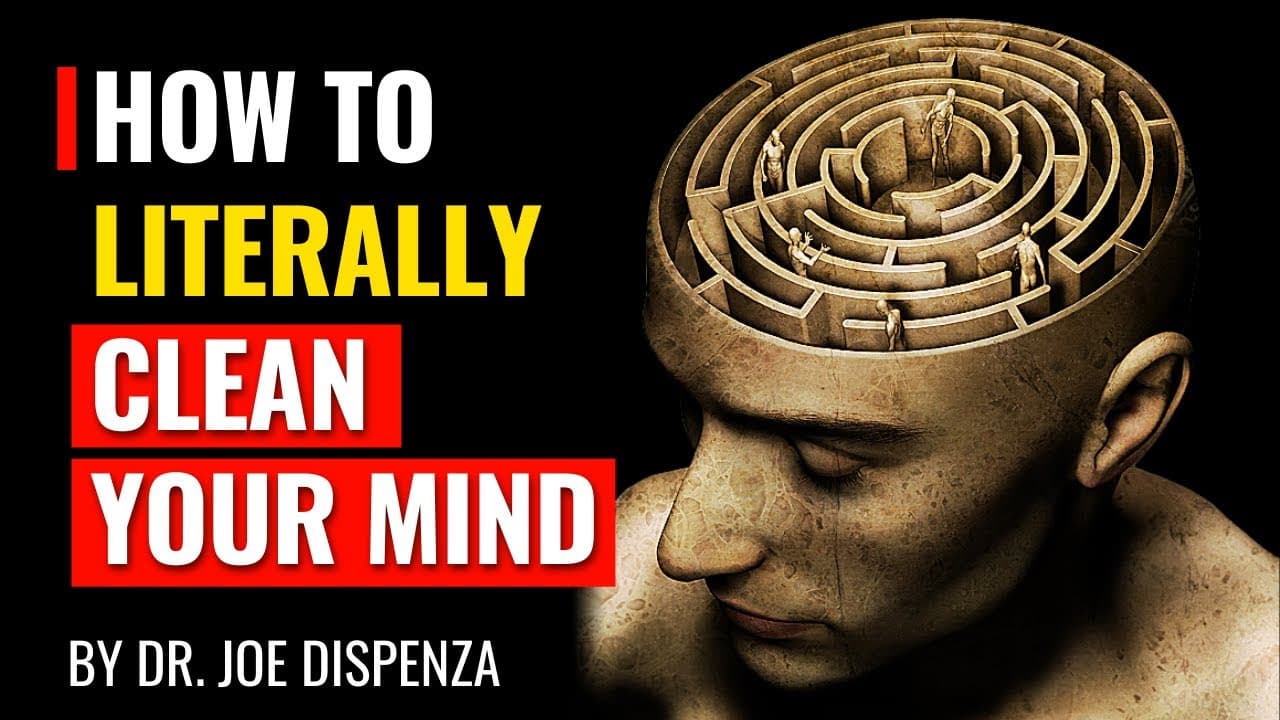
TL;DR
Dr. Joe Dispenza explains how to change habitual thinking patterns.
Transcript
The Habit is when you've done something so many times that your body now knows how to do it better than your mind so if you think about it people wake up in the morning uh they begin to think about their problems those problems are circuits of memories in the brain each one of those memories are connected to people and things at certain tim... Read More
Key Insights
- Habits form when the body becomes more adept at actions than the mind, leading to automatic behaviors that dominate our daily routines.
- People often start their day by dwelling on past problems, which locks them into a cycle of negative emotions and predictable futures.
- Constant engagement with digital devices reinforces our connection to the known, making it difficult to break free from habitual routines.
- By age 35, most people operate largely on subconscious programs, which dictate behaviors, emotions, and beliefs without conscious awareness.
- To change, one must transcend the analytical mind, which separates conscious and subconscious thoughts, often waiting for crises to prompt change.
- Meditation can help alter brain waves, allowing access to the subconscious and facilitating significant personal changes.
- The body often resists change due to its conditioning, making it challenging to overcome familiar emotional states even when they are negative.
- Visualizing and rehearsing desired future behaviors can rewire the brain, turning it from a record of the past into a map for the future.
Install to Summarize YouTube Videos and Get Transcripts
Explore YouTube Video Summarizer or Get YouTube Transcript Extractor
Questions & Answers
Q: What is the main reason people struggle to change their habits?
People struggle to change their habits because, by the age of 35, 95% of their behaviors, emotions, and beliefs are controlled by subconscious programs. These automatic processes are deeply ingrained, making it challenging for the conscious mind to enact change without deliberate effort and new learning experiences.
Q: How does Dr. Dispenza suggest individuals can change their future?
Dr. Dispenza suggests that individuals can change their future by engaging in mental rehearsal and visualization. By imagining desired behaviors and outcomes, the brain begins to form new neural pathways, effectively turning it from a record of past experiences into a map for future possibilities, allowing individuals to create the future they desire.
Q: What role does meditation play in personal transformation according to Dr. Dispenza?
Meditation plays a crucial role in personal transformation by allowing individuals to slow down their brain waves, accessing the subconscious mind. This process enables them to make significant changes in their thought patterns and emotional responses, facilitating the reprogramming of the mind to align with desired personal goals and outcomes.
Q: Why do people often wait for crises to make changes in their lives?
People often wait for crises to make changes because these events force them out of their comfort zones and disrupt the familiar patterns of their lives. In the absence of such disruptions, individuals tend to remain in their habitual routines, as the unknown is perceived as more frightening than the predictability of their current circumstances.
Q: What is the connection between emotions and past experiences?
Emotions are the end products of past experiences, and they strongly influence our current state of being. When individuals recall memories associated with past problems, they often experience the same emotions, such as sadness or pain, which reinforces their current emotional state and perpetuates a cycle of negative thinking and behavior.
Q: How does the body become stronger than the mind over time?
Over time, the body becomes stronger than the mind because it is conditioned to respond to familiar emotional states and behaviors. As these patterns are repeated, they become automatic, with the body executing them without conscious thought, effectively making the body the master over the mind's intentions to change.
Q: What does Dr. Dispenza mean by the brain being a record of the past?
Dr. Dispenza refers to the brain as a record of the past because it stores memories and experiences that shape our current thoughts and emotions. These past experiences form the basis for habitual thinking and behavior, influencing our present state and limiting our ability to envision and create a different future.
Q: How can individuals begin to create their desired future?
Individuals can begin to create their desired future by visualizing and mentally rehearsing the actions and behaviors they wish to embody. By doing so, they fire and wire new neural pathways in the brain, which helps to establish a new mental framework that supports the realization of their goals and aspirations.
Summary & Key Takeaways
-
Dr. Joe Dispenza discusses how habitual thinking and actions dominate our lives, often leading to predictable and unfulfilling outcomes. By engaging in meditation and visualization, individuals can rewire their brains, creating new neural pathways that facilitate personal growth and happiness.
-
The content explores how emotions tied to past experiences shape our present state of being and future. Dispenza emphasizes the importance of breaking free from these patterns through conscious effort and mental rehearsal to create a more fulfilling life.
-
Dr. Dispenza highlights the role of the subconscious in dictating our actions and beliefs. He advocates for using meditation to access and reprogram the subconscious mind, enabling individuals to transcend their current limitations and achieve desired outcomes.
Read in Other Languages (beta)
Share This Summary 📚
Summarize YouTube Videos and Get Video Transcripts with 1-Click
Try YouTube Summary with ChatGPT & Claude or YouTube Transcript Generator