How Can You Effectively Make Political Change?
TL;DR
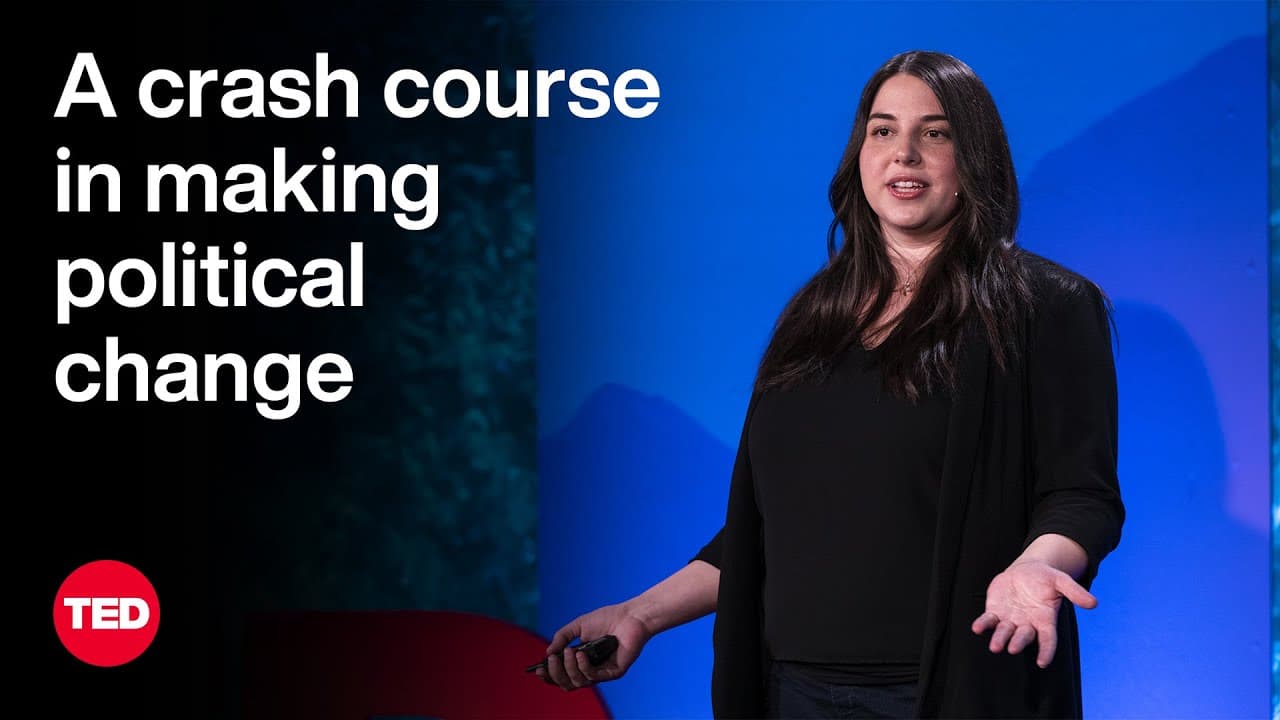
To make effective political change, start by engaging your community through grassroots efforts, as demonstrated by Katie Fahey's movement against gerrymandering in Michigan. By leveraging social media to gather support and utilizing the ballot initiative process, she mobilized over 10,000 people to successfully pass a constitutional amendment, restoring democratic representation.
Transcript
When the Flint water crisis happened in Michigan, I was already feeling pretty disillusioned with the state of the world. I was 27, I had an hour-long commute to work. I worked in the recycling industry, which I liked, but I spent most of my day crawling around in garbage cans. And I would listen to the radio on my hour-long commute and hear about ... Read More
Key Insights
- Gerrymandering is a practice where politicians manipulate voting district boundaries to guarantee election wins for themselves or their political party.
- Gerrymandering can lead to a lack of representation and a disregard for the will of the people.
- Gerrymandering disproportionately impacts communities and can undermine the democratic process.
- Gerrymandering creates unbalanced political power, where politicians can win elections without the support of the majority of voters.
- Social media can be a powerful tool in mobilizing a grassroots movement and raising awareness about important issues.
- A small Facebook post can lead to the formation of a political movement with tens of thousands of supporters.
- Grassroots movements can bring together people from diverse backgrounds and occupations, who are passionate about creating change and improving democracy.
- Grassroots movements can challenge the status quo and restore faith in democracy by giving power back to the people.
- The redistricting process is crucial in determining political representation and can either promote fair elections or perpetuate gerrymandering.
- The redistricting process should aim to create districts that accurately represent the communities they serve, rather than serve the interests of politicians.
- Redistricting should ensure political balance, particularly in states where the population is divided politically.
- Ordinary citizens can play a significant role in shaping democracy and creating change.
- Citizen involvement can bring diverse perspectives and a focus on practical solutions rather than partisan interests.
- People's skills, experiences, and passions can be harnessed to contribute to grassroots movements and political campaigns.
- Constitutional amendments can be a powerful tool to bring about democratic change and protect the rights of citizens.
- Democracy should be inclusive, participatory, and representative of the people it serves.
- Constitutional reforms can ensure fair and transparent processes, safeguarding the integrity of democratic systems.
Install to Summarize YouTube Videos and Get Transcripts
Explore YouTube Video Summarizer or Get YouTube Transcript Extractor
Questions & Answers
Q: What led the speaker to become disillusioned with the state of the world?
The speaker's disillusionment with the state of the world stemmed from a combination of factors, including the Flint water crisis in Michigan, the inaction of politicians, and the discovery of gerrymandering in the political system.
Q: What is gerrymandering and how does it affect the electoral process?
Gerrymandering is a practice in which politicians manipulate voting districts to favor themselves or their political party. By strategically drawing district lines, they can essentially choose which voters will support them, thus ensuring their own election or their party's victory. This undermines the fairness and integrity of the electoral process.
Q: How did the speaker initially seek to address gerrymandering in Michigan?
The speaker made a post on Facebook expressing their desire to take on gerrymandering in Michigan and asked for help from others who shared the same concern. This initial step was prompted by frustration and a desire for change, although the speaker did not anticipate the magnitude of the response they received.
Q: How did the speaker and their team build momentum and support for their cause?
The speaker and their team utilized social media platforms, particularly Facebook, to rally like-minded individuals who were passionate about ending gerrymandering. They were able to connect with over 10,000 people, forming a political movement. This movement eventually led to amending the state constitution and restoring faith in democracy in Michigan.
Q: What methods did the speaker's team employ to gather the required signatures for their cause?
The speaker's team devised a plan to gather the necessary signatures by utilizing the ballot initiative process in Michigan. They recruited volunteers and organized a collective effort to gather signatures from registered voters across the state. By harnessing the creativity and dedication of their volunteers, they were able to surpass their signature goal and achieve a significant level of support.
Q: How did the speaker and their team ensure fairness in Michigan's redistricting process?
Through their efforts, the speaker and their team successfully advocated for the creation of an independent citizen's redistricting commission in Michigan. This commission was composed of 13 individuals who represented a diverse range of political affiliations and backgrounds. They held town halls, gathered input from citizens, and ultimately formulated maps that were fair and representative of the state's demographics.
Q: What impact did the constitutional amendment have on future elections in Michigan?
The constitutional amendment implemented an ongoing process for redistricting in Michigan that ensured fairness and impartiality in future elections. The independent citizen's redistricting commission became the standard for redrawing districts, guaranteeing that future voters would have fair elections and diverse representation. The first election following the implementation of the new maps demonstrated an exact match between how people voted and the elected representatives.
Summary & Key Takeaways
-
The speaker becomes disillusioned with the state of the world, particularly after learning about gerrymandering and the Flint water crisis in Michigan.
-
The speaker makes a Facebook post out of frustration, sparking a political movement of over 10,000 people who want to end gerrymandering.
-
Through grassroots efforts and the ballot initiative process, the movement successfully collects signatures and passes a constitutional amendment to end gerrymandering in Michigan, restoring faith in democracy.
Read in Other Languages (beta)
Share This Summary 📚
Summarize YouTube Videos and Get Video Transcripts with 1-Click
Try YouTube Summary with ChatGPT & Claude or YouTube Transcript Generator
Explore More Summaries from TED 📚



Summarize YouTube Videos and Get Video Transcripts with 1-Click
Try YouTube Summary with ChatGPT & Claude or YouTube Transcript Generator