You should be skeptical when it comes to hyped-up AI. Here’s why | Gary Marcus
TL;DR
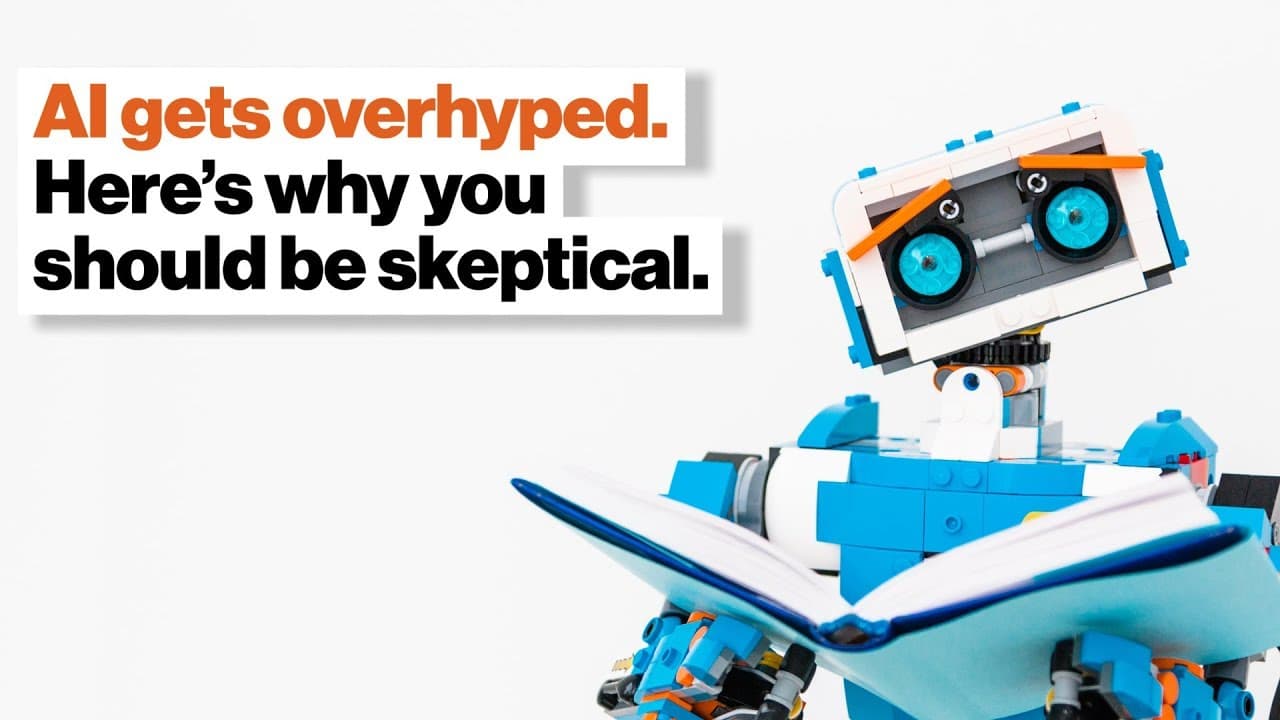
AI is often misrepresented in the media, and readers should be skeptical of exaggerated claims.
Transcript
One of the reasons that we wrote this book is to teach people to be skeptical. So there is an old book called How to Lie with Statistics, which teaches people to catch all of the tricks, like four out of five doctors recommend. Well, what exactly was the sample of doctors that made this recommendation? Was it literally just five, and four of them w... Read More
Key Insights
- 🛄 The book aims to instill skepticism towards exaggerated claims in the media about AI.
- 😑 Press releases often exaggerate AI capabilities, leading to misconceptions about AI advancements.
- 😷 Readers are advised to ask critical questions about AI news to discern the truth behind the hype.
- ❓ Generalizability, human comparisons, task specifics, and robustness should be considered when evaluating AI advancements.
- ❓ Not all advancements in AI translate to progress towards general intelligence.
- ❓ The history of AI is filled with instances where advancements were overhyped, like the chatbot "ELIZA."
- ⛔ AI systems can appear intelligent but may be limited to superficial tasks without true understanding.
Install to Summarize YouTube Videos and Get Transcripts
Explore YouTube Video Summarizer or Get YouTube Transcript Extractor
Questions & Answers
Q: Why did the speaker reference "How to Lie with Statistics" in relation to AI?
The speaker drew a parallel to highlight the need for skepticism towards exaggerated AI claims, just like statistical manipulation.
Q: How does the media often misrepresent AI advancements?
Press releases often exaggerate AI capabilities, leading to misleading reports that make machines appear superhuman.
Q: What questions should readers ask when encountering AI news?
Readers should inquire about the presence of a demo, generalizability, task specifics, human comparisons, progress towards general AI, and robustness.
Q: What pitfalls should readers be aware of when reading AI studies?
Readers should scrutinize the sample used for human comparison, task specificity, and whether advancements truly contribute to general AI.
Summary & Key Takeaways
-
The book aims to teach skepticism towards AI hype similar to "How to Lie with Statistics" to question exaggerated claims.
-
Often, press releases exaggerate AI capabilities, leading to misleading reports about AI advancements.
-
Readers are encouraged to ask critical questions about AI news to uncover the truth behind the hype.
Read in Other Languages (beta)
Share This Summary 📚
Summarize YouTube Videos and Get Video Transcripts with 1-Click
Try YouTube Summary with ChatGPT & Claude or YouTube Transcript Generator
Explore More Summaries from Big Think 📚



Summarize YouTube Videos and Get Video Transcripts with 1-Click
Try YouTube Summary with ChatGPT & Claude or YouTube Transcript Generator