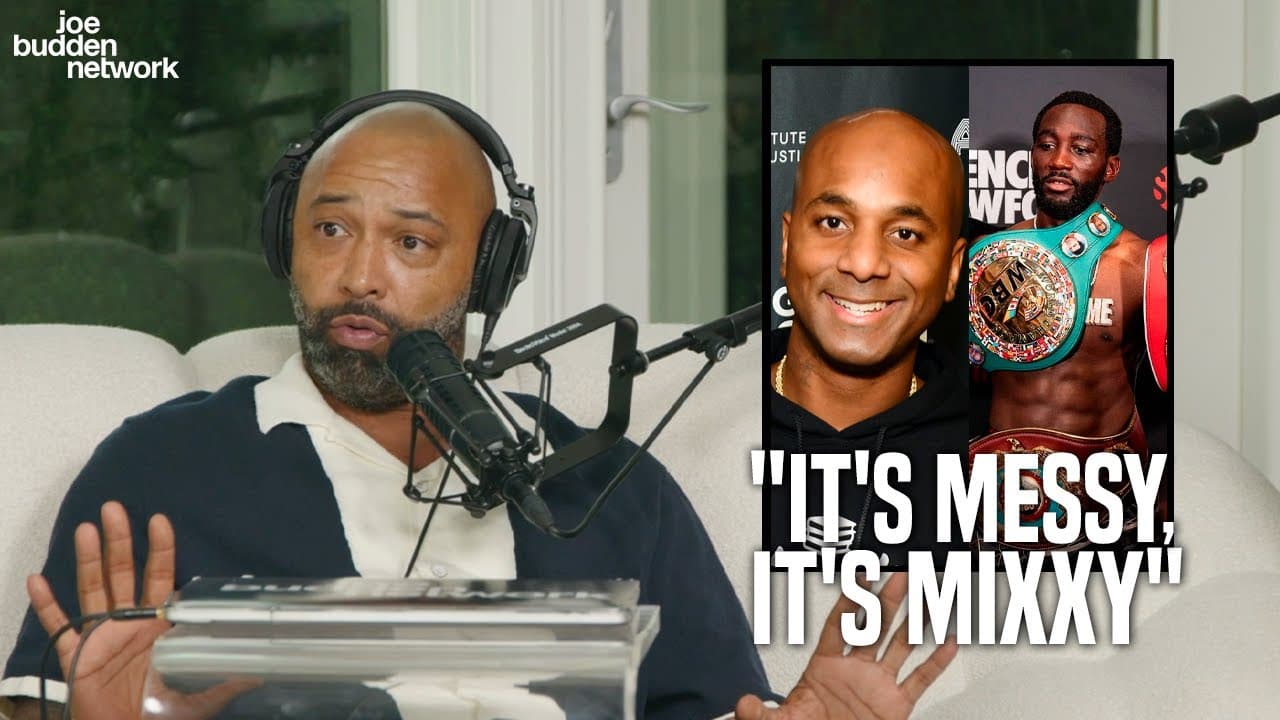
"It's Messy, It's Mixxy" | Joe Budden Reacts To Wallo Posting Texts With Bud Crawford
TL;DR
Recent discussions highlight controversies around private conversations made public in boxing.
Transcript
wallows Bud Crawford text that he sent to Ennis would would uh Bud responding bubble State rightfully so yeah it seems like he took a private conversation and put it made it public it seemed like he initiated conversation like you said oh you think if you think what you think about I mean what you think about Ennis and they're gonna take that and s... Read More
Key Insights
- 🚙 Sharing private conversations in sports can create misunderstandings and harm relationships.
- 😀 Athletes face pressure to manage their public image amidst personal communications being shared.
- 🫥 The line between private dialogue and public commentary in sports is often blurred, leading to ethical concerns.
- 🚙 Fans and celebrity figures in sports can influence narratives, sometimes inappropriately.
- 🤳 Conversations about deceased individuals on social media can appear more self-serving than genuine.
- ❓ Context and consent are critical when discussing the appropriateness of sharing personal texts.
- 🥺 Confidence in one's abilities can lead athletes to make bold claims, sometimes misconstrued by the public.
Install to Summarize YouTube Videos and Get Transcripts
Explore YouTube Video Summarizer or Get YouTube Transcript Extractor
Questions & Answers
Q: What was the nature of the controversy involving Bud Crawford and Ennis?
The controversy arose when a private text conversation between Bud Crawford and Ennis was shared publicly. The discussion seemed to suggest that Crawford’s statements had been misinterpreted or twisted, creating a negative dynamic around the potential for a future fight. This situation reflects broader concerns regarding privacy and the ethics of sharing personal communications in public spaces.
Q: Why do the speakers disapprove of sharing private conversations?
The speakers express disapproval of posting private conversations as it breaches personal trust and can misrepresent original intentions. They argue that sharing such communications can lead to misunderstandings and conflicts, particularly in sports, where public perception can heavily influence a fighter's reputation and marketability.
Q: What comparisons do the speakers make to illustrate their points?
The speakers compare the sharing of personal messages to scenarios where people post about deceased individuals, reflecting on the motivations behind such actions. They point out that often, these tweets or messages appear self-serving rather than genuinely honoring the deceased, as they seek public recognition rather than personal closure.
Q: How do the speakers view the relationship between fans and fighters?
The speakers recognize a unique bond between fans and fighters, noting that many celebrity fans, like Gilly, have a vested interest in the boxing community. This connection can lead to mixed motivations when they seek to amplify controversies or spark narratives around fights, which can impact the fighters' dynamics and public image.
Q: What instance in sports does the conversation reflect upon?
The conversation reflects on a specific moment when one fighter claimed that on a certain night, he would have beaten another legendary fighter, Mayweather. This sentiment encapsulates the enthusiasm and confidence that athletes often possess after personal achievements, though it also raises questions about the realism of such claims in sports narratives.
Q: What are the implications of sharing private texts in such a competitive arena?
Sharing private texts in competitive arenas like boxing can have serious implications. It can distort the message being conveyed by the individual, lead to public fallout, and create unnecessary drama that distracts from the athletes' focus on performance. Additionally, it can affect potential match-ups and relationships within the sport based on misunderstandings or misinterpretations.
Q: How do the speakers reflect on personal experiences with shared communications?
The speakers recount personal experiences where they sought consent before sharing conversations, emphasizing respect for privacy. They articulate that there are clear boundaries regarding personal discussions that should remain confidential, highlighting the importance of mutual agreement in releasing any part of a private interaction into the public domain.
Summary & Key Takeaways
-
The content explores a controversial instance where a private text conversation between Bud Crawford and Ennis became public, raising issues about privacy and intent in the sports world, particularly boxing.
-
It highlights the challenges faced by athletes when their private discussions are shared publicly, potentially misrepresenting their sentiments and intentions, especially in competitive environments.
-
The speakers consider the broader implications of sharing personal conversations in the public domain, including possible motivations and reactions from the boxing community.
Read in Other Languages (beta)
Share This Summary 📚
Summarize YouTube Videos and Get Video Transcripts with 1-Click
Try YouTube Summary with ChatGPT & Claude or YouTube Transcript Generator
Explore More Summaries from Joe Budden TV 📚


Summarize YouTube Videos and Get Video Transcripts with 1-Click
Try YouTube Summary with ChatGPT & Claude or YouTube Transcript Generator