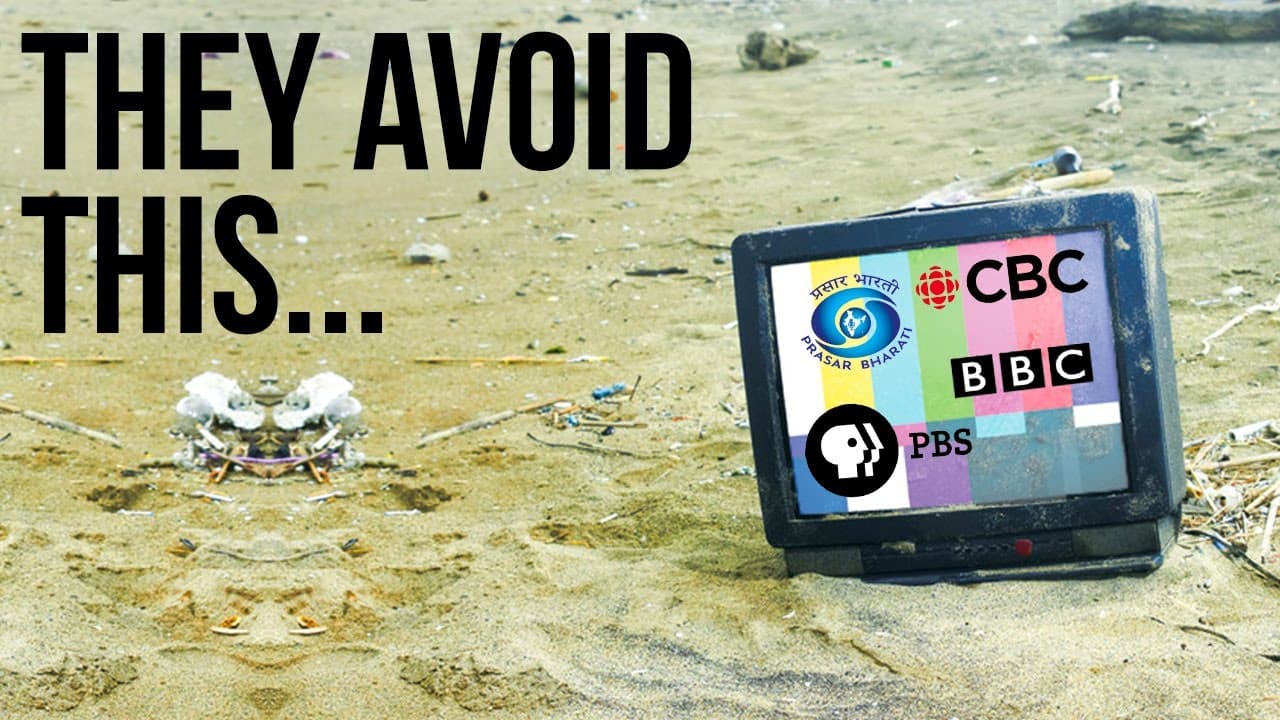
You NEED to know this about State Broadcasters...
TL;DR
State broadcasters should tackle psychological issues to improve societal well-being.
Transcript
Almost every developed nation boasts of having a rather unusual institution at its center, a state broadcaster. These state broadcasters receive taxpayers money on the basis that they serve the public interest in a way that commercial broadcasters never can. In exchange for our cash, they frequently broadcast shows about ancient history and documen... Read More
Key Insights
- 🧘 State broadcasters are uniquely positioned to address psychological issues impacting nations through engaging content.
- 👋 Taxpayer-funded broadcasters need clarity in their mission to balance entertainment with public good.
- ❓ There's a disconnect between the traditional methods of tackling social problems and the psychological nature of these issues.
- 🔉 Compelling storytelling in media can effectively influence societal norms and individual behaviors.
- 💠 Governments have statistical insights into public issues and must leverage this data to shape broadcast content.
- ❓ Elevating programming quality and creativity can transform how serious societal issues are perceived and discussed.
- 🔉 Innovative media can be a powerful tool for promoting better parenting, emotional well-being, and community engagement.
Install to Summarize YouTube Videos and Get Transcripts
Explore YouTube Video Summarizer or Get YouTube Transcript Extractor
Questions & Answers
Q: Why are state broadcasters considered essential in developed nations?
State broadcasters are deemed essential because they are funded by taxpayers to promote public interest in ways commercial broadcasters cannot. They are expected to create content that not only entertains but also educates and informs the public on critical societal issues, fostering a deeper cultural understanding and unity.
Q: What are some of the main psychological issues facing advanced nations?
Advanced nations grapple with various psychological issues such as family breakdown, alcoholism, drug addiction, obesity, and depression. These problems not only affect individual lives but also place a significant financial burden on national budgets, resulting in increased spending on health and social services.
Q: Why do traditional methods, like public advertising and educational campaigns, struggle to address social problems?
Traditional methods often fail because they do not resonate deeply with the public. Brief campaigns or added school classes lack the sustained, engaging influence needed to change behaviors. People's mindsets and habits require consistent interaction and compelling content to effectively shift their perspectives and actions towards social issues.
Q: How can state broadcasters change the narrative around public issues?
State broadcasters can change the narrative by creating engaging, entertaining content specifically addressing societal challenges. Instead of producing dry programs about serious issues, they have the opportunity to craft compelling dramas, comedies, and documentaries that highlight these problems in an accessible manner, promoting awareness and dialogue.
Q: What is the proposed mission for state broadcasters in relation to public good?
The proposed mission is for state broadcasters to focus their annual output on addressing the ten leading social problems derived from statistical evidence, such as obesity and family breakdown. Governments should redefine public good to ensure that broadcasts serve as tools for societal betterment while maintaining high entertainment value.
Q: How can state broadcasting contribute more effectively to societal improvement than other institutions?
State broadcasting can contribute more effectively because it has the reach and influence to affect widespread change in mentalities and behaviors. Unlike police or social services, which react to issues, public broadcasting can proactively inspire cultural shifts, guiding societal values and norms through creative storytelling and relatable content.
Q: What role does creativity play in reimagining state broadcasting?
Creativity is crucial as it helps develop innovative programming that resonates with audiences while addressing important social issues. By harnessing the artistic talents within broadcasting, state broadcasters can create meaningful entertainment that engages the public and inspires them to reflect on and change their behaviors.
Summary & Key Takeaways
-
Developed nations often have state broadcasters funded by taxpayers, tasked with serving public interests. However, there's confusion regarding their key objectives, resulting in wasted opportunities for societal improvement.
-
Governments face numerous psychological issues such as addiction and depression that significantly impact national budgets, yet traditional methods to address these issues yield poor results.
-
By leveraging state broadcasters' influence, governments can creatively engage the public in addressing these pressing issues, utilizing captivating content rather than mundane messaging to encourage behavioral change.
Read in Other Languages (beta)
Share This Summary 📚
Summarize YouTube Videos and Get Video Transcripts with 1-Click
Try YouTube Summary with ChatGPT & Claude or YouTube Transcript Generator