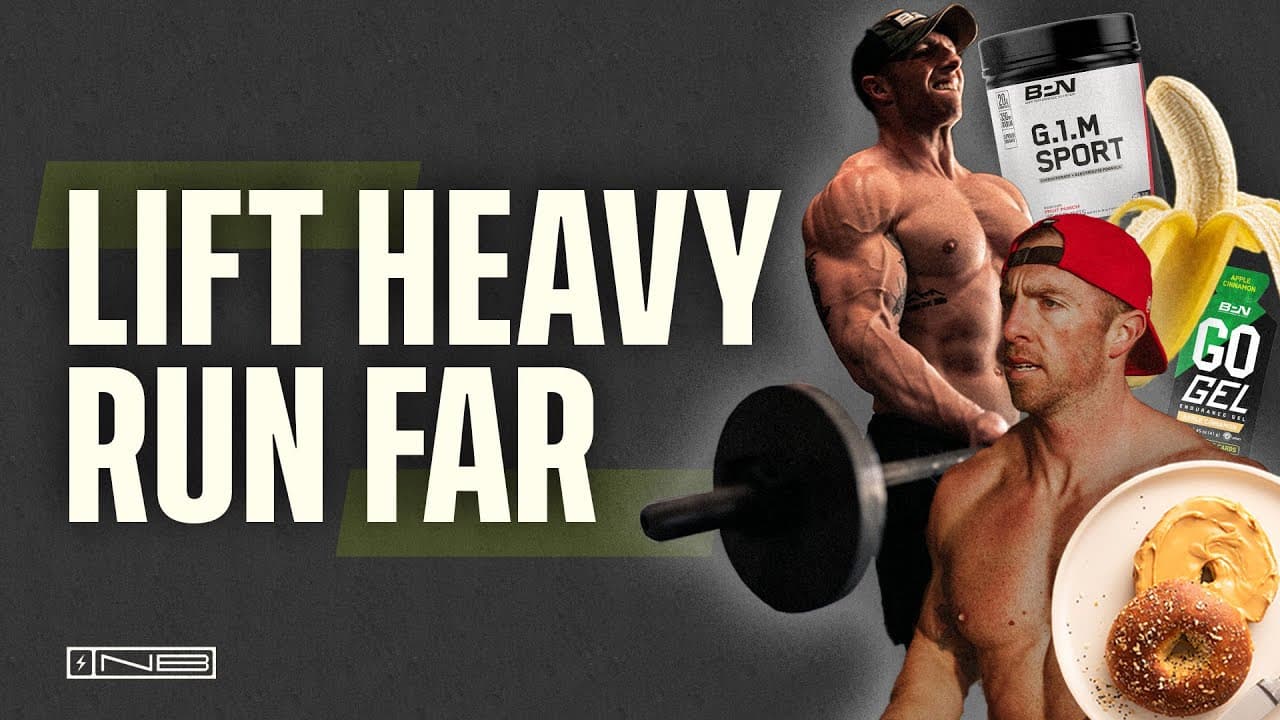
The Fuel Guide to Lift Heavy and Run Far | 063
TL;DR
No perfect diet exists; focus on simplicity and personal goals.
Transcript
in today's episode of the podcast we are talking about the perfect diet to lift heavy and run far and believe it or not it is not a very exact and pinpointed diet cuz the reality is there is no perfect diet but there are a few Concepts that we know work that you can apply to your unique and specific dietary needs to achieve the outcomes that you wa... Read More
Key Insights
- There is no universally perfect diet; it should be tailored to individual goals and preferences, focusing on simplicity and adherence.
- Diet trends and information overload can lead to confusion; it's essential to focus on balanced, whole-food-based nutrition.
- Building healthy relationships with food is crucial to avoid stress-related health issues and to maintain a balanced diet.
- Fueling for performance requires understanding training volume, intensity, and specific goals to optimize recovery and performance.
- Training fueled rather than fasted can significantly enhance performance and recovery, particularly in endurance activities.
- Maintaining muscle mass while running involves adequate caloric and protein intake, alongside strength training.
- Prioritizing diet involves considering calories, protein, carbohydrates, fats, fiber, and micronutrients to meet performance and health goals.
- Keeping a big-picture perspective in diet helps avoid getting caught up in minor details that might not impact overall health and performance.
Install to Summarize YouTube Videos and Get Transcripts
Explore YouTube Video Summarizer or Get YouTube Transcript Extractor
Questions & Answers
Q: What is the main takeaway about the perfect diet?
The main takeaway is that there is no universally perfect diet. Instead, the best diet is one that you can adhere to and aligns with your personal goals and preferences. Simplicity and balance are key, and diets should focus on whole foods tailored to individual needs.
Q: How does the host view the role of motivation in maintaining fitness routines?
The host believes that motivation is not required to maintain fitness routines. He views his diet and training as personal responsibilities and obligations, akin to a job. This mindset helps him maintain consistency and commitment, irrespective of external stressors or life changes.
Q: Why does the host emphasize fueling over fasting before workouts?
The host emphasizes fueling over fasting because training fueled enhances performance and recovery. He shares that once he started fueling with carbohydrates and electrolytes before workouts, he noticed significant improvements in both workout performance and recovery, eliminating the need to train fasted.
Q: How does the host suggest handling information overload about diets?
The host suggests focusing on balanced, whole-food-based nutrition and being wary of diet trends and misinformation. He encourages listeners to conduct their own research and maintain a big-picture perspective, rather than getting caught up in conflicting dietary advice and minor details.
Q: What is the host's approach to maintaining muscle while running?
The host maintains muscle while running by ensuring adequate caloric and protein intake and incorporating strength training into his routine. He emphasizes the importance of consuming enough calories and nutrients to support both endurance and muscle maintenance, alongside regular strength workouts.
Q: What are the host's views on relationships with food?
The host stresses the importance of building healthy relationships with food to avoid stress-related health issues. He shares personal experiences with eating disorders and emphasizes that stress around food can lead to negative health outcomes, advocating for a balanced and mindful approach to eating.
Q: How does the host prioritize his dietary intake?
The host prioritizes his dietary intake by focusing first on total calories, followed by protein, carbohydrates, fats, fiber, and micronutrients. This approach ensures that he meets his performance and health goals, emphasizing the importance of a balanced diet tailored to individual needs.
Q: What analogy does the host use to explain big-picture perspective in diet?
The host uses a military analogy, comparing the chaos of a battle to the complexities of diet. He advises adopting a helicopter view to maintain a big-picture perspective, focusing on significant changes and sustainable outcomes rather than getting lost in minor details or short-term decisions.
Summary & Key Takeaways
-
The episode emphasizes that there is no one-size-fits-all diet; the best approach is one that aligns with personal goals and is simple to follow. The host shares insights from his experiences, highlighting the importance of maintaining a balanced diet and healthy relationships with food.
-
The host discusses the impact of social media and information overload on dietary choices, advocating for a focus on whole foods and personal goals. He shares his morning routine and dietary habits that fuel his hybrid athlete lifestyle, emphasizing the importance of fueling around workouts.
-
Listeners are encouraged to maintain a big-picture perspective on diet, avoiding the pitfalls of focusing on minor details. The host shares personal anecdotes and practical advice on how to fuel for specific performance goals, stressing the importance of research and commitment.
Read in Other Languages (beta)
Share This Summary 📚
Summarize YouTube Videos and Get Video Transcripts with 1-Click
Try YouTube Summary with ChatGPT & Claude or YouTube Transcript Generator
Explore More Summaries from The Nick Bare Podcast 📚

Summarize YouTube Videos and Get Video Transcripts with 1-Click
Try YouTube Summary with ChatGPT & Claude or YouTube Transcript Generator