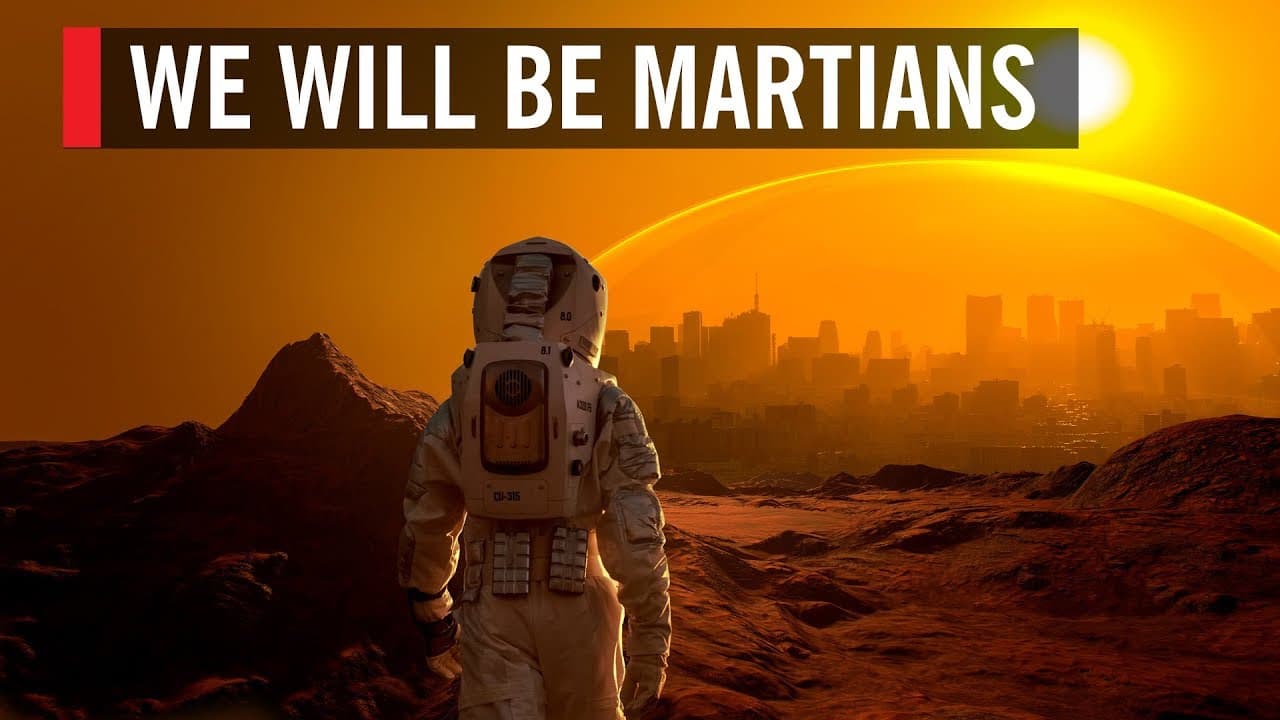
We Will Be Martians
TL;DR
Delve into the complexities of reaching and living on Mars, facing challenges of gravity, atmosphere, and radiation protection.
Transcript
in the third millennium BCE early astronomers from Mesopotamia mapped the Stars giving names to constellations and planets they called the Red Planet Nergal after their God of War for the ancient Greeks the celestial body was likewise their God of War Ares ancient Romans gave it the name we use today Mars over a thousand years later in 1609 Galileo... Read More
Key Insights
- 🫱 Ancient civilizations like Mesopotamians revered Mars as a god of war.
- 🔭 Technological advancements in telescopes and spacecraft enabled in-depth exploration of Mars.
- 🎟️ Successful missions like Mariner 4 and Viking 1 provided critical data on the Martian surface.
- 🎟️ Radiation protection and habitat designs are crucial for human missions to Mars.
- 🧪 Utilizing lava tubes for habitation could offer natural radiation protection on Mars.
- 👨🚀 Understanding DNA repair mechanisms could aid in protecting astronauts from space radiation.
- 👾 Collaborative efforts between space agencies and private companies aim to achieve human exploration of Mars.
Install to Summarize YouTube Videos and Get Transcripts
Explore YouTube Video Summarizer or Get YouTube Transcript Extractor
Questions & Answers
Q: How did ancient civilizations perceive Mars?
Ancient Mesopotamians, Greeks, and Romans named Mars, associating it with gods of war.
Q: What was the significance of the Mariner 4 and Viking 1 missions to Mars?
Mariner 4 and Viking 1 missions provided close-up images and data about the Martian surface and atmosphere.
Q: How has technology helped pave the way for human exploration of Mars?
Advancements in telescopes, spacecraft, and rovers have enabled extensive studies of Mars to prepare for human missions.
Q: What challenges does radiation pose for a Mars mission, and how can they be mitigated?
Radiation exposure in space can lead to health issues, but research on DNA repair mechanisms offers potential solutions to protect astronauts on Mars.
Summary & Key Takeaways
-
Ancient astronomers worshipped Mars, leading to modern-day missions.
-
Progress in telescopes enabled detailed observations of Mars.
-
Mariner 4 and Viking 1 missions provided valuable insights into the Red Planet.
-
Future Mars missions aim for human exploration.
Read in Other Languages (beta)
Share This Summary 📚
Summarize YouTube Videos and Get Video Transcripts with 1-Click
Try YouTube Summary with ChatGPT & Claude or YouTube Transcript Generator
Explore More Summaries from World Science Festival 📚




Summarize YouTube Videos and Get Video Transcripts with 1-Click
Try YouTube Summary with ChatGPT & Claude or YouTube Transcript Generator