It'saBigWorld
TL;DR
Medical anthropology examines cultural impacts on health and disease.
Transcript
hello and welcome to the lecture today we are going to take a look at medical anthropology now veticon apology is a very very interesting field under the umbrella of anthropology in which we see in usage of the other subfields coming together in an applied sense or in a research sense so first thing we need to do when we start off this lecture is a... Read More
Key Insights
- Medical anthropology is the biocultural study of health, exploring how diseases affect populations and the sociocultural factors involved.
- Sickle cell anemia provides a case study of how geography, rather than race, influences disease prevalence and resistance to malaria.
- Condom usage in North America is influenced by cultural perceptions of intimacy, trust, and gender biases, beyond just knowledge of its benefits.
- Health definitions vary culturally; what is considered healthy in one society may be seen as unhealthy in another, such as body types and blood pressure norms.
- Sickness encompasses unwanted variations in health, influenced by cultural interpretations of disease and illness, which can differ greatly between societies.
- The biomedical model views the body as a machine, often neglecting the cultural and social dimensions of health prevalent in other medical systems.
- Ethnomedicine studies all medical systems as cultural systems, emphasizing that Western biomedicine is just one of many approaches.
- Socioeconomic status and living environment are significant determinants of health, affecting exposure to pollutants and access to medical care.
Install to Summarize YouTube Videos and Get Transcripts
Explore YouTube Video Summarizer or Get YouTube Transcript Extractor
Questions & Answers
Q: What is medical anthropology?
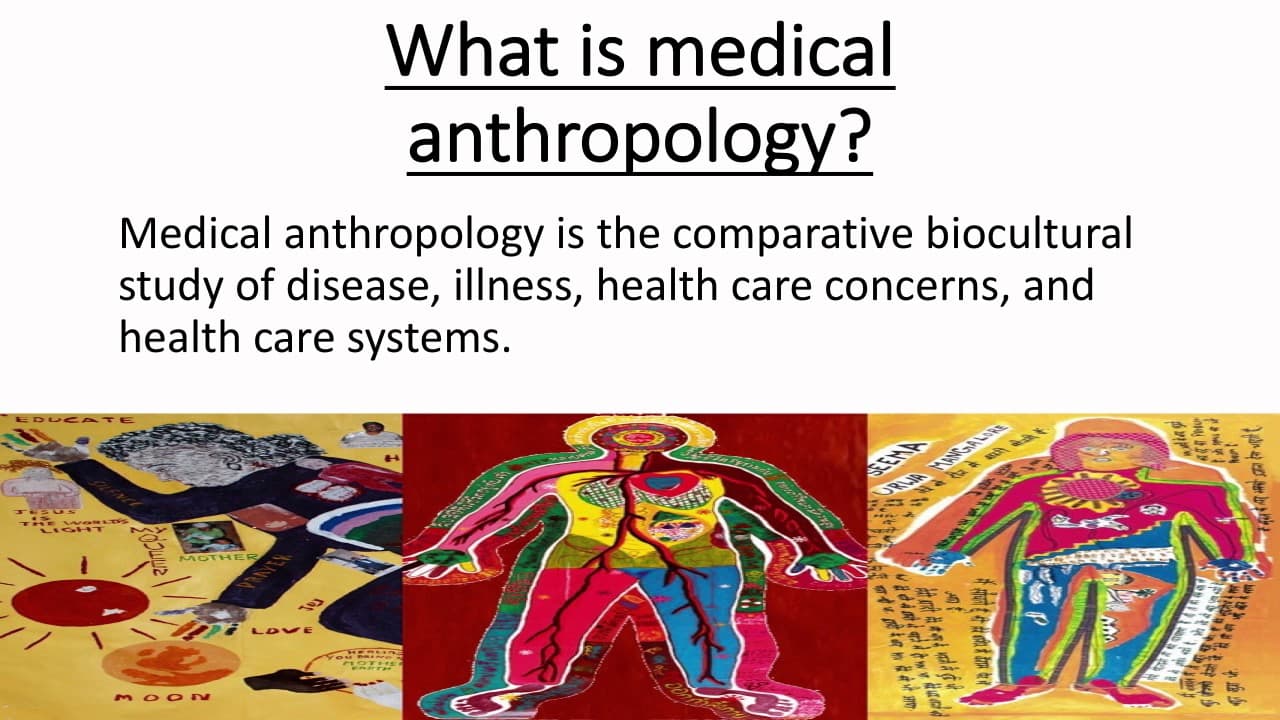
Medical anthropology is the comparative biocultural study of disease, illness, healthcare concerns, and healthcare systems. It applies anthropological theories and methods to questions of health, illness, medicine, and healing, examining how cultural and social factors influence health outcomes.
Q: How does sickle cell anemia relate to geography?
Sickle cell anemia is related to geography because its prevalence indicates that ancestors of affected individuals lived in regions where malaria is common. The condition provides resistance to malaria, offering an evolutionary advantage in such areas, rather than being linked to racial classification.
Q: What cultural factors influence condom usage in North America?
Cultural factors influencing condom usage in North America include perceptions of intimacy, trust, and gender biases. Many individuals associate condom usage with a lack of trust or intimacy, and societal norms often stigmatize women carrying condoms, affecting their willingness to use them.
Q: How do cultural definitions of health vary?
Cultural definitions of health vary significantly, with different societies having distinct perceptions of what constitutes health and well-being. For example, body types considered healthy in one culture may be seen as unhealthy in another, and blood pressure norms can differ between countries like the US and England.
Q: What is the biomedical model's view of the body?
The biomedical model views the body as a machine, focusing on the diagnosis and treatment of illness through biological means. It often neglects cultural and social dimensions of health, assuming the body operates independently of social context, which can limit its effectiveness in addressing health issues holistically.
Q: How does ethnomedicine approach medical systems?
Ethnomedicine studies all medical systems as cultural systems, recognizing that Western biomedicine is just one of many approaches. It emphasizes understanding medical systems within their cultural contexts, acknowledging that different societies have diverse ways of organizing and interpreting health and treatment.
Q: What are the major determinants of health?
Major determinants of health include socioeconomic status and living environment, which influence exposure to pollutants and access to medical care. Wealth and dwelling place significantly impact health outcomes, often more than individual behaviors like smoking or drinking, highlighting the importance of addressing social inequalities.
Q: Why is China considered an incubator for influenza?
China is considered an incubator for influenza due to its farming practices, urbanization, and population density. Farms combining birds and pigs near homes facilitate virus transmission, while urbanization alters bird migration routes, increasing human exposure. High meat demand also creates more vectors for disease spread.
Summary & Key Takeaways
-
Medical anthropology explores the intersection of culture and health, examining how diseases affect populations and the sociocultural factors involved. It emphasizes the importance of understanding cultural contexts in addressing health issues and healthcare systems.
-
Sickle cell anemia is used as an example to demonstrate how geography, rather than race, influences disease prevalence. It highlights the need to consider environmental factors in understanding health conditions and their impacts on populations.
-
Condom usage in North America is influenced by cultural perceptions of intimacy, trust, and gender biases, beyond just knowledge of its benefits. This highlights the importance of considering cultural factors in health initiatives and public health strategies.
Read in Other Languages (beta)
Share This Summary 📚
Summarize YouTube Videos and Get Video Transcripts with 1-Click
Try YouTube Summary with ChatGPT & Claude or YouTube Transcript Generator