Why We Started Shooting Lasers Into People’s Eyeballs
TL;DR
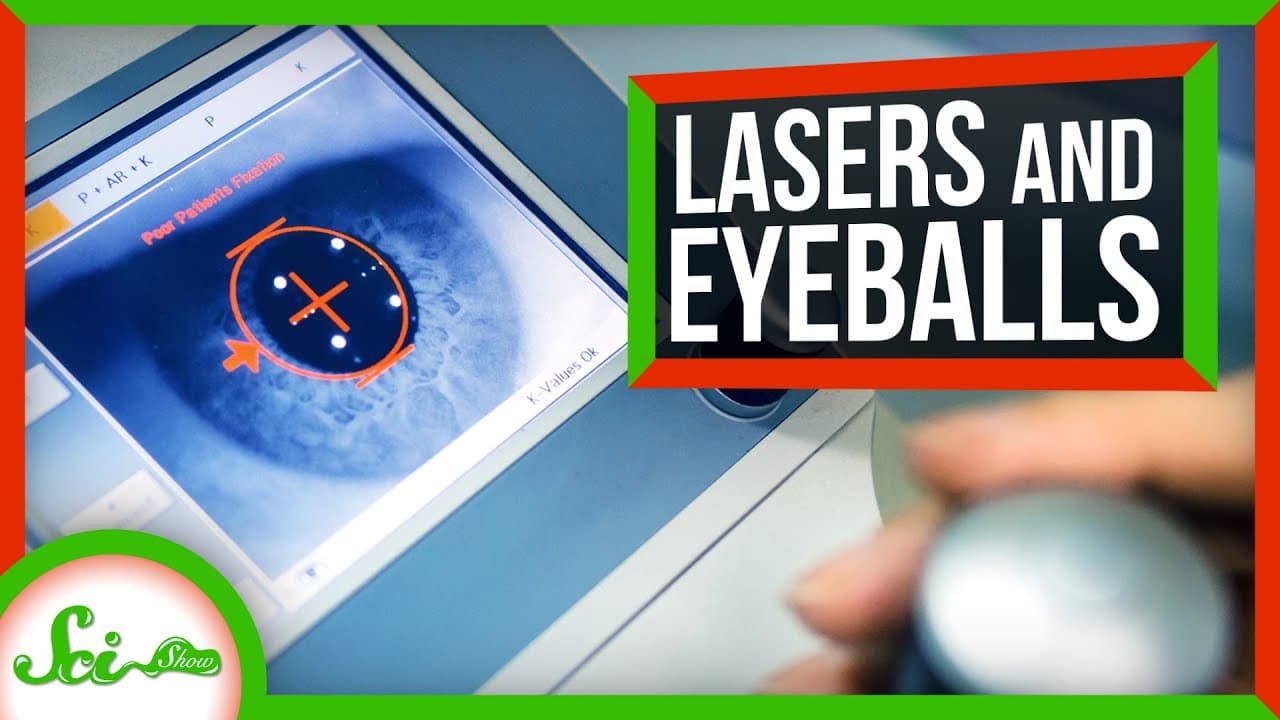
Learn about the history of eye surgery evolution from Lasik to cataract removal using precise lasers.
Transcript
[♪ INTRO] Eyes are amazing! Think about it: People with sight rely on two balls of clear jelly to focus light on some special cells and create the whole experience of vision. And for two balls of jelly, eyes are surprisingly robust—you get one set of them, and they generally last your whole life. But sometimes, they don’t work perfectly, so these d... Read More
Key Insights
- ❓ Lasik surgery replaced risky radial keratotomy methods, providing stable and precise corneal reshaping.
- 🦺 Patricia Bath revolutionized cataract removal with the safe and effective Laserphaco Probe using excimer lasers.
- 😃 Excimer lasers are high-energy lasers that vaporize tissue without heating, making them a safe option for eye surgeries.
- 😃 Lasers have become a major player in modern medicine for eye surgeries, ensuring clear, healthy eyes and improved vision.
Install to Summarize YouTube Videos and Get Transcripts
Explore YouTube Video Summarizer or Get YouTube Transcript Extractor
Questions & Answers
Q: What is Lasik eye surgery and how does it work?
Lasik eye surgery involves cutting a corneal flap, reshaping the cornea with a laser, and replacing the flap, providing improved vision with stable results.
Q: How did Patricia Bath revolutionize cataract removal with lasers?
Patricia Bath developed the Laserphaco Probe, using an excimer laser to break up cataracts safely and effectively without causing damage to surrounding tissues.
Q: What are the risks associated with traditional cataract removal methods?
Traditional cataract removal methods using ultrasound or a vibrating needle can lead to corneal burns and other complications, necessitating careful surgical techniques.
Q: Why are lasers a preferred technology for eye surgeries?
Lasers are precise, controllable, and efficient, providing stable and safe results in procedures like Lasik eye surgery and cataract removal, making them a preferred technology in eye surgeries.
Summary & Key Takeaways
-
Eyes, with their jelly-like structure, are crucial for vision, sometimes needing laser eye surgery for correction.
-
Lasik surgery replaced risky radial keratotomy methods, with precise lasers shaping the cornea, providing stable results.
-
Cataract removal has also advanced, using lasers like the Laserphaco Probe for safe and effective treatment.
Read in Other Languages (beta)
Share This Summary 📚
Summarize YouTube Videos and Get Video Transcripts with 1-Click
Try YouTube Summary with ChatGPT & Claude or YouTube Transcript Generator
Explore More Summaries from SciShow 📚


Summarize YouTube Videos and Get Video Transcripts with 1-Click
Try YouTube Summary with ChatGPT & Claude or YouTube Transcript Generator