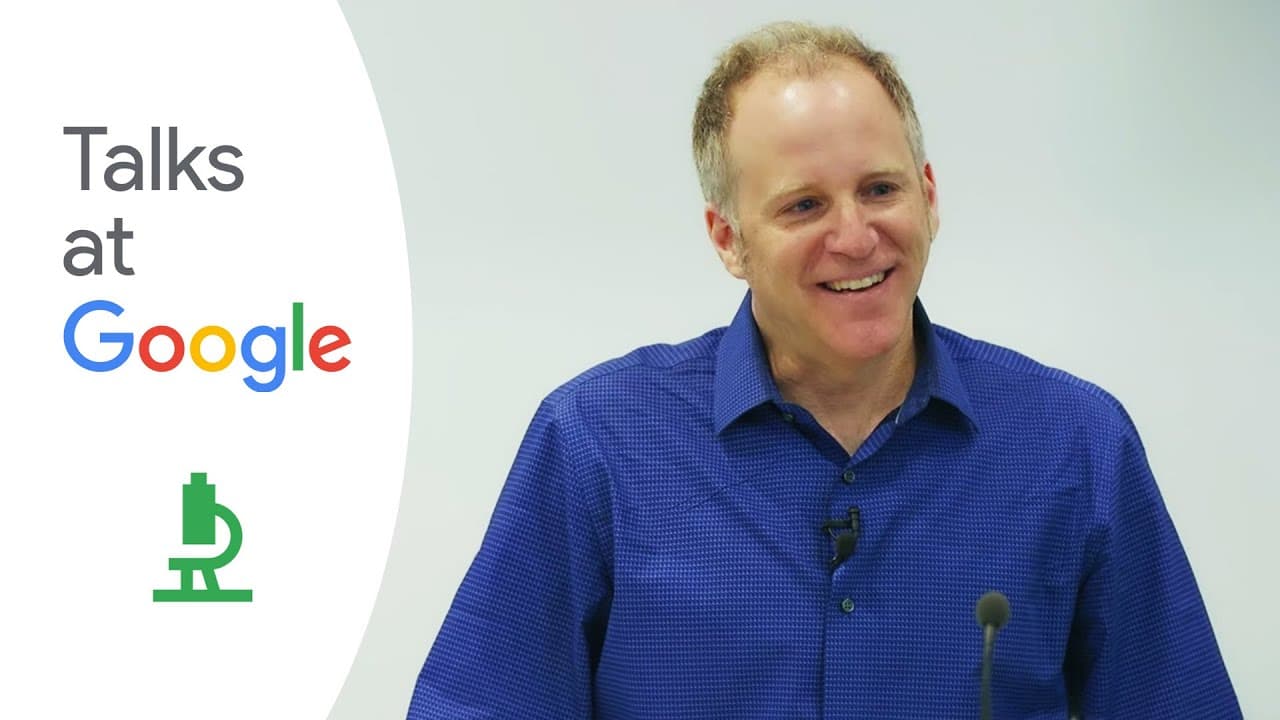
How Death Becomes Life | Joshua Mezrich | Talks at Google
TL;DR
Transplant surgery advances through innovative practices like xenotransplantation, but ethical challenges persist.
Transcript
[MUSIC PLAYING] JOSHUA MEZRICH: Thank you very much. It's so great to be here to share this book with you. This has been my passion for the last number of years, and it's a lot of fun for me to share it. And I have to be careful that I don't break into a terrible English accent, because I'm sure you guys don't know this, but I love different accent... Read More
Key Insights
- 🤨 Xenotransplantation offers a potential solution to the organ shortage but raises ethical concerns about animal breeding and virus transmission.
- 🅰️ Molecular typing enhances donor-recipient matching for better transplant outcomes by considering genetic factors beyond blood type.
- 🥳 The US prioritizes education, consent, and celebration of organ donation, while the UK is transitioning to an opt-out system to address the organ shortage.
Install to Summarize YouTube Videos and Get Transcripts
Explore YouTube Video Summarizer or Get YouTube Transcript Extractor
Questions & Answers
Q: What ethical challenges does xenotransplantation present in the field of transplant surgery?
Xenotransplantation raises concerns about breeding animals for organ donation, the risk of transmitting viruses from animals to humans, and the ethical implications of using non-human organs in human patients.
Q: How does molecular typing of donors and recipients improve matching for organ transplantation?
Molecular typing allows for a more precise assessment of compatibility between donors and recipients, taking into account a wider range of genetic factors beyond blood type for better transplant outcomes.
Q: How does the opt-out system for organ donation differ between the US and the UK?
The US focuses on promoting education, consent, and celebration of organ donation, while the UK is transitioning to an opt-out system in 2020 to address the organ shortage. Both systems aim to increase organ donation rates through different approaches.
Q: What role does education play in increasing organ donation rates, and how can it be effectively implemented?
Education plays a crucial role in promoting organ donation by raising awareness, dispelling myths, and emphasizing the impact of donation on saving lives. Implementing education through schools, social media, and public campaigns can help increase donor rates.
Summary & Key Takeaways
-
Dr. Joshua Mezrich discusses the history of transplant surgery, sharing personal anecdotes and insights into the field's development.
-
He highlights the challenges and innovations, including the use of pigs as organ donors to address the organ shortage.
-
Dr. Mezrich emphasizes the importance of education, consent, and celebrating the gift of organ donation to increase donor rates.
Read in Other Languages (beta)
Share This Summary 📚
Summarize YouTube Videos and Get Video Transcripts with 1-Click
Try YouTube Summary with ChatGPT & Claude or YouTube Transcript Generator
Explore More Summaries from Talks at Google 📚

Summarize YouTube Videos and Get Video Transcripts with 1-Click
Try YouTube Summary with ChatGPT & Claude or YouTube Transcript Generator