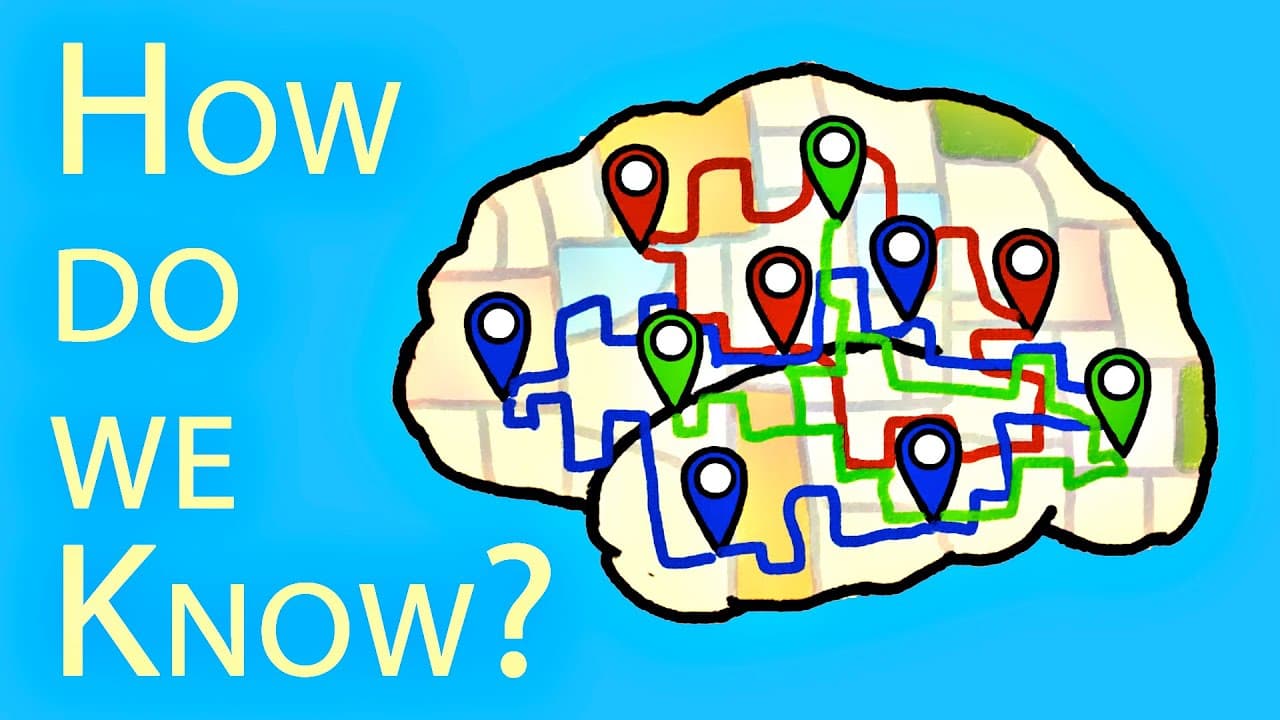
Which Parts Of The Brain Do What?
TL;DR
Understanding brain activity through lesions, fMRI, and networks reveals complexities in brain function.
Transcript
In 1861, a patient arrived at a Paris hospital saying the syllable “Tan” over and over again. His doctor, Paul Broca, found that the man could understand language without a problem; he just couldn’t say anything — besides Tan. When the patient unexpectedly died a few days later, Broca dissected his brain and found a small bit of damage – called a l... Read More
Key Insights
- 😯 Paul Broca's lesion method linked brain damage with speech generation in 1861.
- 😨 Scientists correlated brain areas with tasks like memory and fear before fMRI machines.
- 🧠 fMRI revealed widespread brain activation during tasks, showing coordinated efforts.
- 🙊 Communication networks explain why some with broken areas can speak and others can't.
- 🧠 Combining lesion data with fMRI scans provides a more comprehensive map of brain functions.
- 🧠 Limitations exist in correlating brain activity with mental tasks using single methods.
- 🧠 Recent studies combine lesion data and fMRI scans to understand brain functions comprehensively.
Install to Summarize YouTube Videos and Get Transcripts
Explore YouTube Video Summarizer or Get YouTube Transcript Extractor
Questions & Answers
Q: How did Paul Broca's lesion method contribute to understanding brain function?
Broca's lesion method linked specific cognitive deficits to damaged brain areas, leading to insights into speech generation and other mental tasks.
Q: What did the development of fMRI machines reveal about brain activity?
fMRI machines showed that large areas of the brain activate during tasks, indicating coordinated effort and the importance of long-range communication fibers.
Q: How did researchers combine lesion data with fMRI scans to map brain activity?
By scanning individuals with brain lesions performing tasks, researchers identified active and inactive brain areas, creating a map of brain functions.
Q: What limitations do both lesion data and fMRI scans have in understanding brain function?
Although useful, lesion data and fMRI scans may not always accurately pinpoint brain regions critical to specific tasks, requiring a combination of methods for comprehensive insights.
Summary & Key Takeaways
-
In 1861, Paul Broca discovered that damage to the left frontal lobe affected speech generation.
-
Scientists correlated brain areas with mental tasks like memory in the hippocampus and fear in the amygdala.
-
The development of fMRI machines revealed widespread brain activation and communication network importance.
Read in Other Languages (beta)
Share This Summary 📚
Summarize YouTube Videos and Get Video Transcripts with 1-Click
Try YouTube Summary with ChatGPT & Claude or YouTube Transcript Generator
Explore More Summaries from MinuteEarth 📚


Summarize YouTube Videos and Get Video Transcripts with 1-Click
Try YouTube Summary with ChatGPT & Claude or YouTube Transcript Generator