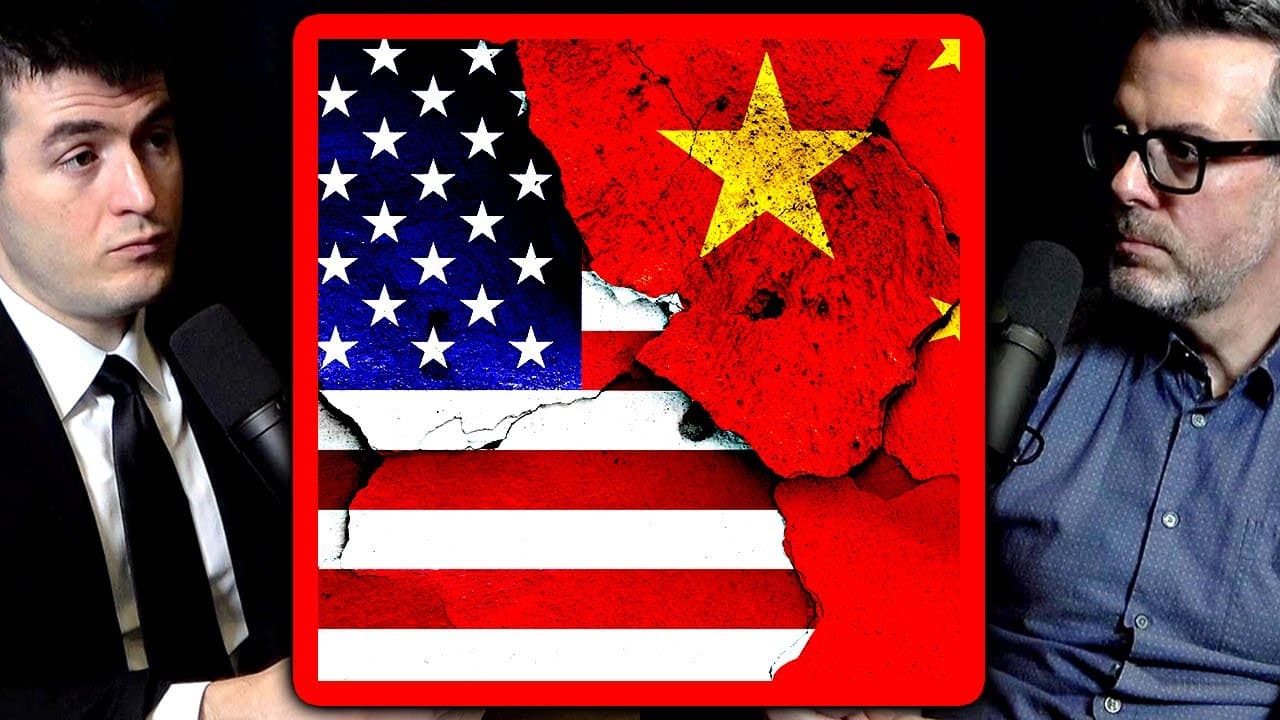
War with China | Chris Blattman and Lex Fridman
TL;DR
In order to avoid a full-blown war with China in the future, increasing interdependence and checks and balances on power can reduce incentives for conflict.
Transcript
Beacon of compromise and War let me ask you about one last one which may be in the future China and the United States yeah how do we avoid an all-out Hot War with this other superpower in the next decade 50 years 100 years because sometimes when it's quiet at night I can hear in the long distance the drums of War beating yeah you know in the second... Read More
Key Insights
- 😚 Increasing interdependence and closer relationships can reduce the likelihood of war.
- 🧑🏭 Economic, social, and cultural interdependence act as a cushion against conflict.
- 🫱 China's wider distribution of power and shared leadership help reduce the risks of war.
- 🇺🇸 Bridging the cultural gap between China and the United States is crucial for better understanding and cooperation.
- 🖤 A lack of understanding of Chinese politics and insularity among Westerners is a concern.
- 🇺🇸 The significant Chinese immigration to the United States has facilitated better understanding.
- ✌️ Maintaining the current level of interdependence is essential for peace.
Install to Summarize YouTube Videos and Get Transcripts
Explore YouTube Video Summarizer or Get YouTube Transcript Extractor
Questions & Answers
Q: How can increasing interdependence between China and the United States reduce the chances of war?
In a globally integrated world, intertwined economies, social relationships, and shared ideologies create disincentives for conflict. These interdependencies make both sides consider the well-being of the other party, reducing the willingness to engage in war.
Q: What factors contribute to the insulation against war between China and the United States?
Economic nationalism, potential sanctions fallout, or a closer Chinese alliance with Russia could undermine the insulation provided by economic, social, and cultural interdependence. Maintaining these interdependencies is crucial for keeping the peace.
Q: How does the collective sharing of power in China act as insulation against future war?
China's power structure is not as centralized or personalized as some regimes, like Russia. The wider distribution of power in China reduces the risks of war by preventing the concentration of power in the hands of a few individuals.
Q: What is the cultural gap between China and the United States, and why is it a concern?
There is a significant cultural gap between the two superpowers, with a lack of understanding and cultural exchange. Bridging this gap through cultural exploration, movies, and increased understanding is necessary to enhance cooperation and prevent misunderstandings.
Summary & Key Takeaways
-
Increasing interdependence and closer relationships between China and the United States can decrease the likelihood of war.
-
Social and cultural entwinement, as well as ideological alignment, can act as disincentives for conflict.
-
The insulation provided by economic, social, and cultural interdependence between the two countries is a valuable cushion against war.
Read in Other Languages (beta)
Share This Summary 📚
Summarize YouTube Videos and Get Video Transcripts with 1-Click
Try YouTube Summary with ChatGPT & Claude or YouTube Transcript Generator
Explore More Summaries from Lex Clips 📚




Summarize YouTube Videos and Get Video Transcripts with 1-Click
Try YouTube Summary with ChatGPT & Claude or YouTube Transcript Generator