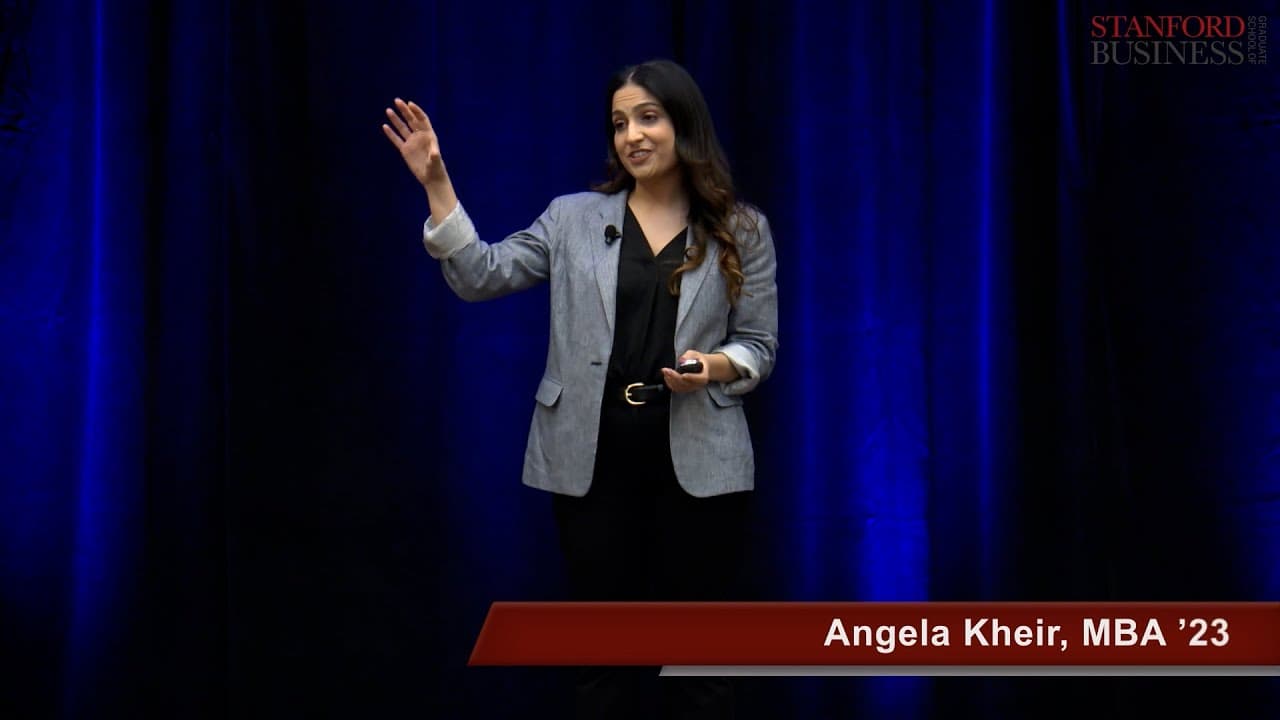
Freedom Pass: Does Everyone Have The Same Freedom To Travel? | Angela Kheir, MBA ’23
TL;DR
Millions of people with "second-class passports" face restrictions, delays, and financial strain while navigating the cumbersome visa process, hindering their ability to travel freely and participate in important life events.
Transcript
[MUSIC] March 31st, 2020, our world shrank from nearly 200 countries to 1. Suddenly, we were all trapped, unable to move beyond quarantines and border closures. Do you remember how painful that was, being separated from our families and loved ones for what felt like eternity? Missing birthdays, missing graduations, missing weddings, missing funeral... Read More
Key Insights
- 🥶 Passport isolation creates a divide between those who have access to visa-free travel and those who face restrictions.
- 🈸 The visa application process involves complex requirements, lengthy procedures, and financial burdens.
- 👯 Millions of people, particularly from Asian and African countries, are affected by the limitations imposed by the current passport system.
- 💦 Some governments and startups are working towards improving the visa system, aiming to streamline processes and increase visitor-friendly policies.
- ❓ Enhancements in visa processes can contribute to economic growth, tourism, and job creation globally.
- 💱 The status quo can and should be changed with increased awareness, collaboration, and action.
- 🛂 The arbitrary classification of passports is a solvable issue given its relatively recent invention, and scholars are questioning the existing system.
Install to Summarize YouTube Videos and Get Transcripts
Explore YouTube Video Summarizer or Get YouTube Transcript Extractor
Questions & Answers
Q: How does having a passport from a certain country affect travel options?
Passports from different countries grant varying degrees of visa-free access to other nations. Those with "first-class passports" enjoy greater travel freedom, while individuals with "second-class passports" face numerous restrictions and visa requirements.
Q: What challenges are associated with the visa application process?
Obtaining a visa involves extensive paperwork, appointments, interviews, and fees. It requires careful planning, time off work, and can be mentally and financially burdensome. Visa approvals are not guaranteed and reapplication may be necessary.
Q: How does the visa system impact personal and professional lives?
The visa process can hinder education, career opportunities, and relationships. Missed school trips, business travels, family events, and even being denied access to one's own country due to transit restrictions all highlight the challenges faced by those with "second-class passports."
Q: Are there any solutions to improve the visa system?
Efforts to make visa processes faster, cheaper, and more digitized, while maintaining security, have been made by governments and startups. Such changes not only benefit travelers but also contribute to economic growth, tourism, and job creation.
Summary & Key Takeaways
-
The speaker discusses the limitations of having a "second-class passport," using her own experience with a Lebanese passport as an example.
-
Obtaining a visa involves extensive preparation, application, interviews, and significant financial costs.
-
The visa process is time-consuming, uncertain, and can result in missed opportunities and events.
Read in Other Languages (beta)
Share This Summary 📚
Summarize YouTube Videos and Get Video Transcripts with 1-Click
Try YouTube Summary with ChatGPT & Claude or YouTube Transcript Generator
Explore More Summaries from Stanford Graduate School of Business 📚


Summarize YouTube Videos and Get Video Transcripts with 1-Click
Try YouTube Summary with ChatGPT & Claude or YouTube Transcript Generator