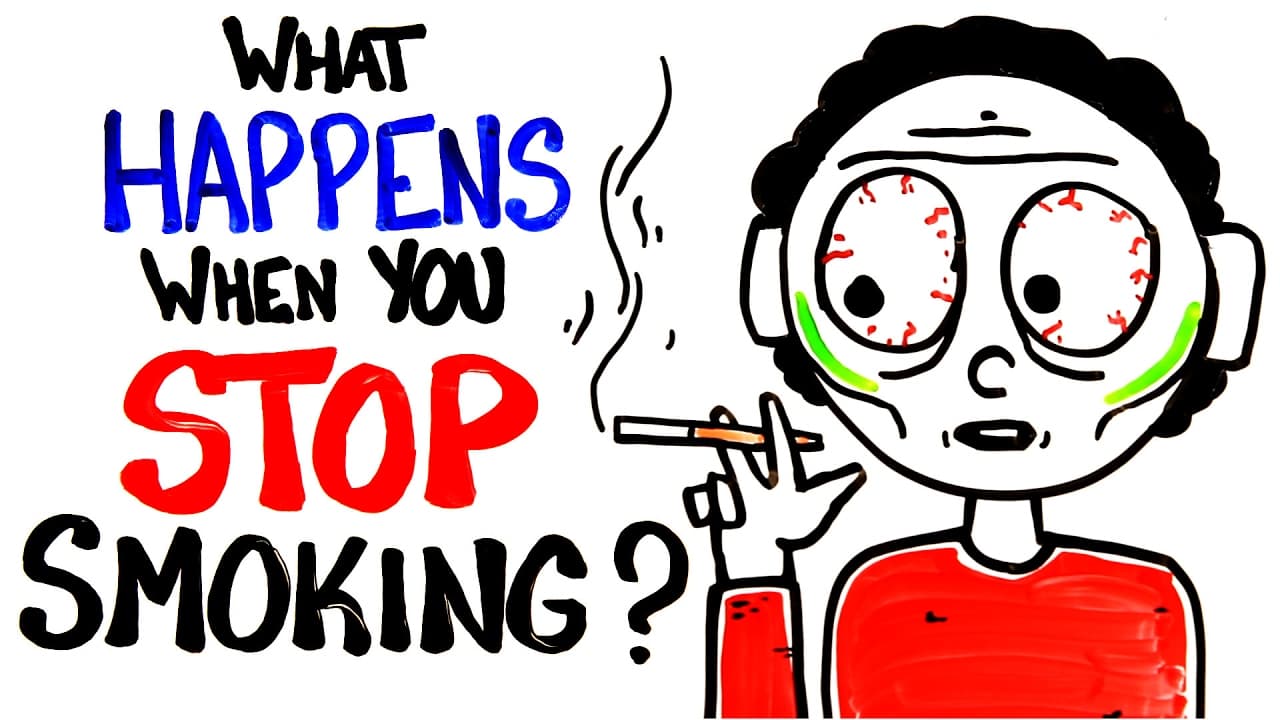
What Happens When You Stop Smoking?
TL;DR
Quitting smoking improves blood pressure, heart rate, and oxygen levels, reduces the risk of diseases, and improves overall health.
Transcript
with over 7,000 chemicals released each time you light a cigarette it's no surprise that smoking is one of the leading causes of preventable deaths worldwide but with 1.3 billion people actively smoking what actually happens when you stop smoking within the first 20 minutes of quitting your blood pressure and heart rate return to normal this is bec... Read More
Key Insights
- 🥰 Quitting smoking leads to immediate health benefits, such as normalized blood pressure and heart rate, improved oxygen levels, and decreased risk of developing coronary diseases.
- ❤️🩹 The regrowth of nerve endings and repair of damaged cilia in the lungs occur within a few months of quitting, providing relief from symptoms like coughing and shortness of breath.
- 🥰 Quitting smoking significantly reduces the risk of developing type 2 diabetes, cancer, cardiovascular diseases, and heart attack.
- 🥰 Prolonged quitting leads to a decreased risk of lung cancer and heart disease, improving overall health and longevity.
Install to Summarize YouTube Videos and Get Transcripts
Explore YouTube Video Summarizer or Get YouTube Transcript Extractor
Questions & Answers
Q: How does quitting smoking affect blood pressure and heart rate?
Quitting smoking helps normalize blood pressure and heart rate by reducing the effects of nicotine, which increases heart rate and narrows blood vessels.
Q: Why does coughing increase 24 hours after quitting?
Coughing increases as the body clears out toxins from the lungs, a process that intensifies after quitting smoking.
Q: How does quitting smoking affect the risk of developing coronary artery diseases?
Within 24 hours of quitting, the risk of developing various coronary artery diseases decreases due to the removal of harmful chemicals and toxins from the body.
Q: How long does it take for damaged taste buds to regain their sensitivity?
Around 48 hours after quitting, damaged taste buds begin to regrow, allowing for the regaining of taste sensitivity and making food taste better.
Q: What are the symptoms of nicotine withdrawal, and when do they peak?
Nicotine withdrawal symptoms, such as headaches, nausea, cramps, anxiety, and depression, peak around 72 hours after quitting.
Q: How long does it take for the lungs to repair after quitting smoking?
Within three to nine months of quitting, damaged cilia in the lungs start to regenerate, improving respiratory function and reducing symptoms like coughing and shortness of breath.
Q: How long does it take for the risk of developing heart disease to decrease?
Around one year after quitting smoking, the risk of developing heart disease decreases significantly due to the reduction in arterial wall deposits.
Q: How does quitting smoking affect the risk of lung cancer?
In 10 years, the risk of developing lung cancer decreases by half compared to someone who continues to smoke.
Summary & Key Takeaways
-
Within 20 minutes of quitting smoking, blood pressure and heart rate return to normal, and extremities regain their normal temperature.
-
After 2 hours, nicotine cravings begin, causing moodiness, drowsiness, and difficulty sleeping.
-
Eight hours after quitting, inhaled carbon monoxide clears, allowing oxygen levels to return to normal.
Read in Other Languages (beta)
Share This Summary 📚
Summarize YouTube Videos and Get Video Transcripts with 1-Click
Try YouTube Summary with ChatGPT & Claude or YouTube Transcript Generator
Explore More Summaries from AsapSCIENCE 📚





Summarize YouTube Videos and Get Video Transcripts with 1-Click
Try YouTube Summary with ChatGPT & Claude or YouTube Transcript Generator