Semantic SEO Podcast I Learn from the expert @IMuhammadHamidKhan
TL;DR
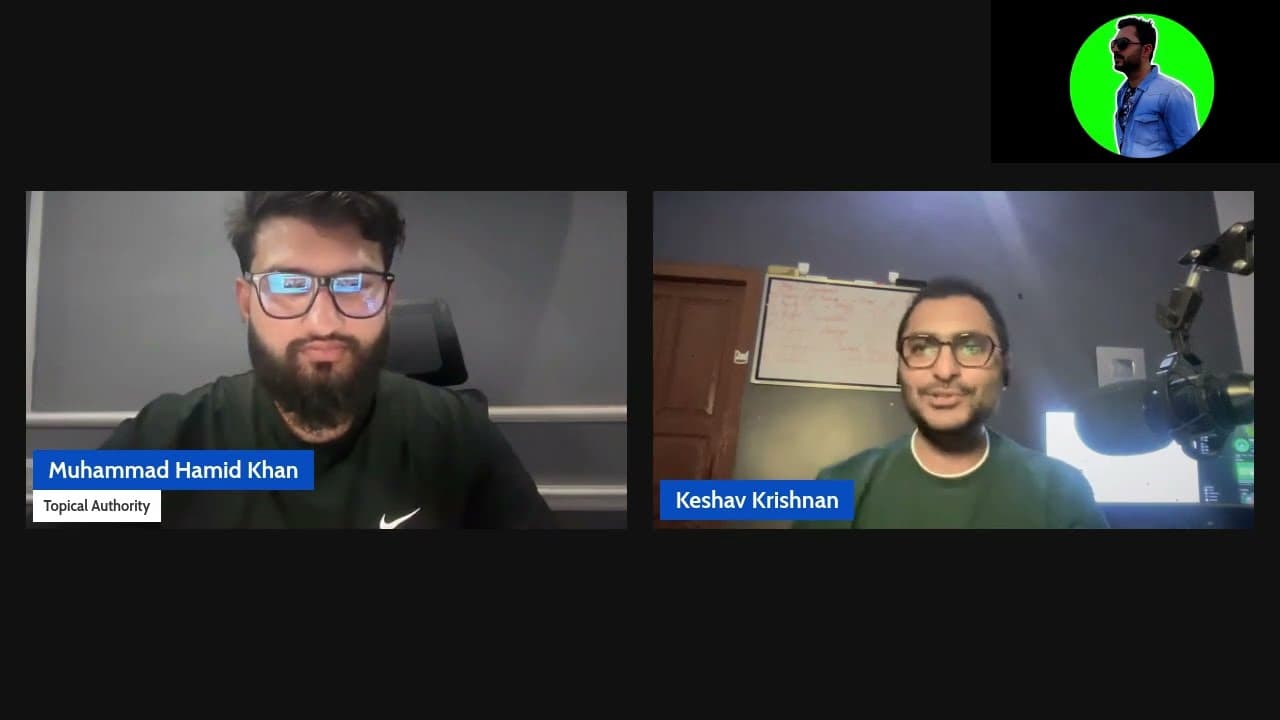
Muhammad Hamid Khan discusses the evolution and strategies of Semantic SEO.
Transcript
so hi everyone welcome to learn SE uh today's session is going to be an awesome SE session because you know uh because we have some important guest and I I'm bit confident that the session is going to be DME crazy for you today because it's going to be all about semantics so we have a guest today and he is one of the semanti... Read More
Key Insights
- Semantic SEO is rooted in understanding Google's algorithms, focusing on entity-oriented search and building relationships between entities.
- Muhammad Hamid Khan emphasizes the importance of continuous learning and testing in SEO to adapt to updates and trends.
- Creating a topical map and a semantic content network is crucial for establishing topical authority and optimizing content.
- The shift from traditional SEO practices to entity-based approaches highlights the need for deeper content connections and relevance.
- Technical SEO remains vital, with a focus on site architecture, navigation, and preserving page rank for efficient crawling.
- The importance of balancing page rank, authoritative content, and trustworthy backlinks is emphasized for effective SEO strategies.
- The future of SEO involves a combination of traditional and semantic approaches, tailored to specific website needs.
- Muhammad Hamid Khan encourages knowledge sharing and collaboration across borders, emphasizing professional relationships over political differences.
Install to Summarize YouTube Videos and Get Transcripts
Explore YouTube Video Summarizer or Get YouTube Transcript Extractor
Questions & Answers
Q: What is Semantic SEO and why is it important?
Semantic SEO is a logic-based approach derived from Google patents and research papers. It focuses on understanding how Google interprets and ranks content by building relationships between entities. This approach is crucial as it aligns with Google's evolving algorithms, ensuring content remains relevant and authoritative.
Q: How did Muhammad Hamid Khan start his journey in SEO?
Muhammad Hamid Khan began his SEO journey in 2015, working with local companies in Lahore, Pakistan. He initially focused on link building before expanding into technical SEO, schemas, and content marketing. His continuous experimentation and learning led him to explore semantic SEO, which transformed his approach.
Q: What role does a topical map play in Semantic SEO?
A topical map is essential in Semantic SEO as it helps organize content around a central theme, establishing topical authority. It involves mapping out entities, attributes, and relationships, ensuring content is comprehensive and relevant. This approach aids in creating a semantic content network that enhances search visibility.
Q: How does Semantic SEO differ from traditional SEO?
Semantic SEO focuses on understanding and leveraging entity relationships, while traditional SEO often emphasizes keywords and backlinks. Semantic SEO requires a deeper understanding of Google's algorithms and user intent, aiming to create content that is contextually relevant and interconnected, rather than solely keyword-focused.
Q: What challenges did Khan face during the evolution of SEO?
Khan faced challenges with algorithm updates that affected site rankings. He had to continuously adapt his strategies, learning about new concepts like entity-oriented search. The lack of a clear roadmap for Semantic SEO required extensive research and experimentation to understand and implement effective techniques.
Q: How can beginners start learning Semantic SEO?
Beginners should start by studying expert case studies and frameworks, such as those by Koray Gubur. Engaging with available online resources, enrolling in courses, and experimenting with their own projects can help build a foundational understanding. Continuous learning and adaptation are key to mastering Semantic SEO.
Q: What is the significance of entity-attribute-value in SEO?
The entity-attribute-value model is fundamental in understanding how Google organizes information. Entities are defined by their attributes and values, which Google uses to build relationships and index content. Mastering this model helps SEO practitioners create content that aligns with Google's indexing and ranking processes.
Q: What future trends does Khan foresee in the SEO industry?
Khan anticipates a blend of traditional and semantic SEO strategies, tailored to specific website needs. He emphasizes the importance of staying updated with algorithm changes and integrating various tactics to maintain relevance. The focus will be on creating high-quality, authoritative content that meets both user and search engine expectations.
Summary & Key Takeaways
-
Muhammad Hamid Khan shares his journey in SEO, highlighting the transition from traditional methods to semantic SEO. He discusses the importance of entity-oriented search and building a knowledge base for effective content optimization.
-
The podcast emphasizes the need for a strategic approach to SEO, combining technical, on-page, and off-page elements. Khan stresses the significance of a topical map and semantic content network in establishing authority.
-
Future SEO trends are discussed, with a focus on the evolving nature of search algorithms. Khan advocates for a balanced approach, integrating traditional tactics with semantic strategies to achieve sustainable results.
Read in Other Languages (beta)
Share This Summary 📚
Summarize YouTube Videos and Get Video Transcripts with 1-Click
Try YouTube Summary with ChatGPT & Claude or YouTube Transcript Generator