Concentrated winding | Distribution factor -1/2 | Synchronous Machines | Lec-10
TL;DR
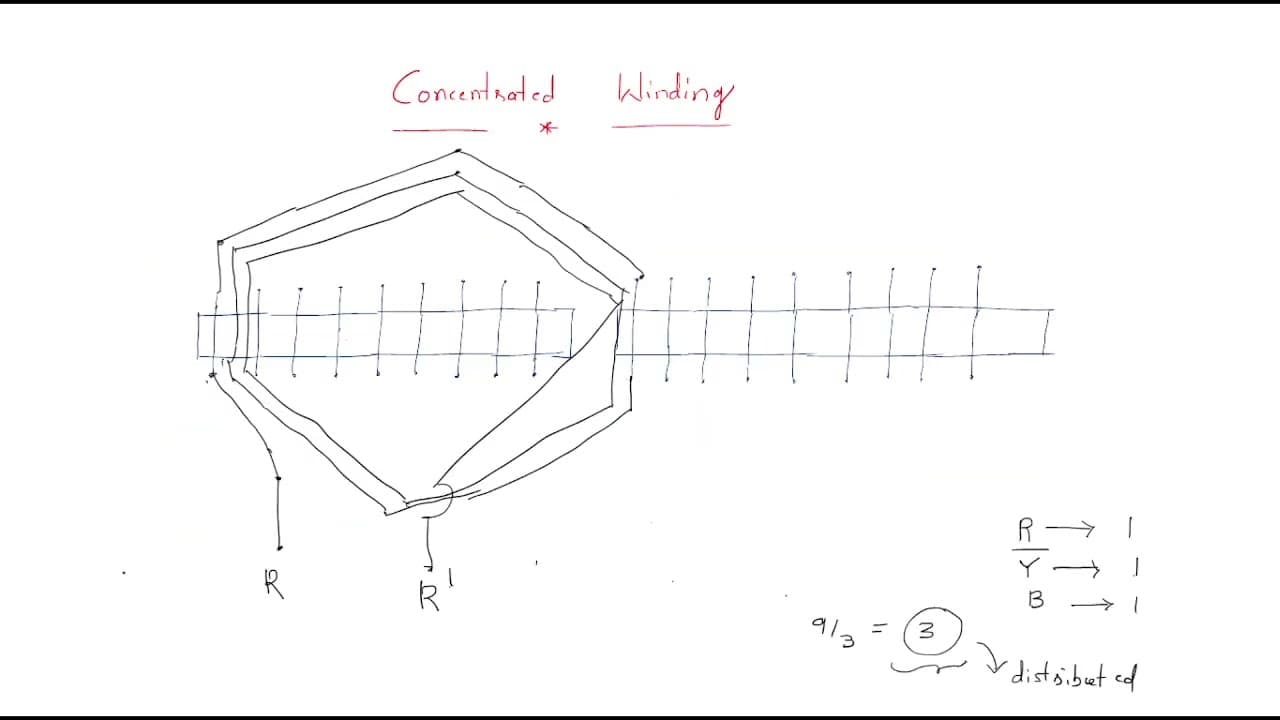
Concentrated winding involves all phases connected to a single slot, differing from distributed winding.
Transcript
hello everyone in this session we will discuss about the next type of finding that is the concentrated wine we already have some discussion on distributed winding the distributed winding the name itself all the slots are distributed equally so here next winding is the concentrated winding okay so here concentrated winding means as simply a simple p... Read More
Key Insights
- 🦥 Concentrated winding utilizes a single slot for each phase, thereby simplifying the winding layout and affecting EMF characteristics.
- 🎰 The phase spread and slot angle are pivotal for determining the distribution factor KD and its implications on machine efficiency.
- 🟰 In concentrated winding, the KD value is typically equal to 1, indicating an efficient EMF distribution.
- 💨 In contrast, distributed winding usually results in KD values less than 1, reflecting a more complex EMF interaction.
- 🎰 The relationship between KD and the harmonic distributions is critical for analyzing machine behavior under load conditions.
- 💨 Greater slot per pole for a phase indicates a trend towards distributed winding, while a value of 1 suggests concentrating winding configurations.
- ⚡ The choice between concentrated and distributed winding affects the overall electrical performance and maintains voltage levels effectively.
Install to Summarize YouTube Videos and Get Transcripts
Explore YouTube Video Summarizer or Get YouTube Transcript Extractor
Questions & Answers
Q: What is the main difference between concentrated and distributed winding?
The key distinction between concentrated and distributed winding lies in how the slots are utilized. In concentrated winding, each phase is associated with a single slot, enhancing certain electrical properties. Conversely, distributed winding spreads slots across phases, leading to varied EMF distributions. This influences efficiency and performance metrics in electrical machinery.
Q: How is the distribution factor KD calculated?
The distribution factor KD is calculated as the ratio of the induced EMFs from distributed versus concentrated winding configurations. Mathematically, it is expressed as the vector sum of the induced EMFs divided by their arithmetic sum. This factor helps quantify the efficiency of winding configurations in electrical machines.
Q: Why is the nth harmonic distribution factor important?
The nth harmonic distribution factor is crucial because it affects the performance and efficiency of electrical machines under various operating conditions. It informs how harmonics influence output voltage, impacting machine reliability and operational stability. Thus, understanding this factor helps engineers optimize machine design.
Q: How does phase spread affect KVA output?
Phase spread directly influences the KVA output of electrical machines as it modifies the distribution factor KD. A larger phase spread typically enhances the efficiency and voltage magnitude, thereby increasing the machine's overall KVA rating. Engineers must consider this relationship for optimal machine performance.
Summary & Key Takeaways
-
Concentrated winding connects all phases of an electrical machine to one slot, resulting in different EMF characteristics compared to distributed winding.
-
The distribution factor KD is significant in understanding the efficiency of electrical winding configurations, with concentrated winding typically yielding a KD value of 1.
-
The arrangement and phase spread in concentrated winding influence the KVA output and overall performance of electrical machines.
Read in Other Languages (beta)
Share This Summary 📚
Summarize YouTube Videos and Get Video Transcripts with 1-Click
Try YouTube Summary with ChatGPT & Claude or YouTube Transcript Generator