What Is Alejandro Aravena's Architectural Philosophy?
TL;DR
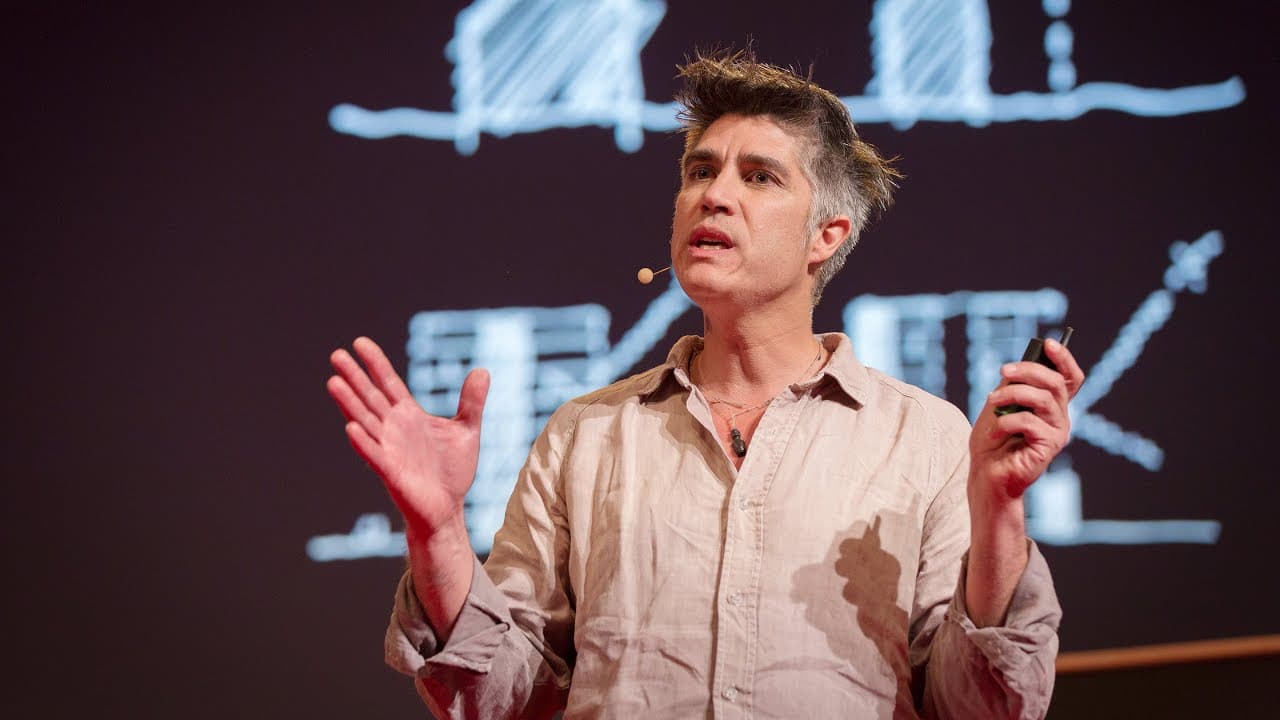
Alejandro Aravena's architectural philosophy emphasizes the power of participatory design, allowing communities to actively engage in the building process. By addressing urbanization, sustainability, and disaster resilience, he advocates for solutions that leverage local capabilities and resources, fostering innovative and adaptable designs that meet the needs of residents.
Transcript
If there's any power in design, that's the power of synthesis. The more complex the problem, the more the need for simplicity. So allow me to share three cases where we tried to apply design's power of synthesis. Let's start with the global challenge of urbanization. It's a fact that people are moving towards cities. and even if counterintuitive, i... Read More
Key Insights
- 🌆 Urbanization and poverty: Urbanization is a global challenge, with a projected increase in people living in cities, particularly those under the poverty line. Solutions must be found to provide affordable housing and infrastructure for these populations.
- 🏠 Participatory design: In the case of accommodating 100 families in Chile, a participatory design process was used to understand constraints and find innovative solutions. This approach allowed for the identification of the "hard half" of housing that could be addressed with public funding, while families took on the rest.
- 🌍 Sustainability: Design can contribute to sustainability by using common sense principles. For example, in the design of an innovation center, an open atrium and cross-ventilation were incorporated to reduce energy consumption for cooling, resulting in a significant reduction in energy use.
- 🔑 Channeling building capacity: To address the challenge of rapid urbanization, design should focus on empowering communities to build for themselves. By providing the necessary framework and resources, slums and informal settlements can be transformed into functional communities.
- 🌊 Natural disaster resilience: In the case of reconstructing the Constitución city in Chile after an earthquake and tsunami, a participatory design process was utilized to find solutions. Instead of resisting the force of nature, a forest was introduced as a geographical response to dissipate energy and prevent flooding.
- 💰 Efficient use of resources: Design's power of synthesis lies in making a more efficient use of resources, particularly coordination. By identifying overlapping projects and integrating them, cost savings of millions of dollars can be achieved.
- 💡 Importance of the right question: Participatory design is not just about finding answers but also about identifying the right questions. Asking the community what problems they want to address ensures that the solutions are relevant and effective.
- 🏗️ Design shaping life: Ultimately, the purpose of design is to shape and mold life itself. By considering the needs and capabilities of communities, design can improve living conditions and empower individuals and communities.
Install to Summarize YouTube Videos and Get Transcripts
Explore YouTube Video Summarizer or Get YouTube Transcript Extractor
Questions & Answers
Q: What is the "3S" menace mentioned in the video?
The "3S" menace refers to the challenges of scale, speed, and scarcity that arise from the global challenge of urbanization. The rapid movement of people towards cities, particularly those living in poverty, presents a significant problem that requires a simplified solution.
Q: How does the design approach to solving the urbanization challenge differ from traditional methods?
The design approach discussed in the video involves including the families affected by the urbanization challenge in the design process. By understanding the constraints and involving the community, innovative solutions can be found. Instead of providing small, individual houses, the approach focuses on providing a frame or infrastructure for families to expand on and build upon collectively.
Q: How can design contribute to sustainability?
Design can contribute to sustainability by using common sense and rethinking traditional building methods. For example, in the case of the Angelini Innovation Center, the design team turned the typical office building concept inside out. By creating an open atrium, controlling light, and preventing direct sun radiation, they were able to significantly reduce energy consumption. Sustainability is achieved through the rigorous use of common sense in design.
Q: How did design contribute to the reconstruction efforts in Constitución after the earthquake and tsunami?
The design approach in Constitución involved a participatory process with the community. Instead of simply protecting the city against future tsunamis, the design team addressed other issues identified by the community, such as annual flooding and the lack of public space. By introducing a forest that would dissipate the energy of nature and provide public access to the river, the design offered a comprehensive solution to multiple challenges. The coordination of three separate projects also helped save four million dollars in costs.
Summary & Key Takeaways
-
The global challenge of urbanization requires simplicity and innovative design solutions, as millions of people are moving to cities, many of whom will live in poverty.
-
Participatory design processes can lead to more effective and sustainable solutions, as seen in the case of building affordable housing in Iquique, Chile.
-
Design can address natural disasters by finding alternative solutions, such as creating a forest to dissipate the energy of tsunamis and provide public space in Constitución, Chile.
Read in Other Languages (beta)
Share This Summary 📚
Summarize YouTube Videos and Get Video Transcripts with 1-Click
Try YouTube Summary with ChatGPT & Claude or YouTube Transcript Generator
Explore More Summaries from TED 📚

Summarize YouTube Videos and Get Video Transcripts with 1-Click
Try YouTube Summary with ChatGPT & Claude or YouTube Transcript Generator