The Insect Nothing Messes With: Meet the Velvet Ant
TL;DR
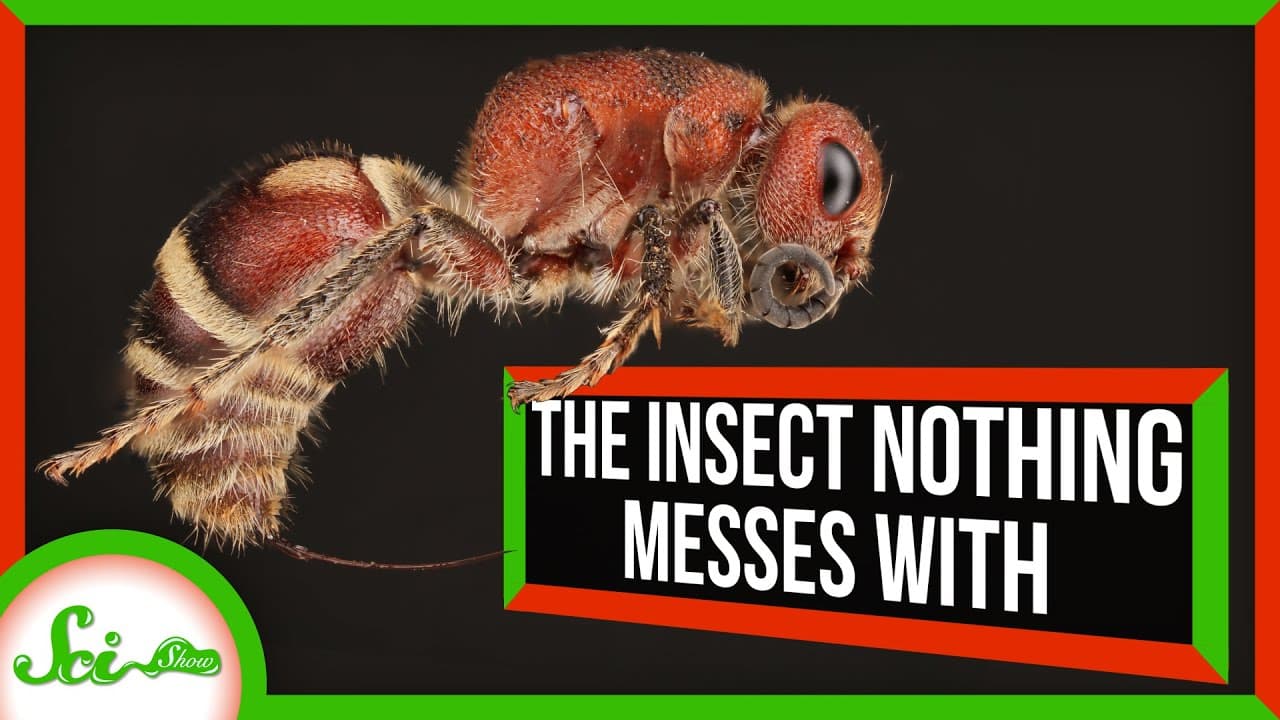
Velvet ants are wasps with a potent stinger, tough exoskeleton, bright coloring, warning signals, and mimicry, making them virtually immune to predators.
Transcript
Thanks to Brilliant for supporting this episode of SciShow. Go to Brilliant.org/SciShow to check out their Knowledge and Uncertainty course! [♩ INTRO] No one wants to be eaten. That’s why the animal world is full of adaptations to stop predators — like hard shells, bright markings, and painful stings. Still, most creatures regularly end up on someo... Read More
Key Insights
- 🤰 Velvet ants, although called ants, are actually wasps with an array of defenses that make them nearly invulnerable.
- 📡 The combination of a long stinger, tough exoskeleton, slippery body, vivid coloring, and alarm signals make velvet ants unappetizing and unapproachable to most predators.
- 🤰 Mimicry among velvet ant species and their bold coloration serve as warnings to predators not to mess with them.
- 🪺 Velvet ants' unique defense mechanisms have evolved to cope with their parasitic lifestyle and the need to protect themselves while laying eggs in other insects' nests.
Install to Summarize YouTube Videos and Get Transcripts
Explore YouTube Video Summarizer or Get YouTube Transcript Extractor
Questions & Answers
Q: What physical defenses do velvet ants possess?
Velvet ants have a long stinger, a tough exoskeleton that is hard to crush, a round and slippery body that is difficult to bite, and bright coloring serving as warning signals.
Q: How do velvet ants communicate their unpalatability to predators?
Velvet ants produce loud squeaking noises by rubbing a section of their abdomen and release smelly alarm pheromones to warn and deter potential predators.
Q: How do velvet ants employ mimicry to defend themselves?
Velvet ants engage in Müllerian mimicry, where multiple species mimic each other's coloring to collectively warn predators, discouraging them from preying on any velvet ant.
Q: What is the reproductive strategy of velvet ants?
Velvet ants are parasitic insects that lay their eggs inside nests of other bees and wasps, feeding on the unsuspecting host's offspring when their larvae hatch.
Summary & Key Takeaways
-
Velvet ants, actually wasps, possess a formidable defense system with a long stinger, tough exoskeleton, and slippery body that deters predators.
-
They produce warning signals such as squeaking noises and smelly alarm pheromones to communicate their unpalatability.
-
Velvet ants use mimicry and aposematic signals to train predators not to mess with them, making them one of the most effective defenders in nature.
Read in Other Languages (beta)
Share This Summary 📚
Summarize YouTube Videos and Get Video Transcripts with 1-Click
Try YouTube Summary with ChatGPT & Claude or YouTube Transcript Generator
Explore More Summaries from SciShow 📚
Summarize YouTube Videos and Get Video Transcripts with 1-Click
Try YouTube Summary with ChatGPT & Claude or YouTube Transcript Generator