Kayaking Over a Waterfall | Science of Stupid: Ridiculous Fails
TL;DR
Kayaker sets world record by successfully kayaking over a dangerous 186-foot waterfall.
Transcript
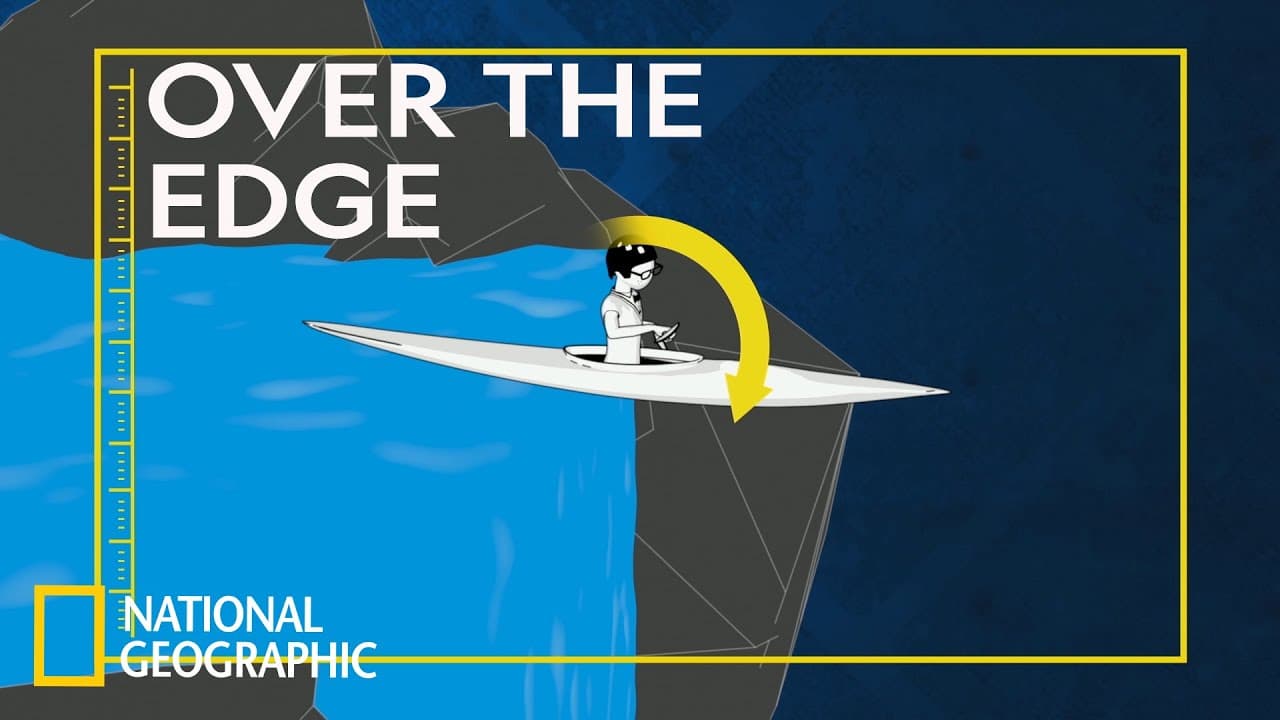
- I think it's time we the scientifically challenged and concentrate on one of science's heroes, Tyler Bradt, kayaker extraordinaire. He wants to kayak over this, Palouse Falls in Washington. Thousands of cubic feet of water pass over this fall every second and drop 186 feet to the pool below. To consider kayaking over this, he must either be a few... Read More
Key Insights
- 🖐️ Gravity plays a crucial role in generating angular velocity for kayakers attempting dangerous stunts.
- 🤪 Correct speed and rotation are essential to minimize impact force when going over a waterfall.
- 💆 Maintaining stability by aligning the center of mass with the center of buoyancy is vital for kayaking success.
- 🐎 Hydrodynamic drag can be minimized by mastering the correct speed and angle while kayaking over waterfalls.
- 📐 Proper understanding of science, particularly angular velocity, is crucial for kayakers undertaking risky endeavors.
- 🥂 Cheering for daredevils should always be accompanied by acknowledging the risks and expertise involved.
- 🦶 Safety should always come first, and attempting dangerous records like kayaking over 186-foot waterfalls should be approached with caution.
Install to Summarize YouTube Videos and Get Transcripts
Explore YouTube Video Summarizer or Get YouTube Transcript Extractor
Questions & Answers
Q: What challenges did Tyler Bradt face when kayaking over the 186-foot waterfall?
Tyler had to navigate the correct speed to generate angular velocity, minimize impact force, and maintain stability by aligning the center of mass with the center of buoyancy.
Q: How did gravity play a crucial role in Tyler's attempt to kayak over the waterfall?
Gravity played a key role in generating the necessary angular velocity for Tyler to rotate the kayak and cut through the water effectively while minimizing hydrodynamic drag.
Q: Why is kayaking over a 186-foot waterfall considered extremely dangerous?
Kayaking over such a massive waterfall poses significant risks due to the impact force, potential loss of stability, and the need to navigate angular velocity correctly to avoid injury or worse.
Q: What lessons can aspiring kayakers learn from Tyler Bradt's record-setting attempt?
Aspiring kayakers can learn the importance of understanding gravity, angular velocity, and stability when attempting risky stunts, highlighting the need for proper preparation and skill.
Summary & Key Takeaways
-
Tyler Bradt attempts to kayak over the Palouse Falls in Washington, a 186-foot waterfall.
-
He must master the correct speed to rotate the kayak, minimize impact force, and maintain stability.
-
Despite the risks and science behind it, the dangerous stunt sets a new world record.
Read in Other Languages (beta)
Share This Summary 📚
Summarize YouTube Videos and Get Video Transcripts with 1-Click
Try YouTube Summary with ChatGPT & Claude or YouTube Transcript Generator
Explore More Summaries from National Geographic 📚



Summarize YouTube Videos and Get Video Transcripts with 1-Click
Try YouTube Summary with ChatGPT & Claude or YouTube Transcript Generator