Why Do We Keep Comparing Ourselves to Others?
TL;DR
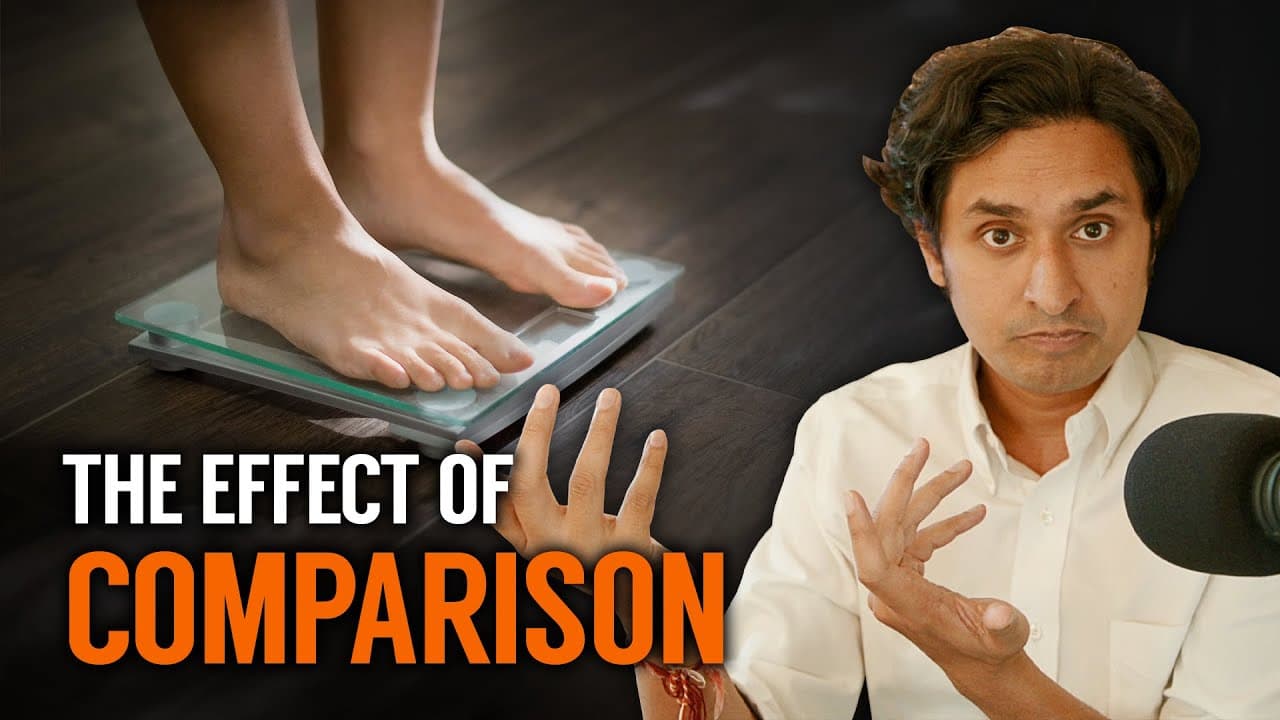
Comparison often stems from a desire to gauge our success and can lead to feelings of inadequacy and decreased motivation. The rise of social media amplifies this issue, as we frequently find ourselves measuring our lives against curated versions of others' experiences. Understanding the nature of these comparisons and the role of our ego can help us mitigate their negative effects.
Transcript
uh elephants are so much stronger than I am oh that's sag like I wish I was as strong as an elephant or do you ever feel Superior to an ant right do you ever feel like oh my God I'm so awesome I'm gonna live so long I'm so good at like playing FPS games and this ant on the sidewalk that ant sucks man I'm the best thing I'm better than every single ... Read More
Key Insights
- 🥺 Comparison is pervasive and addictive, leading to negative emotions and decreased motivation.
- 🔉 Social media has made it easier to compare ourselves to others, creating an environment that fosters comparison.
- 🥺 Upward comparisons can serve as a roadmap for improvement, while downward comparisons are emotional coping strategies that do not lead to personal growth.
- ❎ Understanding the fairness and justification of comparisons can help reduce their negative effects.
- 🤪 Comparisons are fueled by the ego, which activates during moments of negative emotions.
- 🤪 Challenging comparisons and focusing on internal emotional states can help disarm the ego and reduce comparison tendencies.
- ❓ Comparison should be recognized as an inappropriate and unhelpful behavior in most situations.
Install to Summarize YouTube Videos and Get Transcripts
Explore YouTube Video Summarizer or Get YouTube Transcript Extractor
Questions & Answers
Q: Why do people compare themselves to others?
Humans have a natural tendency to compare themselves to others as a way to gauge their own success, identify areas for improvement, or boost their self-esteem through downward comparisons.
Q: How does social media contribute to the comparison epidemic?
Social media provides access to intimate details of other people's lives, creating an illusion that we are in the same league as those we compare ourselves to. This leads to unfair and unrealistic comparisons.
Q: How can understanding the reasons behind comparison help reduce its negative effects?
By recognizing that comparisons are often unfair and based on selective attributes, we can challenge their validity and understand that they do not define our worth or potential.
Q: What is the role of the ego in making comparisons?
The ego, or ahamkar, is the part of our mind that makes comparisons. It aims to protect us from negative emotions, but its comparisons can often lead to feelings of inadequacy and decreased motivation.
Key Insights:
- Comparison is pervasive and addictive, leading to negative emotions and decreased motivation.
- Social media has made it easier to compare ourselves to others, creating an environment that fosters comparison.
- Upward comparisons can serve as a roadmap for improvement, while downward comparisons are emotional coping strategies that do not lead to personal growth.
- Understanding the fairness and justification of comparisons can help reduce their negative effects.
- Comparisons are fueled by the ego, which activates during moments of negative emotions.
- Challenging comparisons and focusing on internal emotional states can help disarm the ego and reduce comparison tendencies.
- Comparison should be recognized as an inappropriate and unhelpful behavior in most situations.
- Developing contentment, self-acceptance, and a strong sense of self-worth can help overcome the addiction to comparison.
Summary & Key Takeaways
-
Many people find themselves constantly comparing themselves to others, leading to feelings of inferiority and a decrease in confidence and motivation.
-
Social media has exacerbated the problem, making it easy to compare ourselves to others and creating an environment that fosters comparison.
-
Two types of comparisons exist: upward comparisons, which can serve as a roadmap for improvement, and downward comparisons, which are used as emotional coping strategies but do not lead to personal growth.
Read in Other Languages (beta)
Share This Summary 📚
Summarize YouTube Videos and Get Video Transcripts with 1-Click
Try YouTube Summary with ChatGPT & Claude or YouTube Transcript Generator
Explore More Summaries from HealthyGamerGG 📚



Summarize YouTube Videos and Get Video Transcripts with 1-Click
Try YouTube Summary with ChatGPT & Claude or YouTube Transcript Generator