How to Actually Master Small Talk Even if You're an Introvert
TL;DR
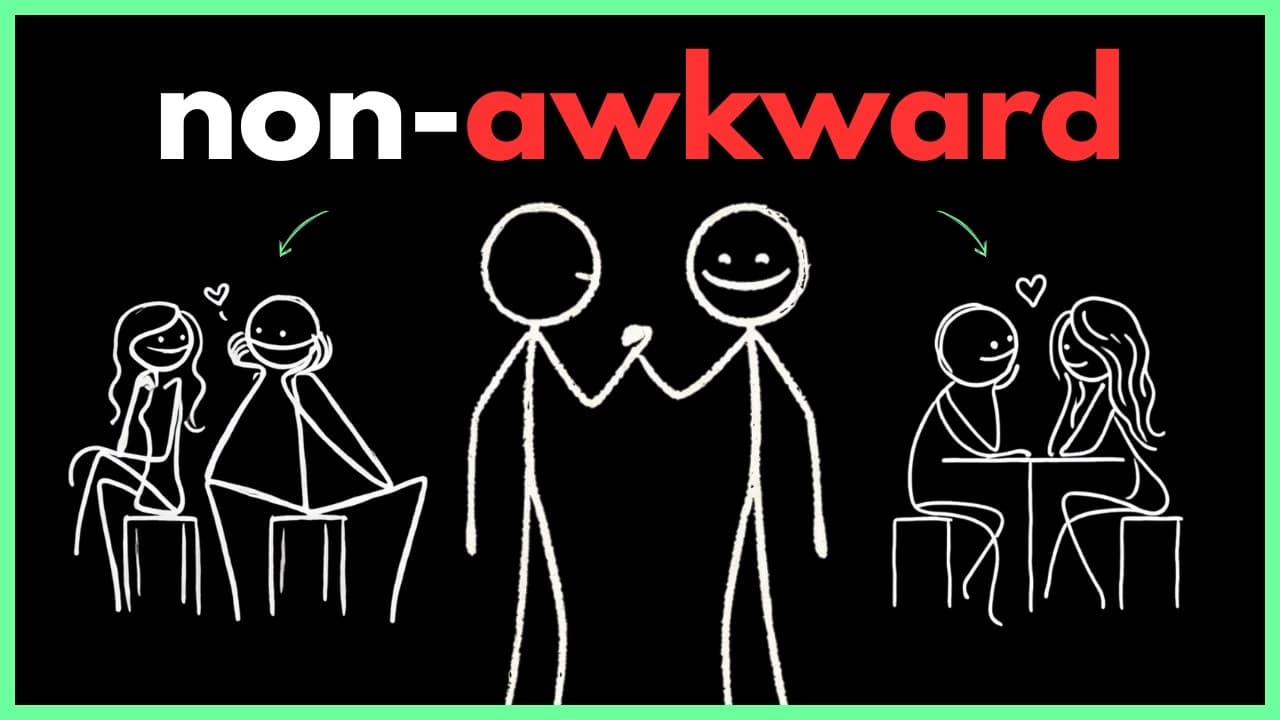
Small talk is about making others feel seen through active observation.
Transcript
you know the funny thing about small talk is that most people look at it like the opening band at a concert something you suffer through to get to the main event deep conversations the real connections that's what we all want right but if you leave your phone for 2 minutes and actually looked around you'd realize every interaction every relationshi... Read More
Key Insights
- Small talk is often seen as trivial but is essential for starting deeper conversations and relationships. It requires active observation to make others feel acknowledged.
- Active observation involves paying attention to details about the person in front of you, such as their attire or behavior, and commenting on these observations.
- Making observations rather than asking direct questions can disarm the other person and invite them to engage without feeling pressured.
- Active observation can be applied in various settings, including work meetings, dates, and social gatherings, making it a versatile skill.
- The goal of small talk is not to impress but to be present and make others feel seen, which can lead to meaningful interactions.
- The practice of active observation can transform small talk from a chore into an enjoyable activity, allowing introverts to engage more comfortably.
- Genuine interest is crucial for active observation to be effective; people can detect insincerity, which can hinder connections.
- The use of AI in content creation can enhance quality and efficiency, but the core of creative work remains human-driven.
Install to Summarize YouTube Videos and Get Transcripts
Explore YouTube Video Summarizer or Get YouTube Transcript Extractor
Questions & Answers
Q: What is the main misconception about small talk?
The main misconception about small talk is that it is trivial and only a precursor to meaningful conversations. In reality, small talk is essential for initiating deeper connections and is about making others feel acknowledged through active observation, rather than focusing on the content of the conversation.
Q: How does active observation differ from traditional small talk?
Active observation differs from traditional small talk by focusing on noticing and commenting on tangible details about the other person, rather than asking direct questions. This approach disarms the other person, inviting them to engage without feeling pressured to perform or provide specific answers.
Q: Why is making observations more effective than asking questions?
Making observations is more effective than asking questions because it reduces pressure on the other person to justify or explain themselves. Observations are neutral and invite engagement, allowing for a more natural and comfortable conversation that feels less like an interview.
Q: In what settings can active observation be applied?
Active observation can be applied in various settings, including work meetings, first dates, family gatherings, and social events. Its flexibility makes it a versatile skill for engaging with others in any environment, as it focuses on being present and noticing details rather than relying on scripted interactions.
Q: How can introverts benefit from active observation?
Introverts can benefit from active observation by transforming small talk from a daunting task into an enjoyable activity. By focusing on noticing details and making observations, introverts can engage more comfortably without the pressure to be charming or witty, leading to more meaningful interactions.
Q: What role does genuine interest play in active observation?
Genuine interest is crucial in active observation because people can detect insincerity. For active observation to be effective, one must genuinely care about the person or something about them, even if only for a short interaction. This authenticity fosters real connections and makes others feel truly seen.
Q: How is AI used in the content creation process described?
AI is used in the content creation process to enhance quality and efficiency, such as providing visual aids, additional script details, and voiceovers. However, the core creative work, including writing, ideas, and editing, remains human-driven, with AI serving as a supportive tool to deliver high-quality content.
Q: What is the ultimate goal of small talk according to the content?
The ultimate goal of small talk, according to the content, is to be present and make others feel seen. It's not about impressing others or proving one's own interest but about acknowledging the other person, which can lead to meaningful connections and enjoyable interactions.
Summary & Key Takeaways
-
Small talk is crucial for initiating deeper connections and is more about making others feel seen than the actual content of the conversation. Active observation is key, which involves noticing and commenting on details about the other person.
-
Active observation can be applied in various social settings, from work meetings to parties, and involves making neutral but interesting observations to engage others without pressure.
-
The practice of active observation can make small talk enjoyable and lead to meaningful interactions. Genuine interest is essential, and AI can be a tool for enhancing content creation without replacing human creativity.
Read in Other Languages (beta)
Share This Summary 📚
Summarize YouTube Videos and Get Video Transcripts with 1-Click
Try YouTube Summary with ChatGPT & Claude or YouTube Transcript Generator
Explore More Summaries from someunfilteredguy 📚

Summarize YouTube Videos and Get Video Transcripts with 1-Click
Try YouTube Summary with ChatGPT & Claude or YouTube Transcript Generator