What Did Immanuel Kant Teach About Morality?
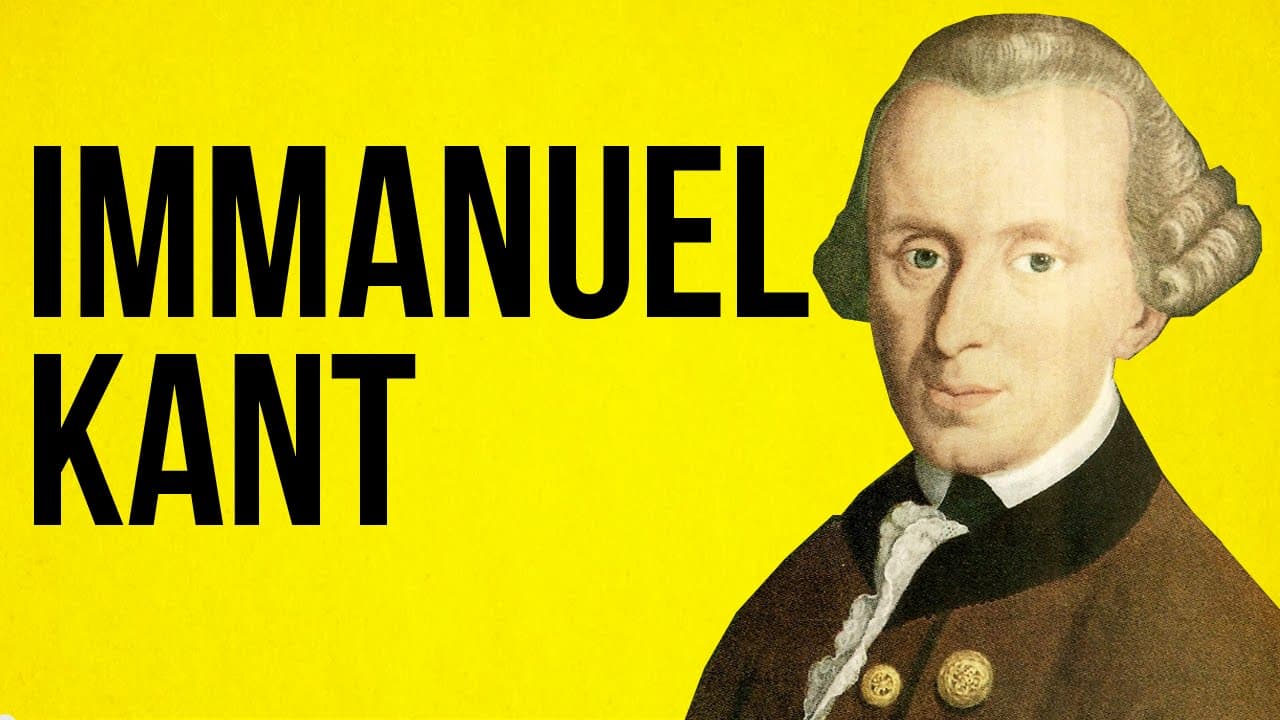
TL;DR
Immanuel Kant aimed to establish morality through reason, arguing that ethical behaviour should be guided by rational thought rather than religious beliefs. He introduced the Categorical Imperative as a test for moral actions, emphasizing the need for individuals to consider the broader implications of their choices on society while recognising the vital role of beauty and art in fostering moral development.
Transcript
Immanuel Kant is a philosopher who tried to work out how human beings could be good and kind outside of the exaltations and blandishments of traditional religions. He was born in 1724, in the Baltic city of Königsberg, which at that time was part of Prussia and now belongs to Russia, renamed Kaliningrad. Kant's parents were very modest, his father ... Read More
Key Insights
- 🚨 Kant's philosophy emerged from his concern about human weaknesses and the necessity for moral guidance.
- 🛟 The Categorical Imperative serves as a practical tool for evaluating the morality of personal actions within a societal framework.
- ❓ He believed ethical behavior could be fostered through reason, challenging the reliance on traditional religious dogmas.
- 🥰 The appreciation of beauty and art is central to Kant's moral philosophy, promoting a disinterested love that transcends personal interests.
- 🫥 Kant's views on freedom emphasize acting in line with one's rational nature, rather than mere indulgence in personal desires.
- ⚾ His dedication to philosophical inquiry aimed at enhancing the rational capacities of individuals against their base instincts remains relevant today.
- 🥰 Kant's work in aesthetics linked the experience of beauty to ethical inspiration, arguing that art could embody important moral concepts.
- 🎙️ More videos with Immanuel Kant:
Install to Summarize YouTube Videos and Get Transcripts
Explore YouTube Video Summarizer or Get YouTube Transcript Extractor
Questions & Answers
Q: What was Kant's main concern regarding human nature?
Kant was deeply pessimistic about human nature, believing that humans are inherently prone to corruption. This recognition led him to pursue a philosophical framework that would promote moral behavior through the use of reason, seeking a foundation for ethics that could replace the declining religious authority of his time.
Q: How did Kant define the Categorical Imperative?
The Categorical Imperative is a rational guideline for assessing the morality of actions by considering whether such actions could be universally applied. Kant emphasized that moral actions should be judged based on their potential as universal laws, urging individuals to reflect on how their behavior would affect society as a whole.
Q: What role did beauty and art play in Kant's philosophy?
For Kant, beauty and art were integral to ethical development, serving as reminders of our better selves. He believed that experiencing beauty allows individuals to rise above their selfish desires and connect with a universal sense of being, thereby promoting moral behavior and inspiring ethical ideals.
Q: How did Kant's views influence his ideas about government and freedom?
Kant argued that true freedom is not merely the absence of constraints but the ability to act in accordance with one's rational self. He believed that a just government embodies these rational principles, facilitating individual liberty by guiding citizens toward moral behavior rather than allowing unchecked passions to dominate.
Q: Why was Kant's upbringing significant to his philosophical views?
Kant's modest and religious upbringing in a strict household influenced his understanding of the role of religion in coping with life's challenges. This background made him appreciate the societal value of moral frameworks, even as he sought to develop ethical principles based on reason rather than religious authority.
Q: How did Kant perceive the relationship between ethics and religion?
Kant acknowledged that while historical religions often contained flawed beliefs, they fulfilled a vital role in promoting ethical behavior. He aimed to create a rational ethics framework that could nurture moral actions in a secular context, reflecting the ethical needs that religions had traditionally addressed.
Summary & Key Takeaways
-
Immanuel Kant, a philosopher from Königsberg, sought to understand human goodness without traditional religion, realizing its societal benefits despite his personal secularism.
-
He proposed the Categorical Imperative, a rational approach to ethics that encourages individuals to consider the broader implications of their actions on society.
-
Kant viewed beauty and art as essential to moral development, believing they help inspire and remind individuals of their better selves by providing universal ethical ideals.
Read in Other Languages (beta)
Share This Summary 📚
Summarize YouTube Videos and Get Video Transcripts with 1-Click
Try YouTube Summary with ChatGPT & Claude or YouTube Transcript Generator