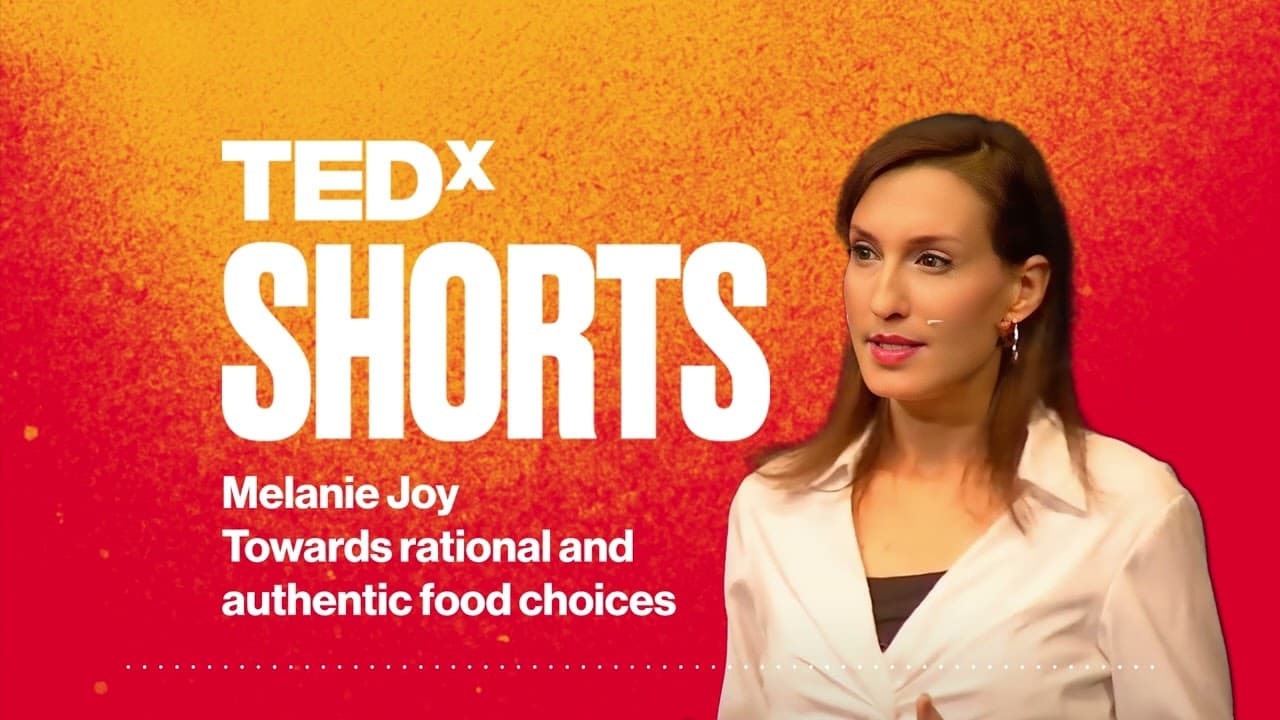
Towards rational and authentic food choices
TL;DR
Melanie Joy challenges the norms of eating meat, highlighting the impact of cultural perceptions and advocating for awareness and change.
Transcript
a quick new idea daily from the world's greatest tedex tots I'm your host atosa Leoni and this is tedex shorts if you went to a barbecue would you be shocked to learn that the hot dogs were actually made from K9 meat whether we eat meat or don't we've build a narrative around which animals are acceptable to slaughter for food psychologist Melanie J... Read More
Key Insights
- 🫥 Carnism is an invisible belief system that shapes our attitudes towards consuming animals.
- 🉑 Cultural norms influence our perceptions of which animals are deemed acceptable for consumption.
- 🤩 Awareness and conscious choices are key in challenging and changing the carnist ideology.
- 😅 Eating animals is often seen as a given rather than a choice, perpetuated by societal norms.
- 🤪 The impact of carnism goes against core human values such as compassion, justice, and authenticity.
- 😅 Melanie Joy advocates for spreading awareness and making conscious choices to shift towards more compassionate eating practices.
- ❓ The ideology of carnism is prevalent and institutionalized, perpetuating the normalization of consuming certain animals.
Install to Summarize YouTube Videos and Get Transcripts
Explore YouTube Video Summarizer or Get YouTube Transcript Extractor
Questions & Answers
Q: How does Melanie Joy define "carnism" and its impact on society?
Melanie Joy defines carnism as the invisible belief system that conditions us to consume certain animals. This ideology is widespread, institutionalized, and goes against core human values like compassion and justice.
Q: What revelation led Melanie Joy to question her meat-eating habits?
Melanie Joy's hospitalization after consuming a hamburger made her reevaluate her food choices. This experience sparked her curiosity and eventually led her to uncover the ideology of carnism.
Q: What role does cultural perception play in our attitudes towards meat consumption?
Cultural perception shapes our attitudes towards meat - certain species are deemed acceptable to eat while others are not. Our perception of meat influences how we view animals as food or companions.
Q: What solutions does Melanie Joy offer to challenge the carnist ideology?
Melanie Joy suggests that awareness is the first step towards change. By making conscious choices, like eating a vegan meal or spreading awareness, individuals can lead more authentic and compassionate lives.
Summary & Key Takeaways
-
Psychologist Melanie Joy questions the cultural constructs around consuming certain animals for food, termed "carnism."
-
She highlights how our perceptions of meat are shaped by culture and challenges us to consider why we eat certain animals but not others.
-
Joy suggests that awareness and conscious choices can lead to a shift in our eating habits towards more authentic and compassionate practices.
Read in Other Languages (beta)
Share This Summary 📚
Summarize YouTube Videos and Get Video Transcripts with 1-Click
Try YouTube Summary with ChatGPT & Claude or YouTube Transcript Generator
Explore More Summaries from TEDx SHORTS: short, eye-opening ideas from some of the world’s greatest TEDx speakers 📚



Summarize YouTube Videos and Get Video Transcripts with 1-Click
Try YouTube Summary with ChatGPT & Claude or YouTube Transcript Generator