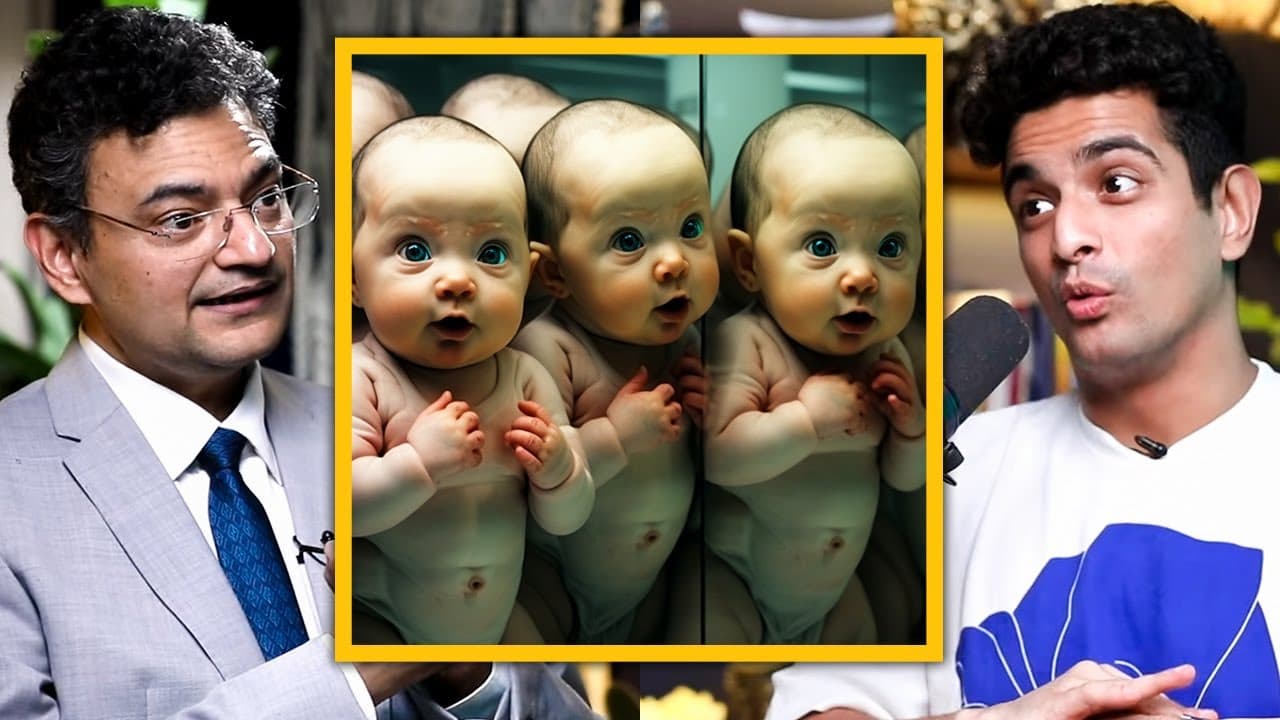
DESIGNER BABIES Are Coming Soon - CRISPR Technology Explained By A Scientist
TL;DR
CRISPR technology has the potential to revolutionize medicine, yet raises ethical concerns.
Transcript
happiness through Curiosity on TS Clips explain crisper because I think that this is the part of the podcast where college students really stand up and listen uh so from Basics explain chrisper is I'm assuming it's related to what you've spoken to yes in fact I'm quite proud of this that I think one of the first general articles on crisper was writ... Read More
Key Insights
- 🧘 CRISPR has the potential to revolutionize medicine by enabling precise genetic edits, which could eliminate diseases efficiently.
- 🖐️ Ethical considerations play a significant role in CRISPR discussions, particularly concerning genetic modifications in embryos and their societal implications.
- 🥺 The technology has already led to promising outcomes in animal studies, showcasing both its capabilities and the ethical ramifications of its application in real-life contexts.
- 😒 Ongoing research suggests that off-target effects of CRISPR could result in unintended consequences, necessitating careful monitoring and regulation of its use.
- ❓ Understanding the complexities of alternative splicing is crucial since it suggests one gene can produce various proteins, which may affect many traits.
- 💦 The dramatic stock price drop of a CRISPR-focused company reflects how swiftly market perceptions can change based on emerging research findings.
- 👶 Advances in CRISPR technology require rigorous ethical frameworks as the science continues to evolve and present new potentials and risks.
Install to Summarize YouTube Videos and Get Transcripts
Explore YouTube Video Summarizer or Get YouTube Transcript Extractor
Questions & Answers
Q: What is CRISPR technology and how does it work?
CRISPR technology is a revolutionary gene-editing tool that enables scientists to cut and modify DNA. It functions akin to molecular scissors, allowing for the precise cutting of specific genes. Scientists can then replace, remove, or add genetic material as needed. The technology's potential applications in treating diseases, enhancing crops, and even editing human embryos have sparked widespread interest and debate in the scientific community.
Q: What ethical concerns are associated with the use of CRISPR on human embryos?
The ethical concerns regarding CRISPR on human embryos center around the potential for unforeseen consequences, such as unintended genetic alterations. Critics worry about "designer babies," where parents may choose specific traits, leading to moral dilemmas about genetic inequality. Additionally, there is concern over the long-term effects of editing the human genome, as changes could be passed down through generations, raising tentative questions about identity and diversity.
Q: How might CRISPR be used to eradicate diseases like malaria and tuberculosis?
CRISPR can theoretically edit the genomes of disease vectors, such as mosquitoes, to render them incapable of transmitting diseases like malaria. By modifying genes that control reproduction or lifespan, scientists could drastically reduce mosquito populations. Similarly, by targeting specific genes in pathogens, CRISPR could lead to the development of therapies that cure or make humans immune to diseases such as tuberculosis within the next two decades.
Q: What does the concept of alternative splicing imply for gene function?
Alternative splicing allows a single gene to produce multiple proteins by rearranging the RNA sequence during transcription. This means that a single genetic change can lead to various outcomes, complicating our understanding of gene function. For instance, if a particular gene associated with muscle growth were edited, unintended consequences might arise, affecting traits unrelated to muscle mass. This intricate relationship complicates genetic modifications, indicating that results can be unpredictable.
Summary & Key Takeaways
-
CRISPR, a gene-editing technology, allows scientists to modify DNA strands by cutting and pasting genes, potentially eradicating diseases like malaria and tuberculosis within decades.
-
Despite the potential benefits, the use of CRISPR on human embryos is highly controversial due to ethical concerns and unforeseen consequences, like unintended gene alterations.
-
Ongoing research into gene therapy has revealed complexities, such as alternative splicing, where one gene can produce multiple proteins, complicating the understanding of genetic modifications and their impacts.
Read in Other Languages (beta)
Share This Summary 📚
Summarize YouTube Videos and Get Video Transcripts with 1-Click
Try YouTube Summary with ChatGPT & Claude or YouTube Transcript Generator
Explore More Summaries from TRS Clips 📚





Summarize YouTube Videos and Get Video Transcripts with 1-Click
Try YouTube Summary with ChatGPT & Claude or YouTube Transcript Generator