The 2009 Nobel Prize in Chemistry - Periodic Table of Videos
TL;DR
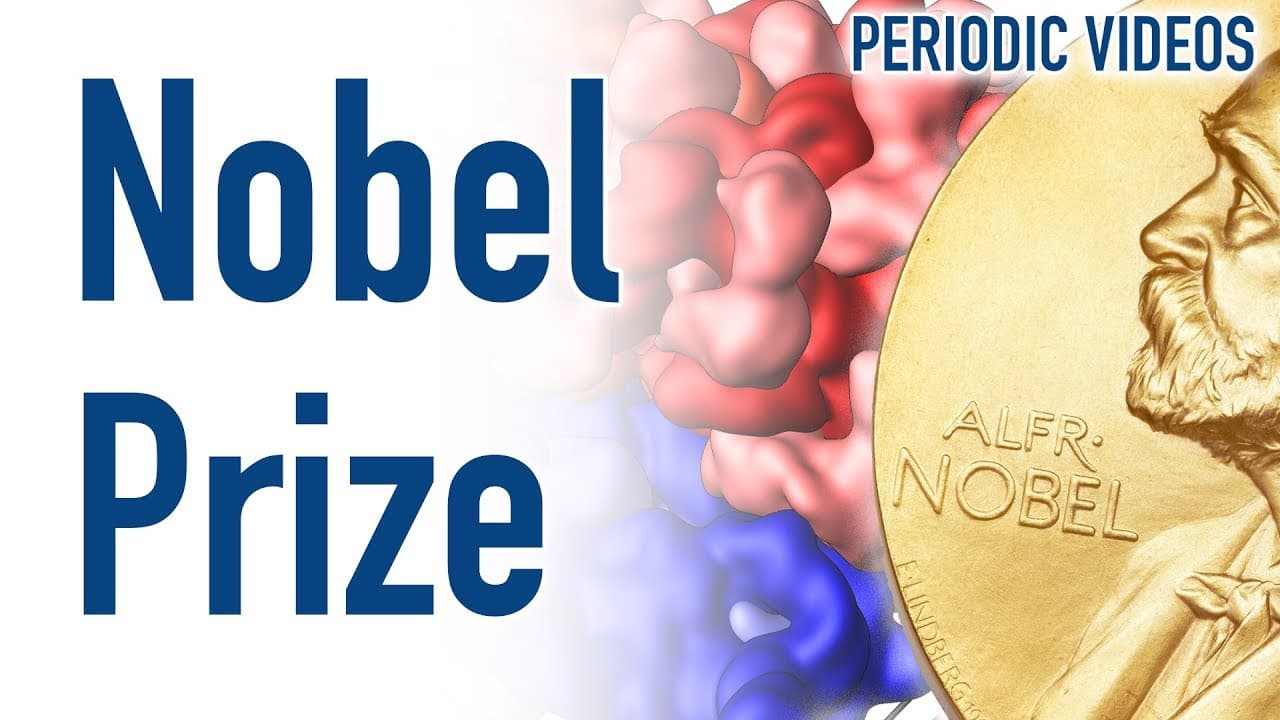
Scientists awarded for deciphering ribosome structure, vital for protein synthesis, using x-ray crystallography.
Transcript
today the 2009 Nobel Prize for chemistry was announced and because there isn't a Nobel Prize in biology the chemistry prize often goes to people who are working on the boundary between chemistry and biology and today was an example just like that because the prize went to three scientists for working out the structure of the so-called ribosome whic... Read More
Key Insights
- 📤 X-ray crystallography plays a crucial role in studying complex biological structures at the atomic level.
- 🤩 The ribosome is a key molecular machine that translates genetic information into functional proteins.
- ❓ Determining the ribosome's structure has profound implications for understanding cellular processes.
- 🌍 Nobel Prize-winning research showcased international collaboration in unraveling biological mysteries.
- ❓ The ribosome's accuracy in protein synthesis is maintained by intricate molecular mechanisms.
- 💦 Ada Yonath, Thomas Steitz, and Venkatraman Ramakrishnan's work revolutionized our understanding of protein synthesis.
- 🫠 The ribosome's ability to read and translate genetic code relies on precise molecular interactions.
Install to Summarize YouTube Videos and Get Transcripts
Explore YouTube Video Summarizer or Get YouTube Transcript Extractor
Questions & Answers
Q: What was the focus of the 2009 Nobel Prize in Chemistry?
The Nobel Prize was awarded for deciphering the ribosome's structure, a vital molecular machinery responsible for translating genetic information into proteins.
Q: How did x-ray crystallography contribute to understanding the ribosome's structure?
X-ray crystallography allowed scientists to visualize the atomic arrangement of the ribosome crystals, leading to a detailed understanding of its complex structure and function.
Q: Who were the three scientists awarded the Nobel Prize in 2009 for their work on the ribosome?
Ada Yonath, Thomas Steitz, and Venkatraman Ramakrishnan were the recipients of the 2009 Nobel Prize in Chemistry for their groundbreaking research on the ribosome.
Q: How does the ribosome ensure accurate protein translation?
Venkatraman Ramakrishnan's work revealed the presence of a molecular ruler within the ribosome that accurately measures distances between bases, ensuring precise protein synthesis.
Summary & Key Takeaways
-
The 2009 Nobel Prize in Chemistry was awarded for understanding the ribosome's structure crucial in translating DNA into proteins.
-
X-ray crystallography was used to elucidate the ribosome's structure, enabling a detailed understanding of its function.
-
Scientists from different countries made significant contributions to decoding this fundamental biological machinery.
Read in Other Languages (beta)
Share This Summary 📚
Summarize YouTube Videos and Get Video Transcripts with 1-Click
Try YouTube Summary with ChatGPT & Claude or YouTube Transcript Generator
Explore More Summaries from Periodic Videos 📚


Summarize YouTube Videos and Get Video Transcripts with 1-Click
Try YouTube Summary with ChatGPT & Claude or YouTube Transcript Generator