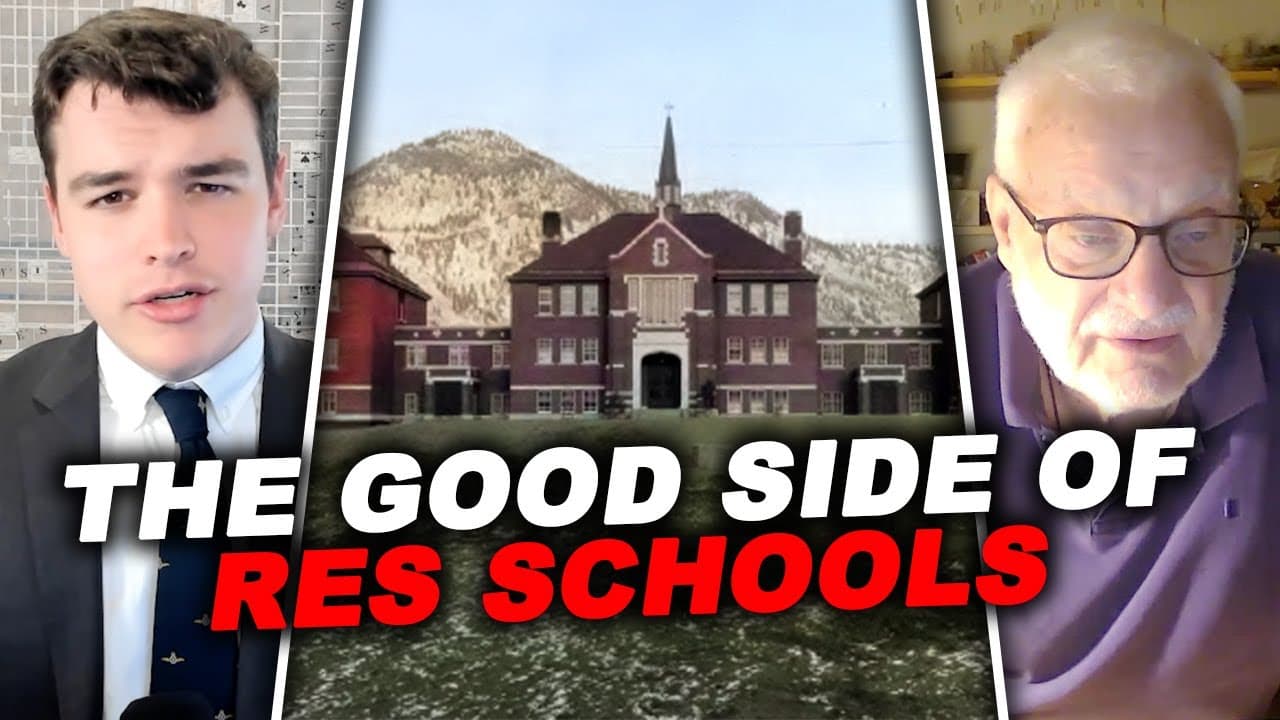
Former residential schools worker criticizes far-left "denier" narrative
TL;DR
The debate on residential schools in Canada raises concerns over truth, denialism, and criminalization of differing opinions.
Transcript
in 2021 news broke that children's bodies had been found in Mass Graves at the sites of former Indian residential schools across Canada What followed was weeks of protest months of mourning and a string of violent assaults on Canadian history and then 100 churches in Canada were attacked vandalized or burned to the ground following those claims but... Read More
Key Insights
- 🤨 The language surrounding the discovery of graves has shifted from "mass graves" to "anomalies," raising questions about the original claims.
- 😑 The movement to criminalize statements about residential schools could lead to significant challenges for free expression in Canada.
- 👶 Clifton recognizes both positive and negative experiences in residential schools, advocating for acknowledgment of the full spectrum of children's experiences.
- 👨🏫 The involvement of non-Indigenous communities in discussions about residential schools must be approached with a commitment to understanding and truth.
- 🤗 Clifton's experiences in residential schools lend him a unique perspective on the issues at hand, as he bears firsthand witness to both care and issues within the system.
- 😯 The potential for criminalizing speech related to residential schools might create a chilling effect on academic research and public discourse.
- 👨🏫 Clifton's forthcoming book aims to provide a comprehensive analysis of residential schools, addressing historical narratives while proposing constructive paths forward.
Install to Summarize YouTube Videos and Get Transcripts
Explore YouTube Video Summarizer or Get YouTube Transcript Extractor
Questions & Answers
Q: What led to the protests and vandalism of churches in Canada regarding residential schools?
In 2021, news about potential unmarked graves at former residential schools prompted widespread anger and protests, leading to violent incidents against churches. The protests highlighted historical injustices experienced by Indigenous communities and the demand for acknowledgment and accountability.
Q: What is Professor Rodney Clifton’s stance on residential schools?
Professor Clifton believes that while negative experiences occurred in residential schools, there were also positive aspects that are frequently overlooked. He stresses that not all children experienced mistreatment, and he advocates for a more balanced understanding of the schools' history.
Q: What are the implications of criminalizing residential school denialism according to Clifton?
Clifton warns that criminalizing denialism poses risks to free speech and historical discourse. It may hinder open discussions about residential schools and stifle the exploration of differing viewpoints, ultimately impacting the integrity of academic and societal conversations.
Q: How does Clifton view government funding related to claims of unmarked graves?
Clifton raises concerns about government funding directed toward excavations based on claims of unmarked graves, arguing that the lack of evidence undermines the rationale for such expenditures. He believes resources should be allocated to urgent issues faced by Indigenous communities instead.
Q: What does Clifton suggest should be prioritized for Indigenous communities?
Clifton emphasizes the need to focus on economic development and educational opportunities for Indigenous peoples rather than pursuing criminalization of speech. He believes tackling poverty and ensuring children's educational success is a more beneficial use of government resources.
Q: How has public sentiment changed regarding the narrative around residential schools?
Clifton has observed a growing curiosity among Canadians to explore different narratives surrounding residential schools, indicating a push for a more nuanced understanding of the historical context rather than accepting monolithic portrayals of the institutions.
Summary & Key Takeaways
-
The discovery of unmarked graves at former residential schools in Canada sparked protests and calls for criminalizing denialism, despite no bodies being found.
-
Professor Rodney Clifton argues that both good and bad experiences existed in residential schools, countering claims that all experiences were negative and asserting the danger of outlawing dissenting voices.
-
Clifton emphasizes the need for a balanced historical view and suggests redirecting government resources to address pressing indigenous community issues instead of pursuing criminalization of speech regarding residential schools.
Read in Other Languages (beta)
Share This Summary 📚
Summarize YouTube Videos and Get Video Transcripts with 1-Click
Try YouTube Summary with ChatGPT & Claude or YouTube Transcript Generator
Explore More Summaries from True North 📚

Summarize YouTube Videos and Get Video Transcripts with 1-Click
Try YouTube Summary with ChatGPT & Claude or YouTube Transcript Generator