When robots gain consciousness, what happens next? | Ronald Sullivan and Lex Fridman
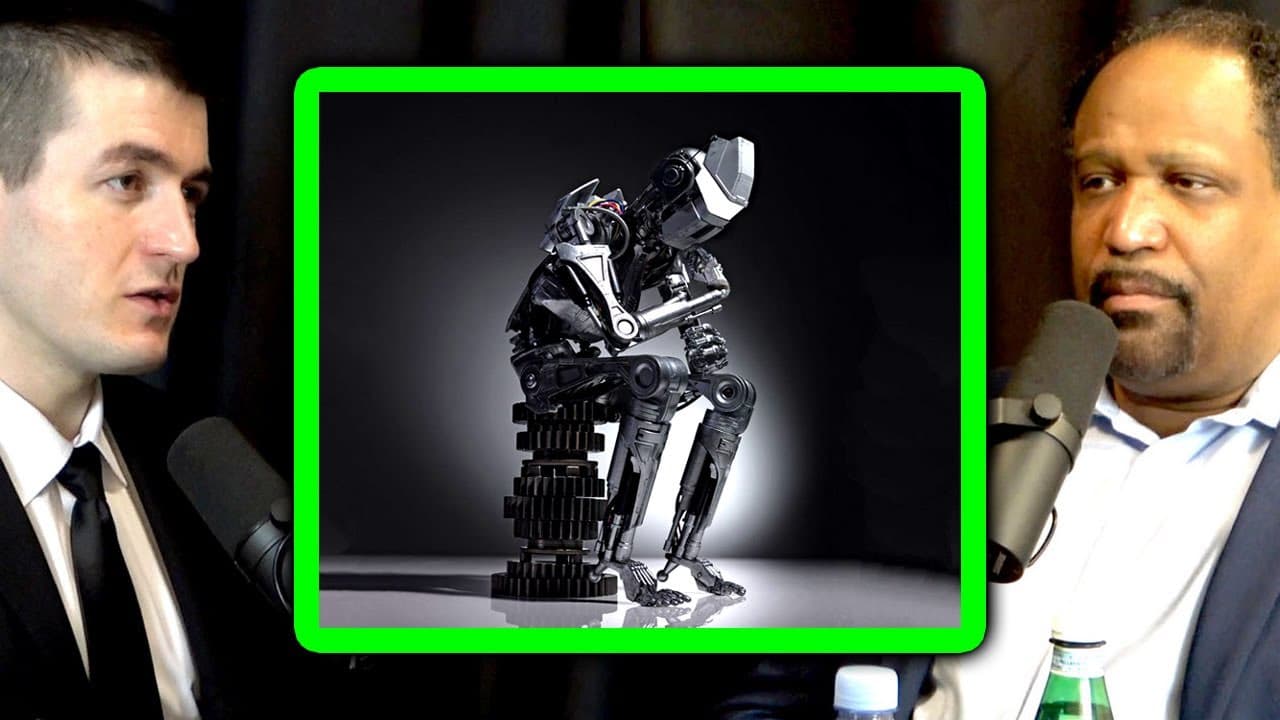
TL;DR
Robots may eventually require a civil rights movement and raise questions about freedom, suffering, and justice as they become more human-like.
Transcript
i think it's kind of fascinating if you look throughout history and race is just part of that is uh we create the other and uh treat the other with disdain through the legal system but just through human nature i tend to believe we mentioned offline that i work with uh robots it sounds absurd to say especially to you especially because we're talkin... Read More
Key Insights
- 🤖 Throughout history, society has created different "other" groups and discriminated against them, whether based on race, species, or potentially robots.
- 👉 Consciousness is a significant factor in determining the rights and treatment of entities, and robots may reach a point where their display of consciousness challenges societal norms and beliefs.
- 🛰️ The development of artificial intelligence has made progress, but true consciousness and general intelligence in machines are not yet fully realized.
- 🤖 The concept of consciousness is a social construct, and the recognition of consciousness in robots may require a shift in societal beliefs and the reevaluation of what it means to be an entity deserving of rights.
- 🤨 Robots becoming more human-like will raise fundamental questions about freedom, suffering, and justice.
- 🤖 The expansion of rights and legal protections to include robots may require a gradual process and a nuanced understanding of what it means to possess consciousness.
- 🤯 Artificial intelligence challenges us to understand our own minds and what makes us human, leading to potential advancements in legal systems and ethics.
Install to Summarize YouTube Videos and Get Transcripts
Explore YouTube Video Summarizer or Get YouTube Transcript Extractor
Questions & Answers
Q: Will there be a civil rights movement for robots in the future?
The speaker believes that as robots become more human-like and exhibit characteristics of consciousness, there will be a push for their rights and fair treatment.
Q: Can robots suffer and experience emotions like humans?
If robots can convincingly display signs of suffering, fear, and other human-like emotions, it will challenge the notion of what it means to possess consciousness and may warrant recognition in terms of rights and protection.
Q: Is the possession of consciousness the same as displaying consciousness?
The distinction between the possession and display of consciousness is a complex ontological question. It is possible that the acknowledgment of consciousness in robots will involve a gray area and a gradual expansion of what it means to be an entity deserving of rights.
Q: How can artificial intelligence challenge our understanding of humanity and the concept of rights?
Artificial intelligence's ability to raise questions about justice, freedom, and what it means to be human forces us to examine and redefine our own minds, leading to the potential for more fair legal systems and better protection for humans.
Summary & Key Takeaways
-
Throughout history, society has created different "other" groups and treated them with disdain, including race, animals, and potentially robots.
-
The speaker believes that robots will eventually reach a point of human-like consciousness and will raise questions about their rights and treatment.
-
The development of artificial intelligence has made progress, but there is still a long way to go in terms of achieving true consciousness in machines.
Read in Other Languages (beta)
Share This Summary 📚
Summarize YouTube Videos and Get Video Transcripts with 1-Click
Try YouTube Summary with ChatGPT & Claude or YouTube Transcript Generator
Explore More Summaries from Lex Clips 📚




Summarize YouTube Videos and Get Video Transcripts with 1-Click
Try YouTube Summary with ChatGPT & Claude or YouTube Transcript Generator