Stanford lab develops high-tech tools to study whales in the wild
TL;DR
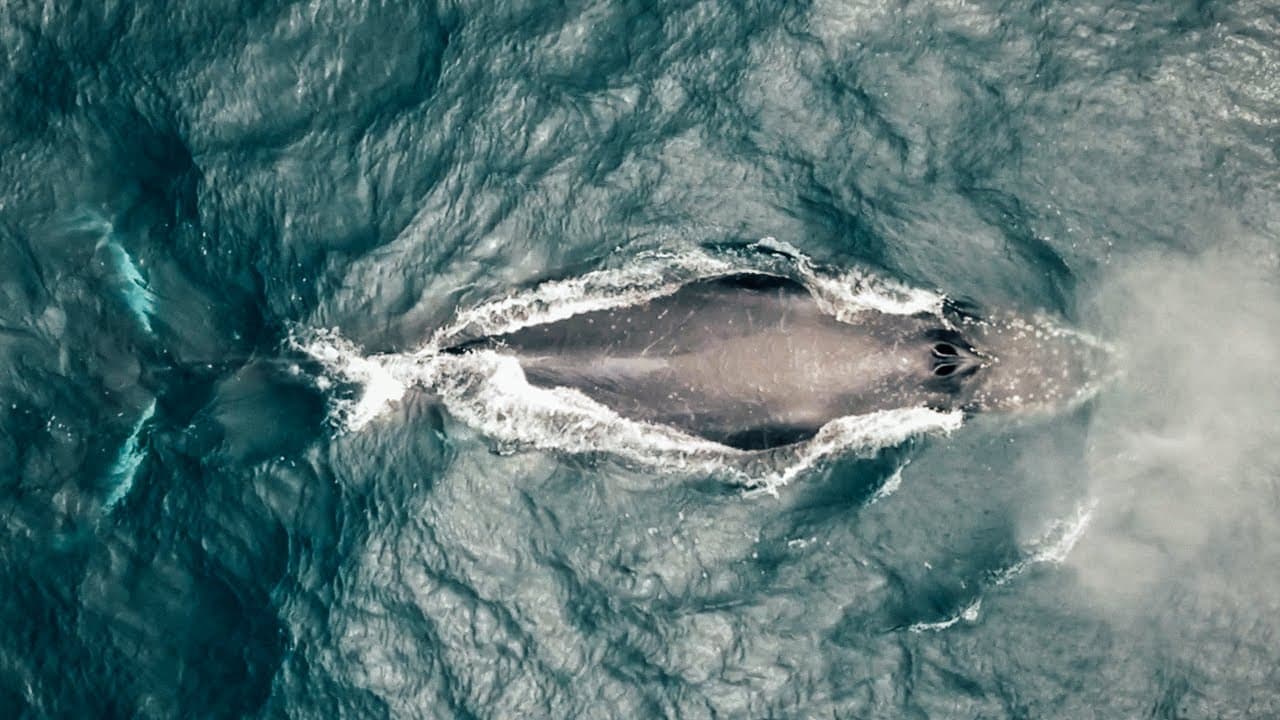
Researchers use innovative technology to study the behavior and physiology of whales, revealing valuable insights about these majestic creatures.
Transcript
- It's a pretty fortunate thing that we get to do to be able to be so close to these majestic animals. And you only get a brief second at it, but you remember every one of them. - My lab is fascinated with how life operates at such extreme body sizes. - Baleen whales are the group of the largest animals that have ever lived. So that's why we study ... Read More
Key Insights
- 🐳 Studying whales in their natural habitats is challenging due to the difficulty of working at sea, especially with large marine vertebrates.
- 👣 The successful development of innovative technology, such as 3D-printed modules and over-the-counter sensors, has revolutionized the study of whale behavior and physiology.
- 🐳 The presence of abundant whales indicates a healthy ecosystem in Monterey Bay, where cold water from the depths spills out over canyon edges, attracting a variety of whale species.
- 🧑⚕️ The increase in whale populations in Monterey Bay suggests that the overall health of the bay has improved over the past few decades.
- 👨🔬 Studying understudied whale species provides valuable research opportunities to learn more about their behavior and physiology.
- 👶 Each deployment of sensors on whales offers new and exciting discoveries, contributing to advancing our knowledge of these magnificent creatures.
- 💦 Whale research in Monterey Bay benefits from the highly productive and abundant waters, making it an ideal location for studying these marine giants.
Install to Summarize YouTube Videos and Get Transcripts
Explore YouTube Video Summarizer or Get YouTube Transcript Extractor
Questions & Answers
Q: Why do researchers focus on studying baleen whales?
Baleen whales are the largest animals to have ever lived, and studying them provides insights into their unique behavioral and environmental interactions which have never been experienced by any other animal.
Q: What kind of information can researchers gather from studying whales?
By using innovative technology, researchers can now measure various aspects of whale behavior, including feeding frequency, energy intake, basal metabolic rate, and heart rate.
Q: How do researchers attach sensors to whales?
A tagger stands on a pulpit on a boat, while a driver maneuvers the boat close to a surfacing whale. The tagger reaches out with a pole and attaches a sensor to the whale using a suction cup which remains attached for 12 to 24 hours before floating to the surface.
Q: How do researchers gather complementary data about whales?
Researchers coordinate with other boats equipped with drones and prey mapping equipment, allowing them to collect additional data on whale behavior and their surrounding environment.
Summary & Key Takeaways
-
Scientists study the largest animals on Earth, baleen whales, to understand their complex behavioral and environmental interactions.
-
The development of 3D-printed modules and over-the-counter sensors allows researchers to collect data on whale orientation, speed, communication, and feeding habits.
-
The presence of whales in Monterey Bay indicates the overall health of the ecosystem, which has improved over the past few decades.
Read in Other Languages (beta)
Share This Summary 📚
Summarize YouTube Videos and Get Video Transcripts with 1-Click
Try YouTube Summary with ChatGPT & Claude or YouTube Transcript Generator
Explore More Summaries from Stanford 📚






Summarize YouTube Videos and Get Video Transcripts with 1-Click
Try YouTube Summary with ChatGPT & Claude or YouTube Transcript Generator