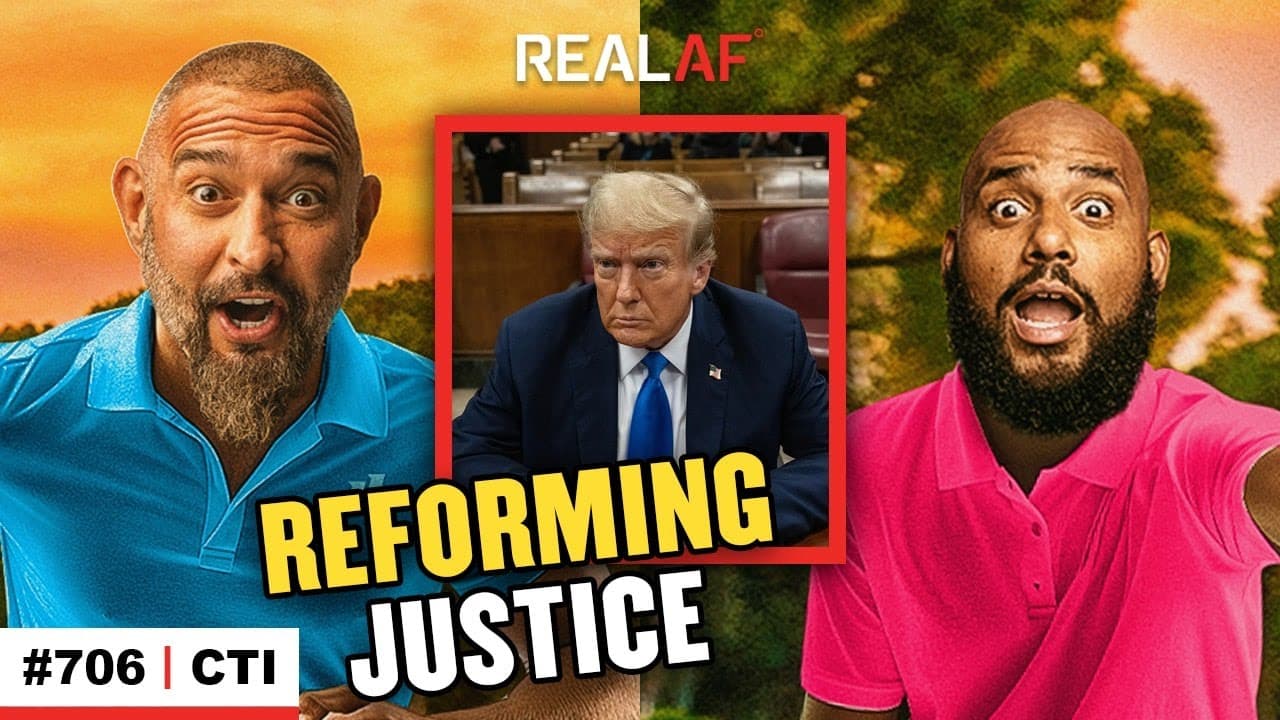
Fixing America’s Broken Legal System - Ep 706 CTI
TL;DR
Discussion on legal system flaws, Trump's rallies, and bird flu testing.
Transcript
what does our legal system look like in 10 years well what does the Reformation look like it's needed you know all of these attorneys and all of the people involved in the Georgia case in the agorian case and in this case and the FED raid case every single person involved deserves to go to jail all of them completely barred from law if you're an FB... Read More
Key Insights
- The podcast discusses the perceived corruption in the American legal system, especially in cases involving Donald Trump, highlighting public skepticism and distrust.
- There is a belief that the legal actions against Trump are politically motivated, serving as a form of election interference to damage his reputation and chances in the upcoming election.
- Trump's popularity appears to be increasing, as evidenced by large rally turnouts, suggesting a significant base of support despite legal challenges.
- The discussion touches on the potential negative impacts of bird flu testing incentives on small farms, drawing parallels to the economic impacts of COVID-19 restrictions.
- There is a concern about the manipulation of the electoral process and the integrity of voting systems, with suggestions for increased voter participation and monitoring.
- The podcast highlights the broader political strategy of using crises to manipulate public opinion and control economic sectors, such as farming.
- The conversation emphasizes the importance of public accountability and civic engagement to address systemic issues in governance and law.
- The hosts express skepticism towards mainstream narratives and encourage listeners to critically evaluate information and participate actively in civic processes.
Install to Summarize YouTube Videos and Get Transcripts
Explore YouTube Video Summarizer or Get YouTube Transcript Extractor
Questions & Answers
Q: What are the main concerns about the legal system discussed in the podcast?
The podcast raises concerns about perceived corruption and bias within the American legal system, particularly in cases involving Donald Trump. The hosts argue that legal actions against Trump are politically motivated and serve as a form of election interference. They also express skepticism about the integrity of the judicial process and the influence of political agendas on legal proceedings.
Q: How do the hosts view Trump's popularity in light of his legal challenges?
The hosts believe that Trump's popularity is increasing despite his legal challenges. They point to large rally turnouts as evidence of significant support for Trump. They argue that the legal pressure on Trump is backfiring, as it is exposing flaws in the judicial system and increasing public support for him. The hosts also suggest that Trump's legal battles are galvanizing his base and drawing attention to issues of corruption and bias in the legal system.
Q: What parallels are drawn between bird flu testing and COVID-19 testing?
The hosts draw parallels between bird flu testing incentives and COVID-19 testing incentives, suggesting that both are examples of government overreach and manipulation. They express concern that incentivizing bird flu testing could lead to negative impacts on small farms, similar to the economic impact of COVID-19 restrictions on small businesses. The hosts argue that these testing incentives are part of a broader strategy to control economic sectors and manipulate public opinion.
Q: What solutions are suggested for addressing issues in the electoral process?
The hosts suggest several solutions for addressing issues in the electoral process, including increased voter participation and monitoring of polling stations. They emphasize the importance of civic engagement and public accountability to ensure the integrity of elections. The hosts also advocate for reforms to the voting system, such as requiring voters to file tax returns to demonstrate their contribution to society. They argue that these measures are necessary to prevent election interference and ensure fair and transparent elections.
Q: How do the hosts view the role of public accountability in governance?
The hosts emphasize the importance of public accountability in governance, arguing that it is essential for addressing systemic issues in the legal and political systems. They believe that holding public officials accountable for their actions is crucial for maintaining the integrity of democratic institutions. The hosts encourage listeners to participate actively in civic processes and to critically evaluate information to hold leaders accountable. They argue that public accountability is necessary to prevent corruption and ensure that government actions align with the public interest.
Q: What concerns are raised about the impact of government policies on small farms?
The hosts raise concerns about the impact of government policies, such as bird flu testing incentives, on small farms. They argue that these policies could negatively affect small farms by imposing additional costs and regulatory burdens. The hosts suggest that these policies are part of a broader strategy to control economic sectors and consolidate power in large corporations. They express concern that government overreach could lead to the loss of small farms and reduced access to locally sourced food.
Q: How do the hosts view the relationship between economic policies and public opinion?
The hosts view economic policies as tools for manipulating public opinion and controlling economic sectors. They argue that government incentives and regulations are often used to influence public behavior and consolidate power in large corporations. The hosts express skepticism about mainstream narratives and encourage listeners to critically evaluate economic policies and their impact on society. They believe that understanding the relationship between economic policies and public opinion is crucial for preventing government overreach and maintaining a free market economy.
Q: What is the hosts' perspective on mainstream narratives and media coverage?
The hosts express skepticism towards mainstream narratives and media coverage, arguing that they often serve political agendas and manipulate public opinion. They encourage listeners to critically evaluate information and seek alternative perspectives to understand the full context of issues. The hosts believe that mainstream media coverage is often biased and fails to accurately represent the views and concerns of the public. They advocate for independent thinking and informed decision-making to counteract the influence of mainstream narratives.
Summary & Key Takeaways
-
The podcast episode discusses perceived corruption and bias within the American legal system, particularly in cases involving Donald Trump. Hosts express concern that legal actions against Trump are politically motivated, serving as election interference.
-
Trump's rallies continue to draw large crowds, indicating strong support despite legal challenges. The hosts suggest that the legal pressure on Trump is backfiring, increasing his popularity and exposing flaws in the judicial system.
-
Incentives for testing dairy cows for bird flu are criticized, with parallels drawn to COVID-19 testing incentives. Concerns are raised about the impact on small farms and the potential for government overreach in economic sectors.
Read in Other Languages (beta)
Share This Summary 📚
Summarize YouTube Videos and Get Video Transcripts with 1-Click
Try YouTube Summary with ChatGPT & Claude or YouTube Transcript Generator
Explore More Summaries from Andy Frisella 📚



Summarize YouTube Videos and Get Video Transcripts with 1-Click
Try YouTube Summary with ChatGPT & Claude or YouTube Transcript Generator