What Are Limiting and Excess Reactants in Chemistry?
TL;DR
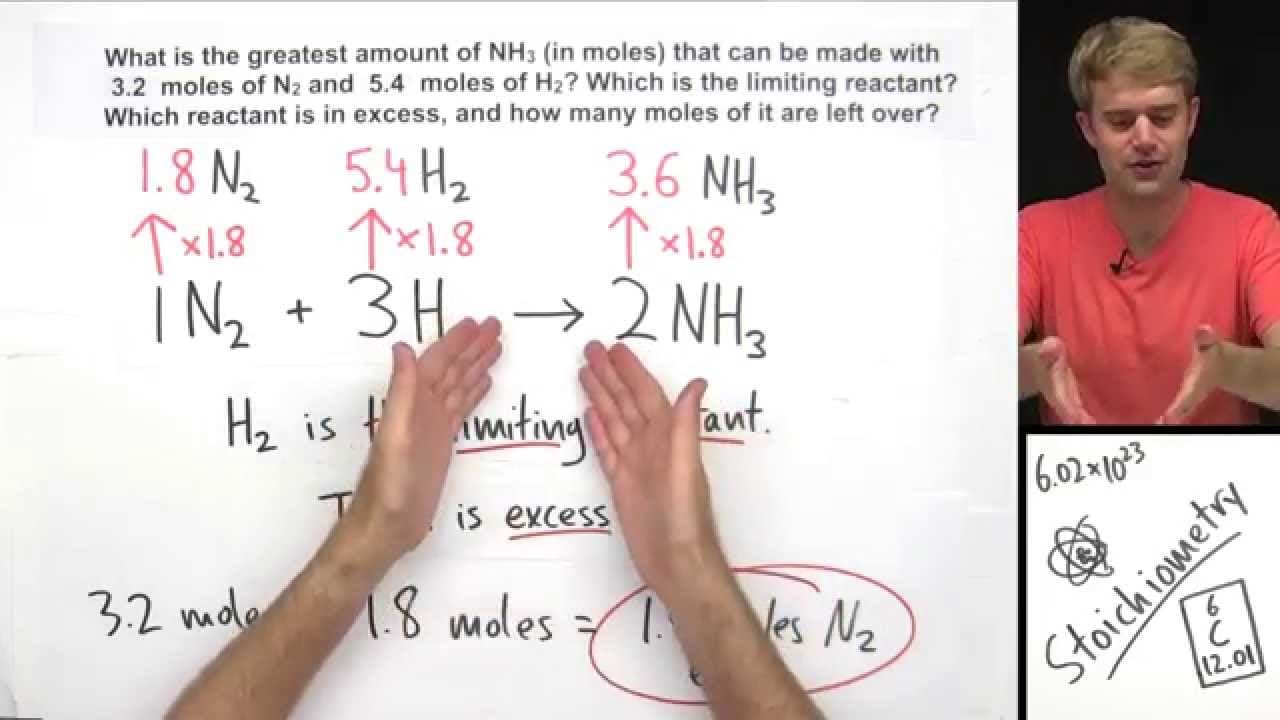
Limiting reactants are the substances that determine the maximum amount of product that can be formed in a chemical reaction, as they are consumed first. Excess reactants are the leftover substances that remain after the reaction completes. Understanding these concepts is crucial for predicting reaction outcomes and maximizing yields.
Transcript
in this video we're going to talk about limiting reactant which can also be called limiting reagent along the way we'll also discuss a related topic called excess reactant now limiting reactant excess reactant this stuff all has to do with chemical reactions but to explain it from the beginning I actually don't want to start talking about the chemi... Read More
Key Insights
- ⛔ Limiting reactants constrain the amount of product generated in a chemical reaction.
- ❓ Excess reactants remain unutilized once the reaction reaches completion.
- 🦻 Analogies, such as cooking recipes, aid in comprehending complex chemical concepts.
- ⛔ Identifying the limiting reactant is essential for maximizing product yield.
- ⛔ Understanding the differences between limiting and excess reactants enhances chemical reaction comprehension.
- 🧑🏭 Conversion factors and coefficients are utilized to determine the limiting reactant.
- 🏃 Limiting reactant problems can be solved by identifying which reactant runs out first.
Install to Summarize YouTube Videos and Get Transcripts
Explore YouTube Video Summarizer or Get YouTube Transcript Extractor
Questions & Answers
Q: What is a limiting reactant in a chemical reaction and how does it affect the outcome?
A limiting reactant is the reactant that gets used up first, thus determining the maximum amount of product that can be formed in a chemical reaction. It restricts the reaction from producing more product once it is depleted.
Q: How does excess reactant differ from limiting reactant in a chemical reaction?
Excess reactant is the reactant that remains after the limiting reactant is fully consumed in a chemical reaction. It doesn't play a direct role in the reaction's outcome but is present in surplus.
Q: How can the concept of limiting reactants be visualized using cooking recipe analogies?
Just like ingredients in a cooking recipe, limiting reactants are akin to the key ingredient that runs out first, limiting the dish's production. Excess reactants, on the other hand, are like leftover ingredients after the recipe is completed.
Q: Why is identifying the limiting reactant crucial in chemical reactions?
Identifying the limiting reactant is crucial as it determines the efficiency of a chemical reaction, ensuring that resources are optimally utilized and the maximum possible product is obtained.
Summary & Key Takeaways
-
Limiting reactants decide the maximum product yield in chemical reactions.
-
Excess reactants remain unused after the reaction ends.
-
The analogy of cooking recipes helps explain limiting reactants and excess reactants in chemistry.
Read in Other Languages (beta)
Share This Summary 📚
Summarize YouTube Videos and Get Video Transcripts with 1-Click
Try YouTube Summary with ChatGPT & Claude or YouTube Transcript Generator
Explore More Summaries from Tyler DeWitt 📚
Summarize YouTube Videos and Get Video Transcripts with 1-Click
Try YouTube Summary with ChatGPT & Claude or YouTube Transcript Generator