What Causes Auroras and How Are They Formed?
TL;DR
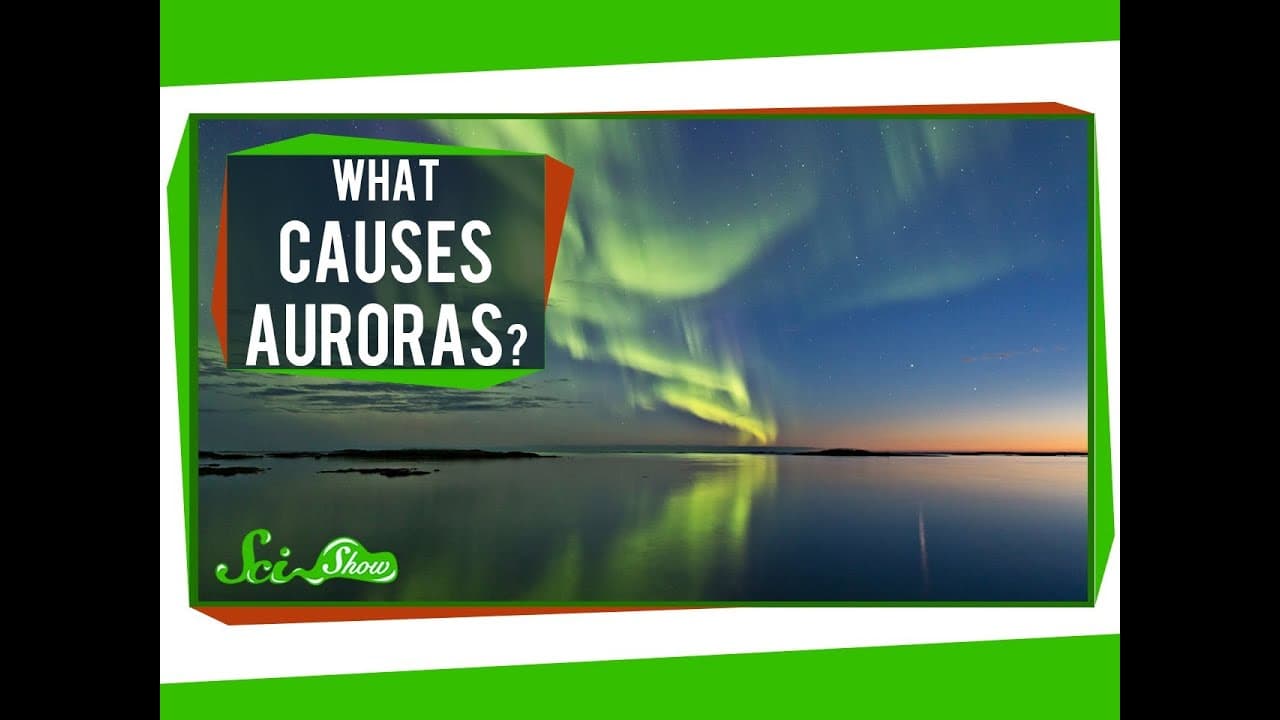
Auroras are caused by solar winds colliding with Earth's magnetic field, which directs charged particles towards the poles. When these particles interact with atmospheric gases, they release energy in the form of light, producing colorful displays. The colors vary based on the type of gas involved, with oxygen creating green or red light and nitrogen producing blue.
Transcript
if you've ever been lucky enough to see Aurora's you're very lucky and I'm very jealous because I never have but I do get some joy from understanding exactly what those dazzling ripples of color are met heard that they're caused by solar winds hitting our upper atmosphere but that's one of those hand wavy answers that doesn't actually answer anythi... Read More
Key Insights
- 💨 Aurora Borealis is caused by solar winds interacting with Earth's magnetic field.
- 🧑🏭 Earth's magnetic field acts as a shield, directing charged particles towards the poles.
- 🫢 The colors of Aurora Borealis depend on the type of gas in the atmosphere.
- 🙂 Solar winds distort the magnetic field, creating spectacular displays of light near the poles.
- ❓ The great solar storm of 1859 had a significant impact on the visibility of Aurora Borealis.
- 🫀 Oxygen and nitrogen atoms in the atmosphere release photons of different wavelengths, creating varied colors in Aurora Borealis.
- 💨 Solar winds consist of high-energy particles that interact with Earth's atmosphere, creating the phenomenon of Aurora Borealis.
Install to Summarize YouTube Videos and Get Transcripts
Explore YouTube Video Summarizer or Get YouTube Transcript Extractor
Questions & Answers
Q: What causes Aurora Borealis?
Aurora Borealis is caused by solar winds interacting with Earth's magnetic field, directing charged particles towards the poles where they create colorful lights in the atmosphere.
Q: How do solar winds affect Earth's magnetic field?
Solar winds, consisting of high-energy particles, distort Earth's magnetic field, directing them towards the poles where they interact with the atmosphere to create Aurora Borealis.
Q: Why do different gases in the atmosphere produce different colors in Aurora Borealis?
Oxygen and nitrogen atoms in the atmosphere release photons of different wavelengths when struck by charged particles, resulting in the variation of colors in Aurora Borealis.
Q: What was the significance of the great solar storm of 1859 in relation to Aurora Borealis?
The great solar storm of 1859 caused the northern lights to be seen as far south as Honolulu due to the intense solar winds distorting Earth's magnetic field, creating a spectacular display of Aurora Borealis.
Summary & Key Takeaways
-
Aurora Borealis results from solar winds hitting Earth's magnetic field, creating colorful lights near the poles.
-
Solar winds distort Earth's magnetic field, directing charged particles towards the poles where they interact with the atmosphere, creating light.
-
The colors of Aurora Borealis depend on the type of gas in the atmosphere, with oxygen and nitrogen producing different hues.
Read in Other Languages (beta)
Share This Summary 📚
Summarize YouTube Videos and Get Video Transcripts with 1-Click
Try YouTube Summary with ChatGPT & Claude or YouTube Transcript Generator
Explore More Summaries from SciShow 📚


Summarize YouTube Videos and Get Video Transcripts with 1-Click
Try YouTube Summary with ChatGPT & Claude or YouTube Transcript Generator