How to Draw and Illustrate Short Hair, Body Hair, and Facial Hair
TL;DR
Learn how to render short hair, facial hair, and hairstyles under 4 inches with detailed tips and techniques.
Transcript
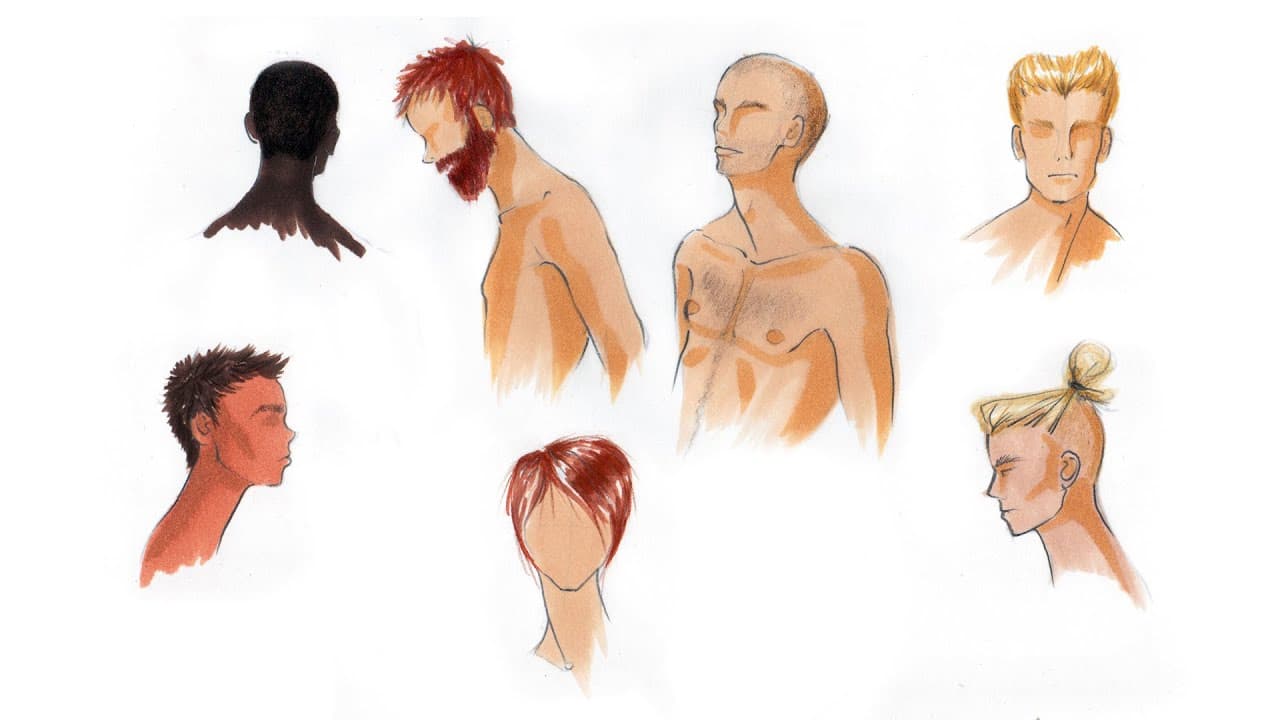
hey party people welcome back today is our next installment in the hair series and today I'm gonna go over all kinds of short hair pixie cuts pompadours facial hair mustaches and beards stubble jar head hair body and whatever all kinds of short hair well we'll say like 4 inches and shorter now I'm rubbing my hands together a lot because it is so fr... Read More
Key Insights
- 👱 Short hair rendering requires attention to detail in direction, shading, and highlights for a realistic depiction.
- 👱 Facial hair like mustaches and beards should be rendered differently due to their coarser texture and darker appearance.
- 👱 Skin tones should be rendered before adding hair textures to ensure a seamless overlap between skin and hair in illustrations.
- 🧕 Man buns for men involve unique styling elements like shaved back heads, stubble, and messy bun loops.
- 👨🦱 Tight curls in black men's hair require precise rendering techniques to maintain a clean and realistic look.
- 💇 Short hairstyles like pixie cuts may not have prominent highlights, focusing more on texture and direction.
- 🤕 Mustaches and beards typically grow darker than head hair and should be illustrated accordingly for accurate representation.
Install to Summarize YouTube Videos and Get Transcripts
Explore YouTube Video Summarizer or Get YouTube Transcript Extractor
Questions & Answers
Q: What are the key points to remember when rendering short hairstyles?
When rendering short hairstyles, it is crucial to follow the direction the hair is growing, focus on shading for depth, and create realistic highlights that follow the hair's texture.
Q: How can you differentiate between rendering facial hair like mustaches and beards from short head hair?
Facial hair like mustaches and beards have coarser hair texture, typically grow darker than head hair, and require more attention to detail in highlighting and shading.
Q: What is the significance of rendering skin tones before adding hair textures in illustrations?
Rendering skin tones before adding hair textures helps create a natural overlap between skin and hair, resulting in a more realistic and cohesive look for short hairstyles.
Q: How does the tutorial address the rendering techniques for specific short hairstyles like pixie cuts and man buns?
The tutorial provides detailed instructions on rendering techniques for pixie cuts and man buns, emphasizing the direction of hair growth, subtle highlights, and unique textures for each style.
Summary & Key Takeaways
-
Detailed tutorial on rendering short hair, facial hair, mustaches, beards, and hairstyles under 4 inches with emphasis on direction and texture.
-
Tips on highlighting and shadowing for various short hairstyles like pixie cuts, stubble, pompadours, and man buns.
-
Techniques for rendering skin tones with color pencils and markers for a realistic hair depiction.
Read in Other Languages (beta)
Share This Summary 📚
Summarize YouTube Videos and Get Video Transcripts with 1-Click
Try YouTube Summary with ChatGPT & Claude or YouTube Transcript Generator
Explore More Summaries from Zoe Hong 📚

Summarize YouTube Videos and Get Video Transcripts with 1-Click
Try YouTube Summary with ChatGPT & Claude or YouTube Transcript Generator