What Are the Four Key Ingredients for Beef Bulgogi?
TL;DR
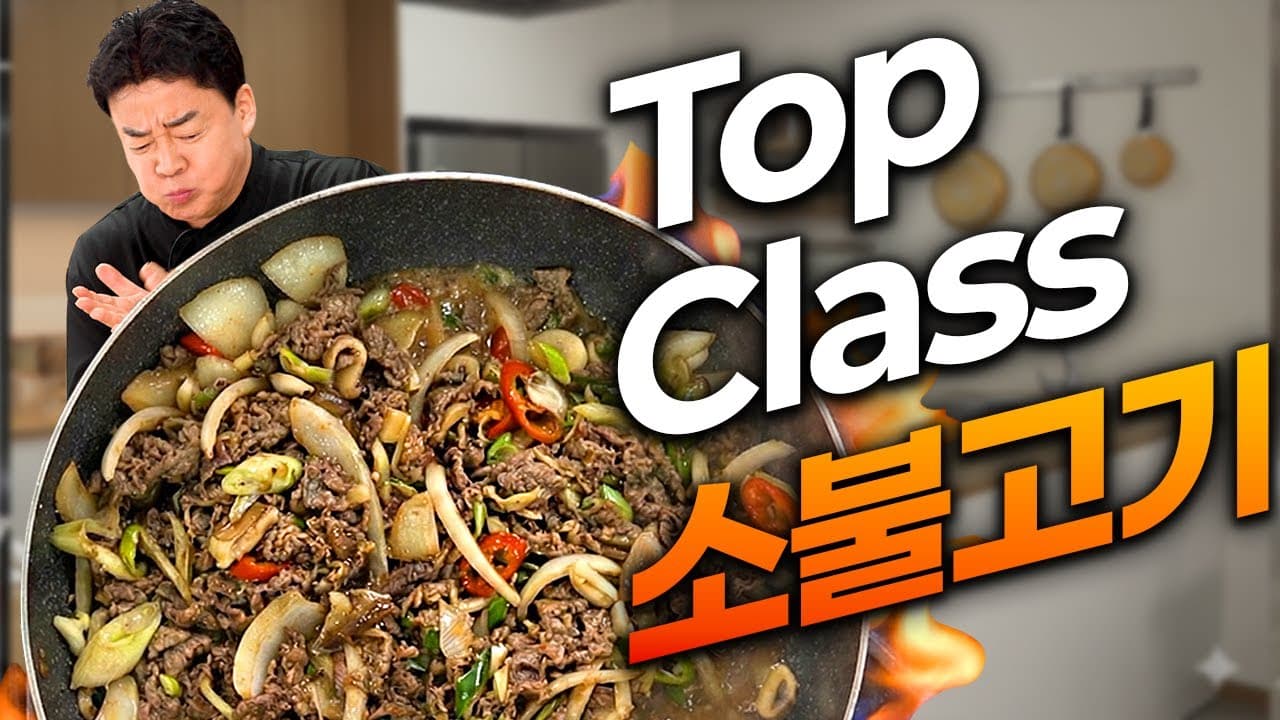
To make beef bulgogi, you need four essential ingredients: sesame oil, soy sauce, sugar, and minced garlic. Any thinly sliced beef with some fat works well, and while vegetables like onions and mushrooms are optional, they enhance the dish's flavor. Start by marinating the beef with sugar, stir-fry it without added oil, and finish with sesame oil for the authentic taste.
Transcript
Hello, I'm Paik Jong Won We'll do one of the most popular Korean dishes today It's called bulgogi in Korean There are pork bulgogi, chicken bulgogi... There are different kinds but beef bulgogi is most popular I'll show you the easiest way (Beef bulgogi) to make bulgogi today [Paik's Cuisine] We'll do... Read More
Key Insights
- Beef bulgogi is a popular Korean dish, and this recipe focuses on a simple method using only four main sauce ingredients: sesame oil, soy sauce, sugar, and garlic.
- The choice of beef is flexible; any thinly sliced beef with a bit of fat works well, such as brisket or meat labeled for bulgogi.
- Vegetables like green onions, onions, and mushrooms are optional but add flavor and texture to the dish. Shiitake, oyster, or enoki mushrooms are recommended.
- For a sweeter flavor, add sugar before salty ingredients to allow the sweetness to penetrate the meat better.
- The cooking process involves marinating the meat, preparing vegetables, and stir-frying without oil, as the meat releases enough moisture.
- Sesame oil is added at the end of the cooking process to give the dish its signature bulgogi aroma.
- The dish can be served with rice or used in a sandwich with mayonnaise and ketchup for a different take.
- For those avoiding vegetables, reduce soy sauce to prevent the dish from becoming too salty.
Install to Summarize YouTube Videos and Get Transcripts
Explore YouTube Video Summarizer or Get YouTube Transcript Extractor
Questions & Answers
Q: What are the main ingredients needed for beef bulgogi?
The main ingredients for beef bulgogi include thinly sliced beef, sesame oil, soy sauce, sugar, and garlic. Optional ingredients that add flavor and texture are green onions, onions, and mushrooms such as shiitake, oyster, or enoki. Sesame seeds can be used for garnish.
Q: How should the beef be prepared for cooking?
The beef should be cut into bite-sized pieces and gently untangled before marinating. It's important to use thinly sliced beef with a bit of fat to ensure tenderness and flavor. If the meat is frozen, it should be thawed and separated before marinating.
Q: What is the recommended order for adding ingredients during marination?
During marination, it is recommended to add sugar first, followed by other sweet ingredients like starch syrup. This allows the larger sugar particles to penetrate the meat, enhancing sweetness. Afterward, add garlic and soy sauce, mixing gently to avoid breaking the meat.
Q: Why is sesame oil added at the end of cooking?
Sesame oil is added at the end of cooking because it provides the distinct aroma and flavor that defines bulgogi. Adding it towards the end ensures that the aroma is fresh and not diminished during the cooking process, giving the dish its characteristic taste.
Q: Can the recipe be adjusted for those who do not want to use vegetables?
Yes, the recipe can be adjusted by reducing the amount of soy sauce if vegetables are not being used. This prevents the dish from becoming too salty. The meat can be cooked longer for a drier texture, making it suitable for sandwiches with mayonnaise and ketchup.
Q: How should the vegetables be prepared for bulgogi?
Vegetables such as green onions, onions, and mushrooms should be sliced thinly. Green onions and red chili peppers can be sliced diagonally for a more presentable look, especially if serving guests. Shiitake mushrooms should have their stems removed and be sliced thinly.
Q: What is a tip for cooking bulgogi to avoid using too much oil?
A tip for cooking bulgogi without using too much oil is to rely on the moisture released by the meat itself. The beef releases enough liquid during cooking, so additional oil is unnecessary. Stir-frying gently ensures the meat cooks evenly without sticking.
Q: How can bulgogi be served for a different culinary experience?
For a different culinary experience, bulgogi can be served as a sandwich. After cooking, place the bulgogi in a sandwich with mayonnaise and ketchup. This offers a unique twist on the traditional dish, providing a fusion of flavors that can appeal to diverse palates.
Summary & Key Takeaways
-
Beef bulgogi is a traditional Korean dish made easy with a simple recipe using four main sauce ingredients: sesame oil, soy sauce, sugar, and garlic. The choice of beef is versatile, allowing for any thinly sliced cut with some fat. Vegetables like green onions, onions, and mushrooms are optional but enhance the dish.
-
The cooking process includes marinating the beef with sugar first to ensure sweetness penetrates the meat, followed by adding soy sauce and other ingredients. Stir-fry the marinated beef without additional oil, as the meat releases its own moisture. Finish with sesame oil for the authentic bulgogi aroma.
-
Bulgogi can be enjoyed with rice or made into a sandwich for a unique twist. Adjust the recipe by reducing soy sauce if not using vegetables to avoid excess saltiness. This simple method offers a delicious way to enjoy a classic Korean favorite at home.
Read in Other Languages (beta)
Share This Summary 📚
Summarize YouTube Videos and Get Video Transcripts with 1-Click
Try YouTube Summary with ChatGPT & Claude or YouTube Transcript Generator
Explore More Summaries from 백종원 PAIK JONG WON 📚

![[내꺼내먹_홍콩반점 2편] 지금도 계속 변화 중입니다. thumbnail](/_next/image?url=https%3A%2F%2Fi.ytimg.com%2Fvi%2Fmxj48nI01z4%2Fhqdefault.jpg&w=750&q=75)
![[백종원의 님아 그 시장을 가오_EP.36_장성] “소곱창 시키니까 12첩 반상이 나오네?” 반찬만으로 소주 1병 거뜬합니다! 장성 곱창집 thumbnail](/_next/image?url=https%3A%2F%2Fi.ytimg.com%2Fvi%2FFpnRPY9Rfdo%2Fhqdefault.jpg&w=750&q=75)
Summarize YouTube Videos and Get Video Transcripts with 1-Click
Try YouTube Summary with ChatGPT & Claude or YouTube Transcript Generator