How to Quickly Master Tarot Reading
TL;DR
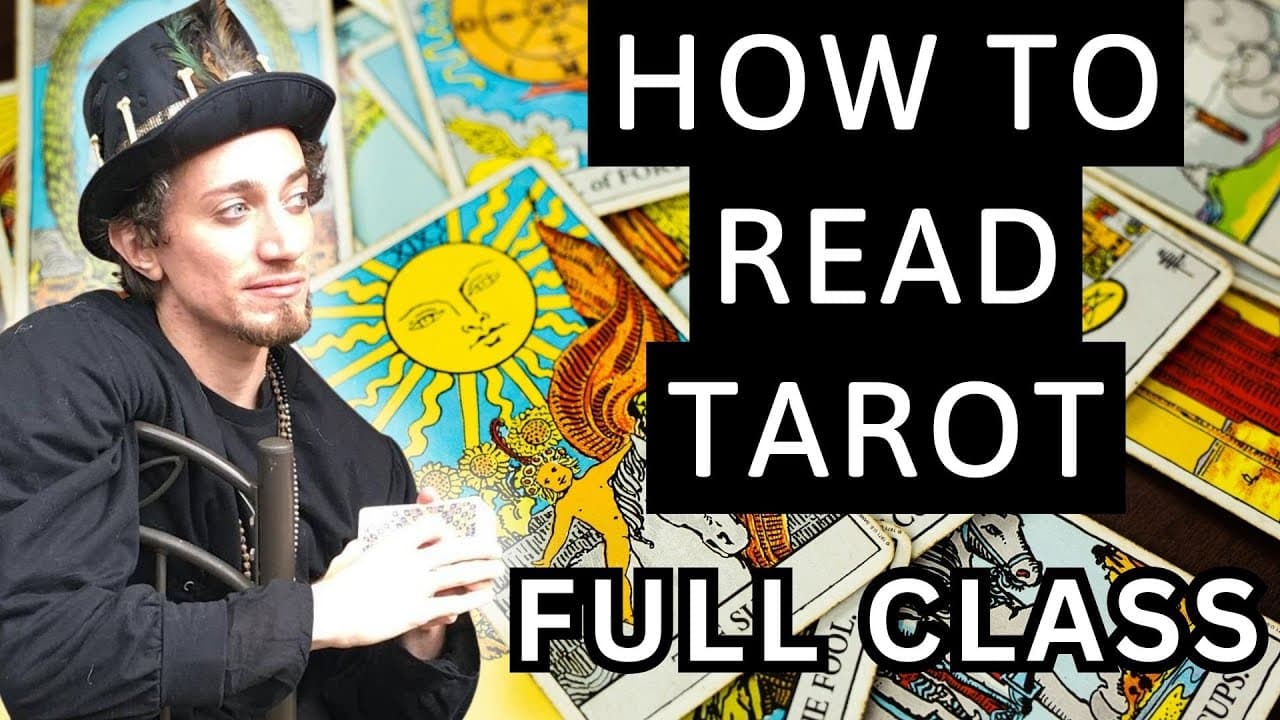
Tarot cards can be a powerful tool for self-reflection and divination. They encompass elements of various spiritual traditions, including Christian and Jewish mysticism, Taoism, and Tantra. This class provides a comprehensive overview of the tarot deck, focusing on the core ideas and meanings of each card, allowing you to develop a personal connection and understanding of the tarot for effective readings.
Transcript
so i got taro i got involved in tara a million years ago like in like in the 90s and at that time like witchcraft wasn't like as cute like me being like in elementary school bringing my tarot tower cards to school like it was not a cute thing it was a weird thing and i people have told me like oh tarot cards are of the devil fun fun fact the number... Read More
Key Insights
- Tarot cards are a blend of multiple spiritual traditions, including Christian and Jewish mysticism.
- The most popular tarot deck, the Rider Waite Smith deck, is rich in Christian mystical symbolism.
- Tarot involves a personal connection; you don't have to use reversals unless you choose to.
- The tarot deck consists of 78 cards, divided into major and minor arcana, each with unique meanings.
- The four elements—fire, water, air, and earth—are crucial to understanding the tarot suits.
- Numerology plays a significant role in interpreting the tarot, with numbers one to ten having specific meanings.
- The court cards represent different elemental combinations, offering insights into personalities and situations.
- Tarot is a map of consciousness, useful for self-reflection, divination, and understanding human experiences.
Install to Summarize YouTube Videos and Get Transcripts
Explore YouTube Video Summarizer or Get YouTube Transcript Extractor
Questions & Answers
Q: How does tarot incorporate different spiritual traditions?
Tarot cards encompass elements from various spiritual traditions, including Christian and Jewish mysticism, Taoism, and Tantra. The Rider Waite Smith deck, for example, is rich in Christian mystical symbolism. This blend of traditions allows tarot to serve as a universal tool for self-reflection and divination, appealing to a wide range of spiritual beliefs.
Q: What is the significance of the Rider Waite Smith tarot deck?
The Rider Waite Smith tarot deck is the most popular deck worldwide, known for its rich Christian mystical symbolism. Created in the late 1800s, it was designed by Arthur Edward Waite, a Christian, and illustrated by Pamela Coleman Smith. Its widespread use and symbolic depth make it a foundational tool for both beginners and experienced tarot readers.
Q: How are the four elements used in tarot?
In tarot, the four elements—fire, water, air, and earth—are crucial for understanding the suits. Each element corresponds to a suit: wands (fire), cups (water), swords (air), and pentacles (earth). These elements symbolize different aspects of life and personality, such as passion, emotion, intellect, and material concerns, providing a framework for interpreting the cards.
Q: What role does numerology play in tarot?
Numerology is integral to tarot interpretation, with numbers one to ten having specific meanings. These numbers represent stages of manifestation and development, from potentiality to completion. By understanding these numerical meanings, readers can gain deeper insights into the cards' messages and how they relate to the querent's life and experiences.
Q: How are court cards interpreted in tarot?
Court cards in tarot represent different elemental combinations and can offer insights into personalities and situations. Each court card—king, queen, knight, and page—corresponds to an element, such as air, water, fire, or earth. By understanding these combinations, readers can interpret the court cards as reflecting various traits, behaviors, or roles in a reading.
Q: What is the purpose of the major arcana in tarot?
The major arcana in tarot, consisting of 22 cards, represent significant life events, spiritual lessons, and universal themes. They are often seen as a journey towards enlightenment or self-discovery, with each card symbolizing a stage in this journey. The major arcana provide profound insights into the querent's life path and spiritual development.
Q: How can one learn tarot effectively?
To learn tarot effectively, focus on understanding the core ideas and meanings of each card, including their elemental and numerical associations. Developing a personal connection with the cards allows for intuitive interpretation. Practice reading for yourself and others, and consider studying esoteric philosophies to deepen your understanding of tarot's symbolic language.
Q: What is the relationship between tarot and consciousness?
Tarot is often viewed as a map of consciousness, reflecting the complexities of human experiences and the subconscious mind. By interpreting the cards, individuals can gain insights into their thoughts, emotions, and life situations. Tarot serves as a tool for self-reflection, helping users explore their inner world and understand their place in the larger universe.
Summary & Key Takeaways
-
Tarot cards are deeply rooted in various spiritual traditions and offer a comprehensive map of consciousness. They are divided into major and minor arcana, with each card holding unique meanings influenced by elements and numerology. Understanding these core ideas allows for personal interpretation and effective tarot readings.
-
The Rider Waite Smith tarot deck, rich in Christian symbolism, is the most popular. The four elements—fire, water, air, and earth—are key to understanding the suits, while numerology helps interpret the cards' meanings. The court cards represent different elemental combinations, reflecting various personalities and situations.
-
This class provides a deep dive into tarot, combining esoteric philosophy with practical application. By focusing on core ideas, learners can develop a personal connection with the cards, enabling them to conduct insightful readings and explore their own consciousness through tarot.
Read in Other Languages (beta)
Share This Summary 📚
Summarize YouTube Videos and Get Video Transcripts with 1-Click
Try YouTube Summary with ChatGPT & Claude or YouTube Transcript Generator
Explore More Summaries from Joe Monteleone 📚
Summarize YouTube Videos and Get Video Transcripts with 1-Click
Try YouTube Summary with ChatGPT & Claude or YouTube Transcript Generator