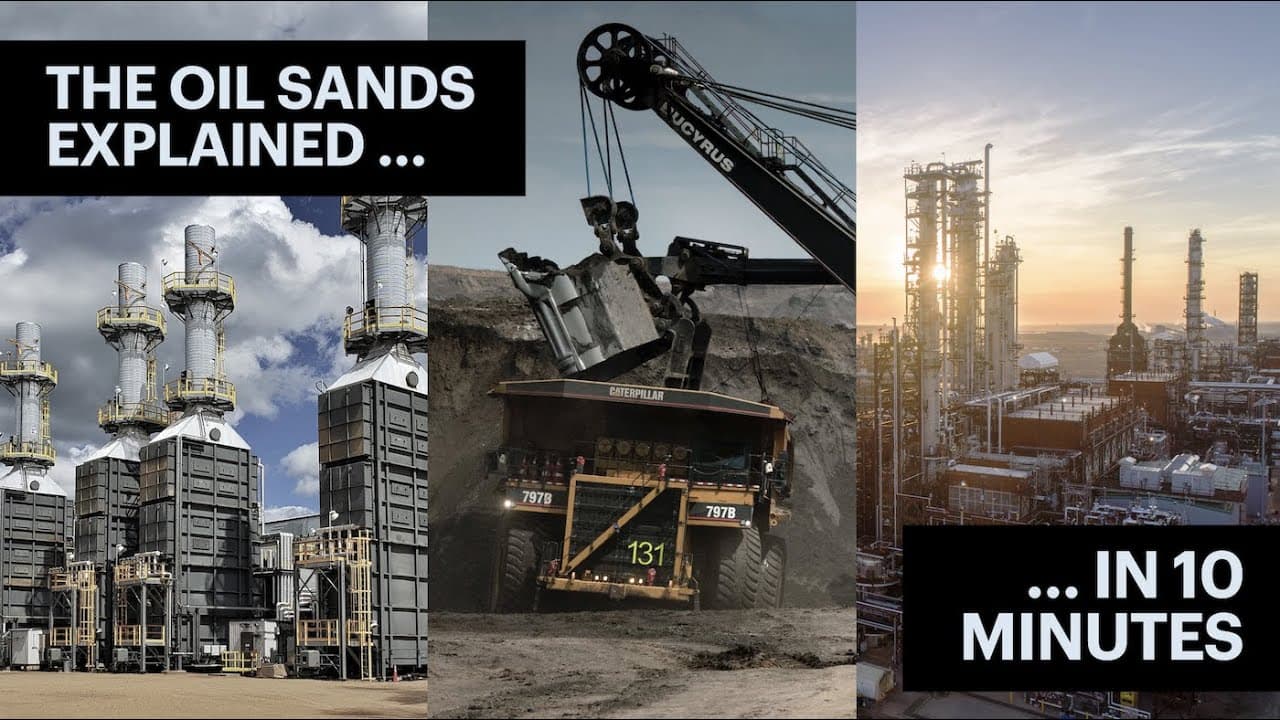
The Oil Sands Explained ... in 10 minutes
TL;DR
Alberta's oil sands contain a significant oil reserve, contributing to Canada's economy, but only a fraction of the barrels can be economically recovered. Extraction methods include in-situ and surface mining, and the extracted bitumen can be processed into a marketable crude product.
Transcript
Alberta's oil sands. It's the world's third largest oil reserve. 161 billion barrels of recoverable oil in the ground. They're a huge part of Canada's economy, contributing trillions to Canada's GDP over the past 50 years, generating billions annually in government taxes, revenues, and royalties, supporting small and medium-sized business... Read More
Key Insights
- 🥪 Alberta's oil sands are a significant contributor to Canada's economy, but only a fraction of the barrels can be economically recovered with current technology.
- 😚 In-situ extraction methods involve pumping steam into the ground, while surface mining is used for deposits closer to the surface.
- 😘 Bitumen is a complex compound high in carbon and low in hydrogen, making it thick and viscous at room temperatures.
- 🖐️ Upgraders play a crucial role in converting bitumen residue into higher-value crude products.
- 🥪 The oil sands industry has committed to being net-zero by 2050 through advancements in technology and carbon capture and storage.
- 🥪 Alberta's oil sands rely heavily on export pipelines, with storage and rail transportation used when pipelines are full.
- 🛢️ The price differentials for oil grades like WCS reflect the cost of shipping the oil to the final customer.
Install to Summarize YouTube Videos and Get Transcripts
Explore YouTube Video Summarizer or Get YouTube Transcript Extractor
Questions & Answers
Q: How much oil is estimated to be in Alberta's oil sands?
There are approximately 1.8 trillion barrels of oil in the oil sands, but only 10% can be economically recovered with current technology.
Q: What are the two methods of extracting bitumen from the oil sands?
Bitumen can be extracted through in-situ methods, where steam is pumped into the ground, or through surface mining, depending on the depth of the deposit.
Q: What is the composition of oil sands?
Oil sands are a mixture of sand, clays, water, and bitumen. The sands are mostly coarse silica sand (80%), with fine solids and clays making up 5%, water another 5%, and bitumen saturation rates averaging about 10%.
Q: How is bitumen processed into a marketable crude product?
The extracted bitumen can be either upgraded or diluted to create a marketable crude product. Upgrading involves converting the residue into higher-value gas oils, while dilution allows for the direct sale of the clean bitumen blend to a refinery.
Key Insights:
- Alberta's oil sands are a significant contributor to Canada's economy, but only a fraction of the barrels can be economically recovered with current technology.
- In-situ extraction methods involve pumping steam into the ground, while surface mining is used for deposits closer to the surface.
- Bitumen is a complex compound high in carbon and low in hydrogen, making it thick and viscous at room temperatures.
- Upgraders play a crucial role in converting bitumen residue into higher-value crude products.
- The oil sands industry has committed to being net-zero by 2050 through advancements in technology and carbon capture and storage.
- Alberta's oil sands rely heavily on export pipelines, with storage and rail transportation used when pipelines are full.
- The price differentials for oil grades like WCS reflect the cost of shipping the oil to the final customer.
- Emissions from the oil sands industry account for about 15% of Canada's total emissions, but efforts are being made to reduce carbon emissions through technology advancements and carbon capture and storage.
Summary & Key Takeaways
-
Alberta's oil sands are a major part of Canada's economy, contributing trillions to its GDP and generating billions in government taxes and revenues.
-
The oil sands contain approximately 1.8 trillion barrels of oil, but only 10% can be economically recovered with current technology.
-
Bitumen extraction can be done through in-situ methods or surface mining, with the extracted bitumen processed into a marketable crude product.
Read in Other Languages (beta)
Share This Summary 📚
Summarize YouTube Videos and Get Video Transcripts with 1-Click
Try YouTube Summary with ChatGPT & Claude or YouTube Transcript Generator