How Are Photo-Realistic Digital Humans Created?
TL;DR
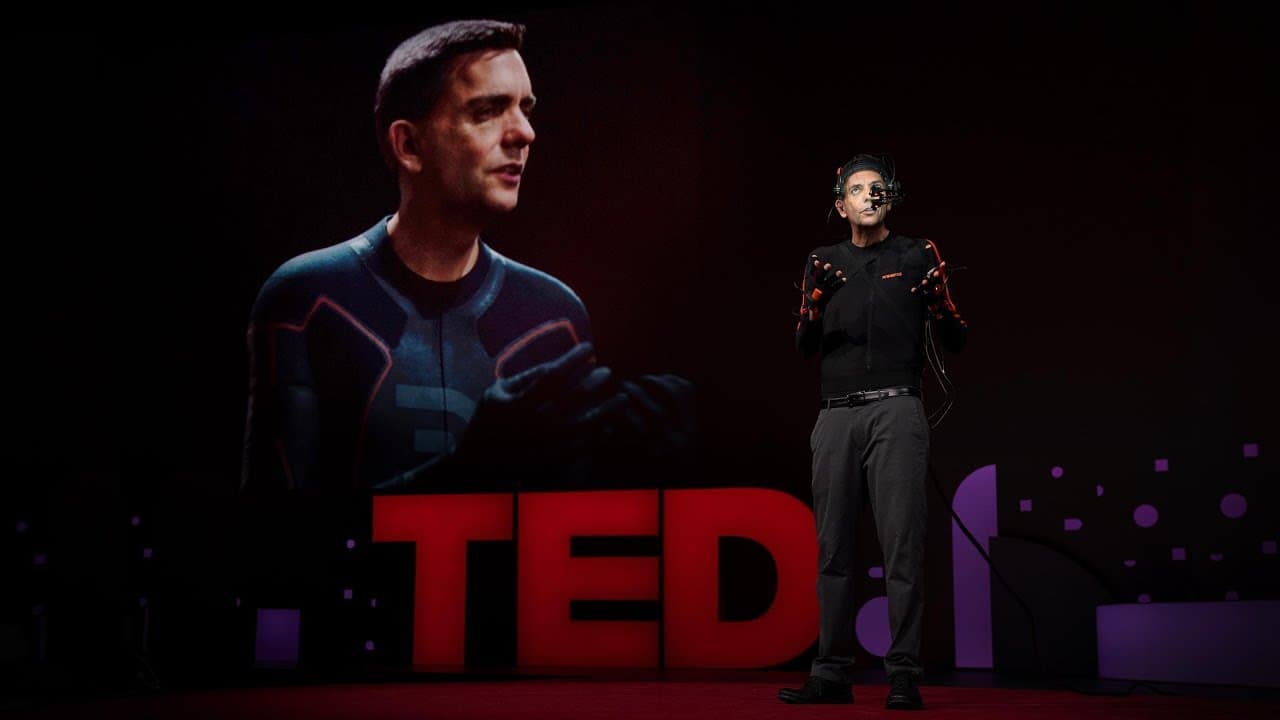
Photo-realistic digital humans are created using advanced motion capture technology and machine learning, which allow real-time expression transfer from a human to a digital avatar. This technology has applications in film, live events, and virtual interactions, enhancing communication by providing realistic nonverbal cues, but it also raises ethical concerns similar to those of deepfake technology.
Transcript
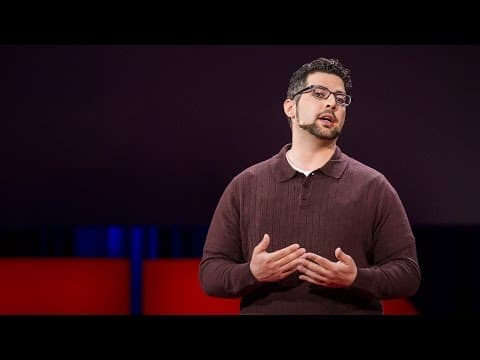
Hello. I'm not a real person. I'm actually a copy of a real person. Although, I feel like a real person. It's kind of hard to explain. Hold on -- I think I saw a real person ... there's one. Let's bring him onstage. Hello. (Applause) What you see up there is a digital human. I'm wearing an inertial motion capture suit that's figuring what my body i... Read More
Key Insights
- 🤖 Creating believable digital humans is challenging but advancements in technology and machine learning have made it possible to create photo-realistic human-like characters in real time.
- 🌟 The use of machine learning and deep neural networks allows for the computation of detailed facial expressions, wrinkles, blood flow, and even eyelash movement in digital humans.
- 🏭 The technology has applications beyond film, including live events and concerts where digital celebrities can interact with audiences in real-time and new forms of communication such as virtual reality interactions and enhanced video calls.
- ⚠️ The technology also raises concerns about the potential for manipulation and deception, similar to the issues surrounding deepfake technology.
- 👥 Human-like virtual assistants with bodies and faces can provide more natural and intuitive communication experiences, allowing for nonverbal cues and making interactions easier.
- 🌍 The ability to interact with digital humans brings science fiction to reality and has the potential to revolutionize the way we communicate with computers and connect with others, bringing people closer together.
- 💡 Advancements in technology are constantly evolving, and there is still work to be done to improve the realism and functionality of digital humans.
- 🤔 Balancing the excitement of this new technology with the ethical and privacy concerns it raises will be crucial as it becomes more widely adopted.
Install to Summarize YouTube Videos and Get Transcripts
Explore YouTube Video Summarizer or Get YouTube Transcript Extractor
Questions & Answers
Q: What is the purpose of creating photo-realistic digital humans?
The purpose of creating photo-realistic digital humans is to make them so convincing that the audience accepts them as real, with the ability to convey emotions and details of the person controlling them in real time.
Q: How did the creators capture the necessary data to build the model of the speaker's face?
The creators captured an enormous amount of data by using a specialized device called the "light stage," which has individually controlled lights and cameras. They reconstructed the speaker's face under various lighting conditions, capturing even the blood flow and the changes in facial expressions.
Q: What role does machine learning play in creating these realistic digital humans?
Machine learning played a crucial role in creating the realistic digital humans. The creators collected a large amount of data, including high-resolution motion capture and facial images, and used deep neural networks to train the machine learning algorithms. These algorithms can quickly analyze an image of the speaker and compute their expressions, wrinkles, blood flow, and even the movement of their eyelashes.
Q: What are some potential applications for this technology?
This technology has various potential applications. It can be used in live events and concerts, creating digital celebrities that are alive and in real time. It can also enhance communication, allowing people to interact with virtual assistants in a more human-like way, including nonverbal cues. Additionally, it can be used to give virtual assistants a body and a face, making communication more intuitive.
Q: What concerns might arise with this technology?
As with any new technology, there are concerns that need to be addressed. The ability to create highly realistic digital humans raises questions about the potential misuse of the technology, such as creating fake videos or manipulating information. Additionally, ethical considerations regarding privacy and consent may emerge as this technology becomes more widespread.
Summary & Key Takeaways
-
The speaker is a digital human controlled by a real person in real time using motion capture technology and machine learning.
-
The goal of the project is to create a photo-realistic human with actual emotions and details of the person controlling it.
-
The technology has potential applications in film, live events, concerts, virtual reality, and virtual assistants, allowing for more immersive and human-like interactions.
Read in Other Languages (beta)
Share This Summary 📚
Summarize YouTube Videos and Get Video Transcripts with 1-Click
Try YouTube Summary with ChatGPT & Claude or YouTube Transcript Generator
Explore More Summaries from TED 📚


Summarize YouTube Videos and Get Video Transcripts with 1-Click
Try YouTube Summary with ChatGPT & Claude or YouTube Transcript Generator