Will austerity work?
TL;DR
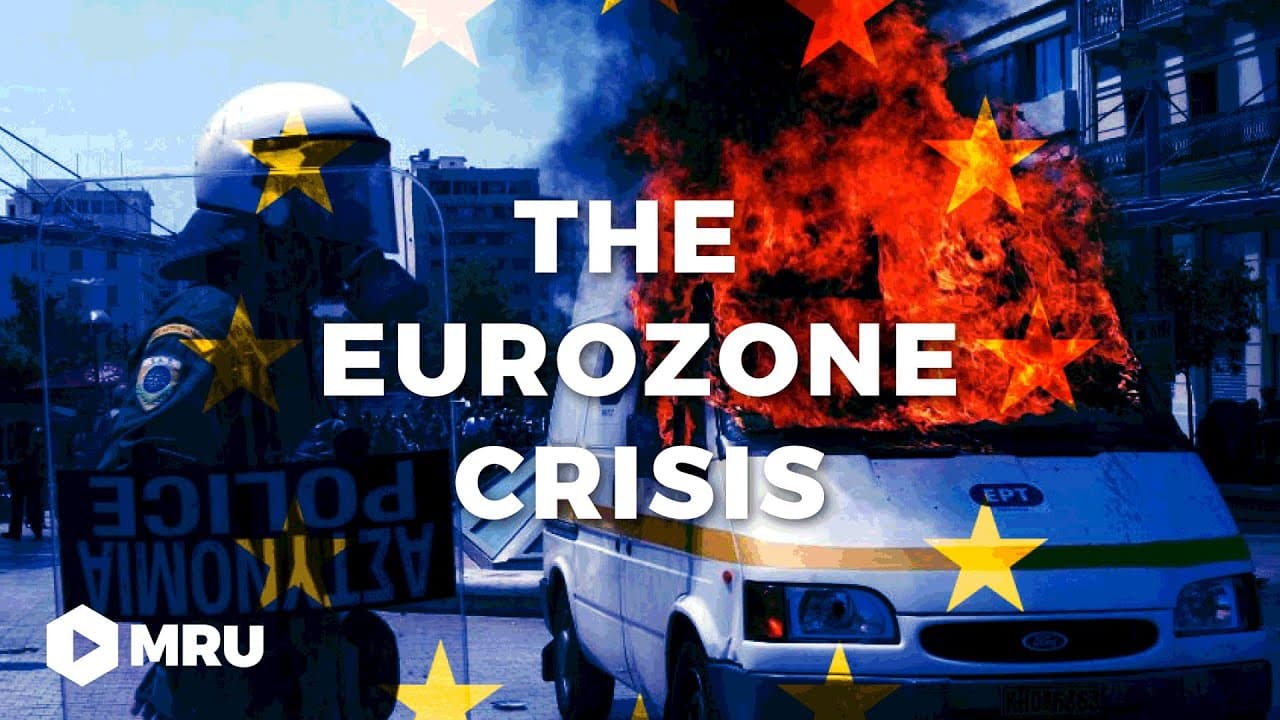
Austerity is challenging and may worsen the Euro Crisis.
Transcript
When it comes to the Euro Crisis, will austerity work? Let's consider a simplified form of a domestic government budget constraint. Government spending is equal to tax revenue taken in plus the amount of money borrowed. Note that the term austerity can have multiple meanings. Austerity could refer to a decrease in government spending or it coul... Read More
Key Insights
- Austerity involves either reducing government spending or increasing taxes, both of which can harm economic growth by reducing aggregate demand.
- Raising taxes can be ineffective if tax rates are already high or if the tax collection system is inefficient, as seen in France and Greece.
- Cutting government spending can lead to short-term economic problems, including layoffs and reduced investment in future growth areas like education.
- Both tax increases and spending cuts risk creating a downward economic spiral, potentially worsening budget deficits and necessitating further austerity measures.
- Eurozone economies face unique challenges due to inflexible labor markets and credit contractions, making austerity measures particularly difficult to implement effectively.
- Successful financial crisis adjustments typically involve currency depreciation, spending cuts on wasteful items, and minimal tax hikes, but these are difficult within the Eurozone.
- Alternatives to austerity include external aid, which may only postpone problems, or defaulting on debt, which can lead to global financial crises and difficulty borrowing in the future.
- Borrowing more and spending in hopes of economic recovery is risky, especially without signs of rapid growth in the Eurozone.
Install to Summarize YouTube Videos and Get Transcripts
Explore YouTube Video Summarizer or Get YouTube Transcript Extractor
Questions & Answers
Q: What are the main components of austerity?
Austerity typically involves either reducing government spending or increasing taxes. Both approaches aim to address budget deficits but can negatively impact economic growth by reducing aggregate demand. Tax hikes can deter consumer spending and investment, while spending cuts may lead to layoffs and decreased public services.
Q: Why might raising taxes be ineffective in some Eurozone countries?
Raising taxes can be ineffective in countries like France and Greece due to already high tax rates or inefficient tax collection systems. In such cases, increasing taxes may not significantly boost revenue and could further discourage economic activity, exacerbating economic challenges rather than alleviating them.
Q: What are the potential short-term effects of cutting government spending?
Cutting government spending can lead to short-term economic problems, such as reduced aggregate demand, layoffs, and decreased investment in critical areas like education. These cuts risk creating a downward economic spiral, worsening budget deficits, and necessitating further austerity measures, which could further harm the economy.
Q: How do inflexible labor markets and credit contractions affect austerity in the Eurozone?
Inflexible labor markets and credit contractions make austerity measures more challenging in the Eurozone. These factors prevent the economy from adjusting efficiently to spending cuts, as labor markets cannot quickly absorb laid-off workers, and credit constraints limit private sector investment, hindering economic recovery.
Q: What are typical components of a successful financial crisis adjustment?
Successful financial crisis adjustments usually include currency depreciation, spending cuts on wasteful items, and minimal tax hikes. These measures help balance budgets and stimulate economic activity. However, within the Eurozone, currency depreciation is challenging due to the shared currency, complicating the adjustment process.
Q: What are the alternatives to austerity in the Eurozone?
Alternatives to austerity include external aid and debt default. External aid can provide temporary relief but may postpone problems, while default can lead to financial crises and future borrowing difficulties. Another option is borrowing more and spending, hoping for economic recovery, though this is risky without growth prospects.
Q: What are the risks of defaulting on debt?
Defaulting on debt can trigger financial crises, potentially affecting global markets. It also makes future borrowing difficult, as creditors may be reluctant to lend. Without borrowing capabilities, countries may still face budget imbalances, leading to austerity measures despite the default, trapping them in economic hardship.
Q: Why is borrowing more and spending a risky strategy in the Eurozone?
Borrowing more and spending in hopes of economic recovery is risky in the Eurozone due to the lack of clear signs of rapid growth. Without growth, increased debt may become unsustainable, leading to financial instability. This strategy relies on uncertain future economic improvements, making it a gamble for struggling economies.
Summary & Key Takeaways
-
Austerity, involving tax hikes or spending cuts, can harm economic growth by reducing aggregate demand. Raising taxes may be ineffective in countries with high rates or poor tax collection. Spending cuts can lead to layoffs and reduced investment, risking a downward spiral in the economy.
-
Eurozone economies struggle with inflexible labor markets and credit issues, complicating effective austerity implementation. Successful crisis adjustments require currency depreciation, targeted spending cuts, and minimal tax hikes, but these are challenging within the Eurozone's framework.
-
Alternatives to austerity include external aid, which may delay problems, or defaulting on debt, risking financial crises and future borrowing difficulties. Borrowing more and spending in hopes of recovery is risky without clear growth prospects in the Eurozone.
Read in Other Languages (beta)
Share This Summary 📚
Summarize YouTube Videos and Get Video Transcripts with 1-Click
Try YouTube Summary with ChatGPT & Claude or YouTube Transcript Generator
Explore More Summaries from Marginal Revolution University 📚

Summarize YouTube Videos and Get Video Transcripts with 1-Click
Try YouTube Summary with ChatGPT & Claude or YouTube Transcript Generator