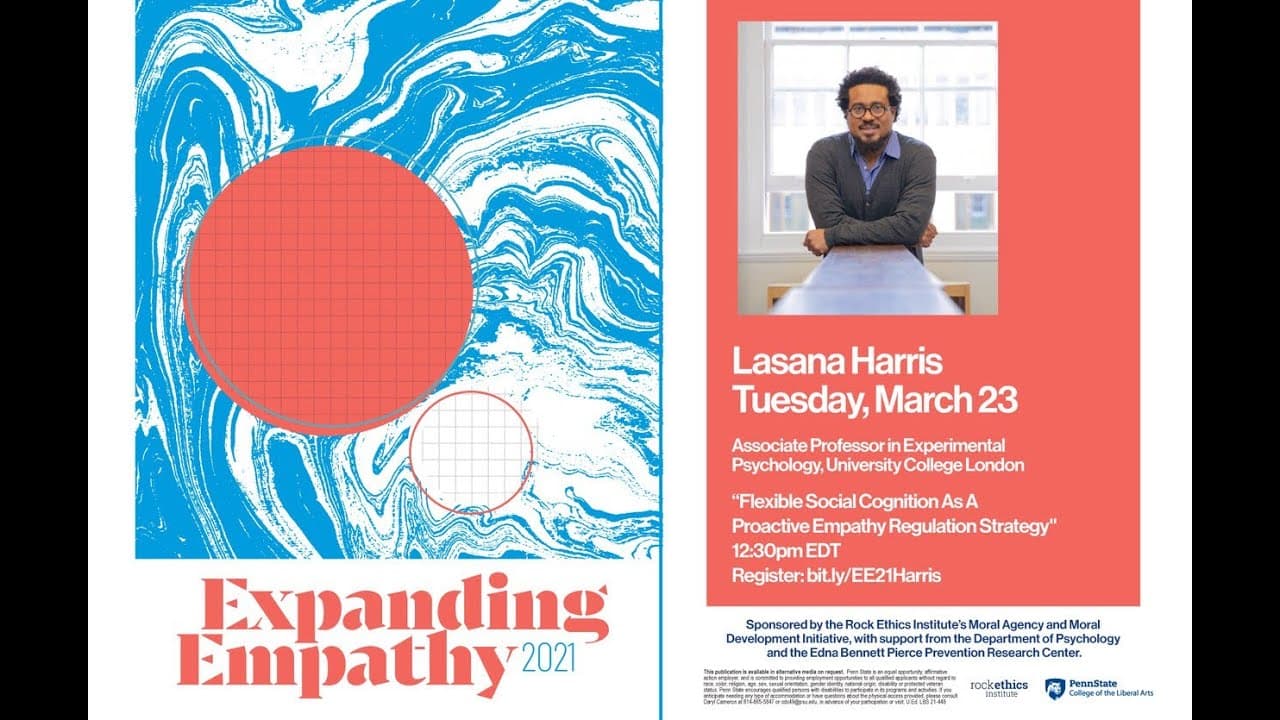
Expanding Empathy 2021: Lasana Harris
TL;DR
This talk explores the concept of empathy as a proactive emotion regulation strategy, particularly within the medical context, and discusses the impact of social cognition and context on empathic responses.
Transcript
so uh hopefully all of you have been able to access the webinar room i just want to say welcome uh this is the uh the fourth in a series of talks for the expanding empathy 2021 series uh i'm hosting it here at the rock ethics institute through the moral agency and moral development initiative it's also being co-sponsored by the psychology departmen... Read More
Key Insights
- 😷 Empathy can be seen as a proactive emotion regulation strategy, particularly in the medical context.
- ❓ The prediction and inference stages of empathy can be influenced by social cognition and context.
- 😷 Medical professionals often regulate empathy to avoid emotional exhaustion, but this may result in dehumanization and impact patient care.
- 👾 Context, such as physical space and procedural cues, can play a role in empathic responses.
- ❎ Mindfulness and acceptance approaches can help individuals tolerate and regulate negative emotions associated with empathy.
Install to Summarize YouTube Videos and Get Transcripts
Explore YouTube Video Summarizer or Get YouTube Transcript Extractor
Questions & Answers
Q: How does the type of medical intervention or interaction impact the effectiveness of empathy in improving outcomes?
The type of medical intervention or interaction matters in terms of empathic responses. For example, surgical procedures may require medical professionals to regulate their empathy, while therapy sessions may benefit from higher levels of empathy. The hierarchical and dependency nature of these interactions may also play a role in empathy dynamics.
Q: For individuals naturally detached, what strategies have been effective in switching on empathic modes and perspective taking?
Context is important in switching on empathic modes and perspective taking. Creating a medical context, such as through physical space or procedural cues, may facilitate the regulation of empathy for individuals naturally detached. This allows them to understand and communicate empathy without becoming emotionally exhausted.
Q: Could acceptance, such as a mindfulness approach, be an effective strategy for empathy regulation in the medical context?
Mindfulness and acceptance approaches have shown promise in regulating empathy without completely downregulating it. Mindfulness practices can help individuals accept and tolerate negative emotions associated with empathy, allowing them to maintain empathy without being overwhelmed.
Q: How does emotion contagion play a role in empathy regulation?
Emotion contagion, or the tendency to automatically "catch" and mirror the emotions of others, may impact empathy regulation. Controlling or managing emotion contagion can be important for medical professionals, as excessive emotional mirroring may lead to burnout or compromised patient care. Understanding and regulating emotion contagion is therefore crucial in empathy dynamics.
Key Insights:
- Empathy can be seen as a proactive emotion regulation strategy, particularly in the medical context.
- The prediction and inference stages of empathy can be influenced by social cognition and context.
- Medical professionals often regulate empathy to avoid emotional exhaustion, but this may result in dehumanization and impact patient care.
- Context, such as physical space and procedural cues, can play a role in empathic responses.
- Mindfulness and acceptance approaches can help individuals tolerate and regulate negative emotions associated with empathy.
- Emotion contagion, or mirroring others' emotions, may impact empathy regulation and should be carefully managed in the medical field.
Summary & Key Takeaways
-
Dr. Lasana Harris discusses the concept of empathy as an emotion regulation strategy in the medical field.
-
The talk focuses on the prediction and inference stages of empathy and how they can be influenced by social cognition and context.
-
Studies show that medical professionals may regulate empathy to avoid emotional exhaustion, but this can lead to dehumanization and impact patient care.
Read in Other Languages (beta)
Share This Summary 📚
Summarize YouTube Videos and Get Video Transcripts with 1-Click
Try YouTube Summary with ChatGPT & Claude or YouTube Transcript Generator