Stalin's Terror Explained | Michael Malice and Lex Fridman
TL;DR
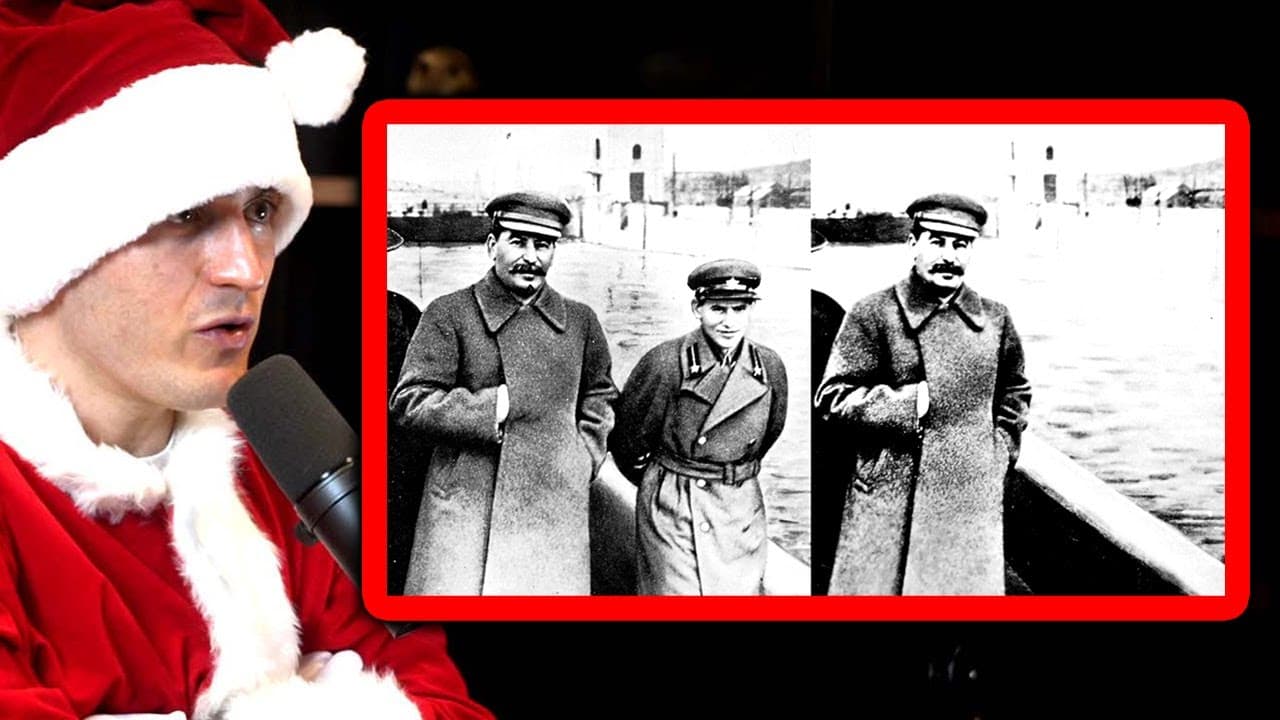
Stalin implemented a system of fear and control through the Great Terror, targeting anyone who posed a threat to his power.
Transcript
just looking at the different mechanisms that made all of this happen so this is not just one guy Stalin having a policy there's a whole system I mean one of it is just a system of fear but how do you implement that system of fear well what there's a giant bureaucracy of fear yeah so what he implemented with the great terror is that's in the in the... Read More
Key Insights
- 😨 Stalin's system of fear and control was not solely the result of his policies, but rather a complex and widespread bureaucracy that relied on societal participation.
- 🫒 The Great Terror targeted not only political opponents but also individuals in various professions and even foreigners living in the Soviet Union.
- ✊ The erosion of privacy and the attack on bonds such as family and friendships were strategic moves to eliminate any power centers outside of Stalin's control.
- 😇 The use of torture and coerced confessions was rampant during the Great Terror, leading to false accusations and the destruction of innocent lives.
- ✊ Ethnicity was used as a tool to divide and weaken certain groups, further solidifying Stalin's power.
- 😂 The Great Terror resulted in the displacement and suffering of millions of people, with families torn apart and communities shattered.
- 🥺 The fear and paranoia created by the Great Terror led to a culture of self-preservation, where individuals were compelled to turn on one another to avoid being targeted themselves.
Install to Summarize YouTube Videos and Get Transcripts
Explore YouTube Video Summarizer or Get YouTube Transcript Extractor
Questions & Answers
Q: How did Stalin implement his system of fear and control during the Great Terror?
Stalin utilized a giant bureaucracy of fear, encouraging citizens to turn in one another and targeting any form of bond or organization that could challenge his power. This led to mass arrests, interrogations, and violence against perceived enemies of the state.
Q: Why did Stalin see privacy and individuality as threats to his power?
In communism, the focus is on the common good and public interest. Stalin believed that any form of private property or individuality went against this ideology and could potentially undermine his authority.
Q: How did the Great Terror affect families and communities?
Families and communities were torn apart as individuals were arrested, executed, or sent to labor camps. Relationships between friends and even spouses were seen as threats, resulting in children being orphaned and social bonds being shattered.
Q: How did ethnicity play a role in Stalin's system of fear and control?
Stalin saw ethnicity as a potential power center that could challenge his authority. He targeted specific ethnic groups, deporting them from their ancestral lands and spreading the population to break their connection to the land and weaken their unity.
Summary & Key Takeaways
-
Stalin's system of fear and control, known as the Great Terror, was implemented in the 1930s to eliminate any bonds or organizations that could challenge his power.
-
The concept of privacy and individuality was seen as an issue in the communist society, leading to the elimination of private property and communal ways of living.
-
Ethnicity and any form of bond, such as friendships or family ties, were considered threats to Stalin's power and were systematically targeted.
Read in Other Languages (beta)
Share This Summary 📚
Summarize YouTube Videos and Get Video Transcripts with 1-Click
Try YouTube Summary with ChatGPT & Claude or YouTube Transcript Generator
Explore More Summaries from Lex Clips 📚



Summarize YouTube Videos and Get Video Transcripts with 1-Click
Try YouTube Summary with ChatGPT & Claude or YouTube Transcript Generator