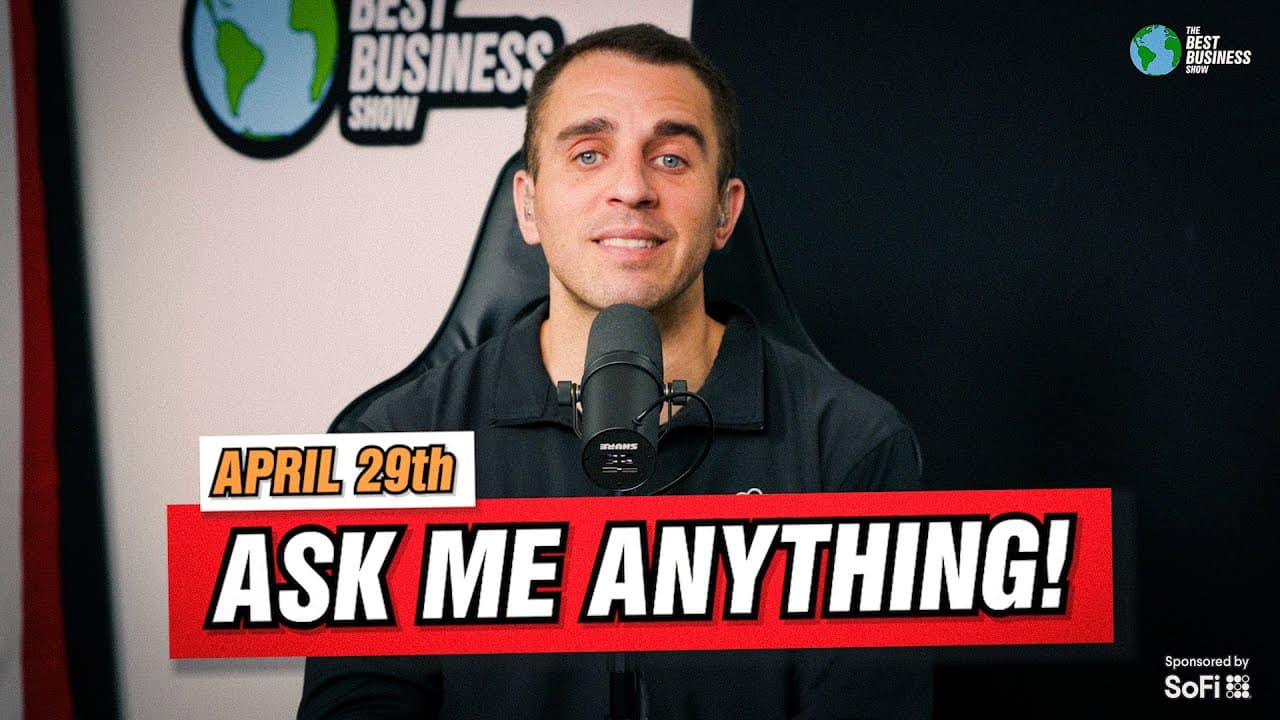
Ask Pomp Anything! Q&A From The Best Business Show.
TL;DR
Universal Basic Income may discourage productivity and increase inflation, leading to economic issues.
Transcript
why don't we uh take the first question here uh zack sg has uh explained why ubi socialism is bad by the way shout out matt and jordy look at it i already got the comments up on a uh on a visual pulling it up on the screen pretty damn good right uh explain why ubi socialism is bad so take out socialism for a second just ubi ubi use uh universal bas... Read More
Key Insights
- 🥺 UBI may discourage individuals from creating economic value, potentially leading to an unproductive society.
- 🥺 Cash distributions without productivity can lead to inflation, impacting the economy negatively.
- 🎁 Current economic conditions characterized by negative GDP growth alongside inflation present unprecedented challenges for monetary policy.
- 🌥️ The need for increasingly large stimulus packages could indicate a dependency on government intervention in a failing economy.
- 🌍 Bitcoin's status as legal tender may be more appealing to nations with failing currencies rather than economically stable countries like the U.S.
- 🧑🎓 The student loan market is less interconnected than the mortgage market, reducing the likelihood of systemic crises resulting from defaults.
- 🍉 A long-term investment strategy focused on asset accumulation can provide security during volatile economic periods.
Install to Summarize YouTube Videos and Get Transcripts
Explore YouTube Video Summarizer or Get YouTube Transcript Extractor
Questions & Answers
Q: Why is Universal Basic Income (UBI) criticized for its impact on productivity?
UBI is criticized mainly because it may eliminate the incentive for individuals to work or produce value. Critics argue that if people receive money without effort, they may choose not to engage in productive activities, leading to a less dynamic and innovative economy, eventually affecting overall societal progress.
Q: What are the potential inflationary effects of implementing UBI?
Implementing UBI could lead to high inflation rates, as observed in past instances where cash distributions contributed to significant inflation. If the government hands out money without corresponding productivity increases, it might devalue currency, raising prices and diminishing the purchasing power of citizens, creating an economically unstable environment.
Q: How does negative GDP growth relate to inflation in the current economic scenario?
The speaker highlights that we are experiencing negative GDP growth alongside continued inflation, which presents a unique challenge for policymakers. This unusual pairing may force difficult choices, as traditional responses to inflation, like raising interest rates, could further contract the economy instead of fostering growth, leading to a detrimental cycle.
Q: How might stimulus packages evolve in response to economic needs?
The speaker suggests that as economic conditions deteriorate, stimulus packages will likely grow larger. Drawing a parallel with addiction, they assert that just as a drug user's tolerance builds, requiring higher doses over time, governments may increasingly rely on larger stimulus measures to achieve the same economic "high," leading to potential financial crises.
Q: In what ways could Bitcoin become legal tender in future nations?
Countries with weak or unstable currencies may find adopting Bitcoin appealing, as evidenced by El Salvador's move to use it as legal tender. Such nations could benefit from Bitcoin's decentralized nature, providing an alternative to currencies that may not serve their economic interests effectively.
Q: Why does the speaker believe that student loan debt may not lead to a crisis like the mortgage crisis?
The speaker posits that while student loan debt is significant, it is not as financialized as the mortgage market, which was heavily interconnected with banking and investment systems. Consequently, the fallout from student loan defaults would likely not trigger the same widespread financial panic or systemic issues seen during the mortgage crisis.
Q: What investment strategy does the speaker employ during economic volatility?
The speaker prefers a long-term investment strategy focused on acquiring assets and avoiding frequent trading. They emphasize holding investments, only selling when necessary for liquidity. During uncertain times, they may maintain more cash to ensure peace of mind, rather than altering their overall investment approach significantly.
Q: How has fatherhood impacted the speaker's perspective?
The speaker expresses that being a parent has deepened their appreciation for their own parents. Observing their child's development has led to a newfound understanding of parental sacrifices and the complexities of raising children, fostering gratitude and reflection on the responsibilities and joys of parenthood.
Summary & Key Takeaways
-
The discussion critiques Universal Basic Income (UBI) by arguing it removes incentives for productivity, potentially leading to a stagnant economy where individuals contribute little or no value.
-
The content highlights that implementing UBI could exacerbate inflation, citing a past instance where financial support contributed to significant inflation rates, further harming the economy.
-
The speaker addresses other economic concerns such as negative GDP growth, suggesting that current monetary policies may require increasingly large stimulus packages to sustain growth, comparing this need to drug addiction.
Read in Other Languages (beta)
Share This Summary 📚
Summarize YouTube Videos and Get Video Transcripts with 1-Click
Try YouTube Summary with ChatGPT & Claude or YouTube Transcript Generator
Explore More Summaries from Anthony Pompliano 📚

Summarize YouTube Videos and Get Video Transcripts with 1-Click
Try YouTube Summary with ChatGPT & Claude or YouTube Transcript Generator