How to Eliminate Phone Distractions for Better Focus

TL;DR
The key to reducing phone distractions is mindfulness, which begins with radical self-honesty. Identify the conditions where distractions occur and create an environment that supports your best performance. Consider limiting access to distracting apps and replacing mindless activities with intentional, fulfilling ones.
Transcript
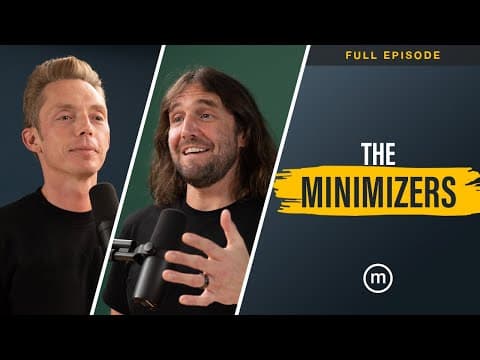
every little thing you think that you need every little thing you think that you need every little thing that's just feeding your greet oh I bet that you be fine without it you're listening to the minimalist podcast with Joshua Fields Milbourne and TK Coleman recorded live at earthing studios in sunny California yes thank you Alabama hello everybod... Read More
Key Insights
- Mindless distractions mimic productivity but don't provide meaningful outcomes.
- Radical self-honesty is the first step towards mindfulness and reducing distractions.
- Understanding the conditions that lead to distractions can help in creating a better environment.
- Intentional distractions can be beneficial if they are chosen mindfully.
- The concept of home court advantage in sports can be applied to personal productivity.
- Boredom can be reinterpreted as a form of peace and an opportunity for mindfulness.
- Pleasure often wins over discipline; thus, framing discipline in terms of purpose and pleasure is essential.
- Creating buffers or boundaries around distractions can help in choosing healthier alternatives.
Install to Summarize YouTube Videos and Get Transcripts
Explore YouTube Video Summarizer or Get YouTube Transcript Extractor
Questions & Answers
Q: How to reduce phone distractions effectively?
Reducing phone distractions starts with mindfulness and radical self-honesty. Identify when and why distractions occur, and create an environment that minimizes these triggers. Use tools like the Light phone to limit access to distracting apps, and replace mindless activities with intentional, fulfilling ones. Mindfulness and setting boundaries are key to managing distractions.
Q: What is the difference between mindless and intentional distractions?
Mindless distractions are activities that do not provide meaningful outcomes and often mimic productivity. They can lead to dissatisfaction and a lack of fulfillment. Intentional distractions, on the other hand, are chosen mindfully and can provide value and relaxation. The key is to choose distractions that align with one's goals and values.
Q: How can radical self-honesty help in reducing distractions?
Radical self-honesty involves acknowledging the conditions and moments when distractions occur. By being honest with oneself about these triggers, individuals can create environments that support better performance and reduce the likelihood of falling into distraction traps. This honesty is the first step towards mindfulness and intentional living.
Q: What role does the environment play in managing distractions?
The environment plays a crucial role in managing distractions. By understanding the conditions that lead to distractions, individuals can create environments that minimize these triggers. This might involve setting up a dedicated workspace, using tools like the Light phone, or creating buffers around distracting apps to make them harder to access.
Q: How to make discipline more pleasurable?
To make discipline more pleasurable, it's important to focus on the purpose and desired outcomes of disciplined actions. By framing discipline in terms of personal growth and fulfillment, individuals can find pleasure in the process. Additionally, creating small rewards for disciplined behavior can help in making it more enjoyable.
Q: Why is it important to set boundaries around distractions?
Setting boundaries around distractions is crucial because it helps in choosing healthier alternatives. By creating buffers or making distracting apps harder to access, individuals can reduce the likelihood of succumbing to mindless activities. Boundaries provide the necessary structure to focus on intentional and fulfilling activities.
Q: What is the concept of home court advantage in personal productivity?
Home court advantage in personal productivity refers to creating conditions where one is more likely to perform at their best. Just like sports teams perform better in familiar environments, individuals can enhance their productivity by setting up environments that support their goals and reduce distractions. This involves understanding personal triggers and creating a supportive context.
Q: How can boredom be reinterpreted as a positive experience?
Boredom can be reinterpreted as a form of peace and an opportunity for mindfulness. Instead of seeking distractions to fill the void, individuals can embrace boredom as a chance to reflect and be present. By sitting through boredom, one can discover a sense of peace and contentment that is often masked by the constant need for stimulation.
Summary & Key Takeaways
-
Distractions can mimic productivity but often lack meaningful outcomes. By practicing radical self-honesty, one can identify conditions that lead to distractions and create environments that support better performance. Mindfulness, achieved through intentional actions and setting boundaries, is an effective way to manage distractions and lead a more fulfilling life.
-
Understanding the difference between mindless and intentional distractions is crucial. Intentional distractions can provide value, while mindless ones often lead to dissatisfaction. By focusing on the conditions that foster productivity and using tools like the Light phone, individuals can reduce the impact of distractions.
-
Pleasure and discipline often conflict, with pleasure usually prevailing. To counter this, it's important to make discipline pleasurable by focusing on the purpose and desired outcomes. Creating boundaries around distractions, like deleting addictive apps, can help in choosing more fulfilling activities.
Read in Other Languages (beta)
Share This Summary 📚
Summarize YouTube Videos and Get Video Transcripts with 1-Click
Try YouTube Summary with ChatGPT & Claude or YouTube Transcript Generator
Explore More Summaries from The Minimalists Podcast 📚





Summarize YouTube Videos and Get Video Transcripts with 1-Click
Try YouTube Summary with ChatGPT & Claude or YouTube Transcript Generator