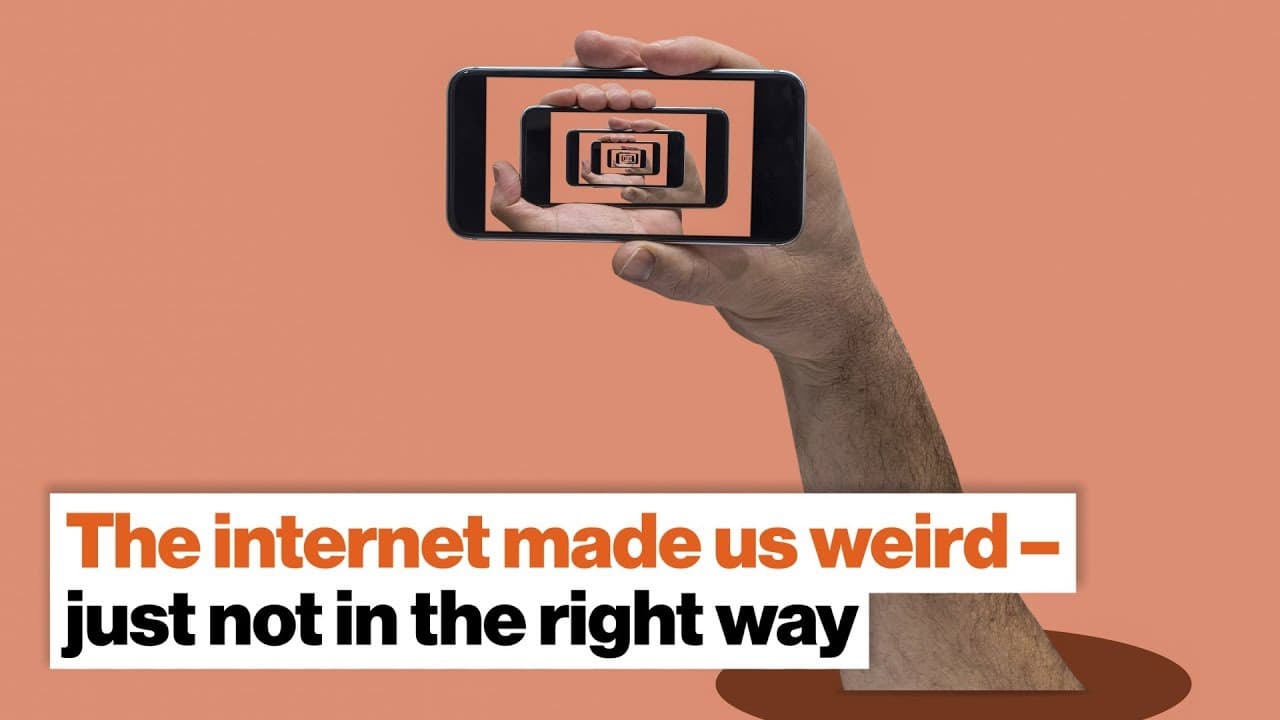
The internet made us weird – just not in the right way | Douglas Rushkoff | Big Think
TL;DR
Undergraduates are more cynical about social media, lacking time for conspiracy theories, but struggle with digital relationships.
Transcript
I feel like my undergraduate students, who are 18 to 22 years old, are maybe a bit more cynical about social media and their smartphones and all than we would have expected. I mean, they're cynical about everything, on a certain level. But I think that they're less likely to get hooked into some crazy idea and start following some conspiracy about ... Read More
Key Insights
- 🧑🎓 Undergraduate students exhibit a cynical attitude towards social media and smartphones, resisting falling into conspiracy theories.
- 💨 Swipe culture has shaped the way students engage in digital relationships, fostering a binary view of media content.
- ❤️🩹 The digital future has not generated the expected cognitive surplus but instead overwhelmed students with a never-ending stream of content.
- 🧑🎓 Students struggle to appreciate ambiguity in media content, opting for quick dismissals rather than delving deeper into the material.
- ◼️ The fast-paced digital environment has led to a lack of reveling in media experiences, with students eager to move on to the next piece of information quickly.
Install to Summarize YouTube Videos and Get Transcripts
Explore YouTube Video Summarizer or Get YouTube Transcript Extractor
Questions & Answers
Q: How do undergraduate students view social media and smartphones differently?
Undergraduate students exhibit a more cynical attitude towards social media and smartphones, being less likely to fall into conspiracy theories due to their fast-paced and time-constrained lifestyles. They engage in digital relationships through swipe culture, favoring quick judgments and dismissals.
Q: What challenges do undergraduate students face with digital media?
Undergraduate students struggle with inhabiting an in-between place when consuming media, finding it hard to appreciate ambiguity or delve deeper into content. The digital environment promotes a rush to consume information quickly, leading to a lack of reveling in media experiences.
Q: How has digital media impacted the cognitive surplus of students?
Contrary to expectations, the digital future has not provided the cognitive surplus envisioned by some, but instead inundated students with more information, creating a frantic and harried environment. Students feel pressured to constantly consume more content without savoring or exploring it deeply.
Q: What is the main difference in the digital media experience between undergraduates and older generations?
Undergraduates exhibit a more polarized view of media, characterized by quick thumbs up/thumbs down judgments, unlike older generations who may appreciate ambiguity or exploration in media content. The fast-paced digital environment has shaped students' media consumption habits.
Summary & Key Takeaways
-
Undergraduate students are cynical about social media and conspiracy theories but lack time for deep explorations.
-
They engage primarily in digital relationships through swipe culture, leading to a binary view of media.
-
The digital future lacks the expected cognitive surplus, fostering a frantic and harried environment for students.
Read in Other Languages (beta)
Share This Summary 📚
Summarize YouTube Videos and Get Video Transcripts with 1-Click
Try YouTube Summary with ChatGPT & Claude or YouTube Transcript Generator
Explore More Summaries from Big Think 📚




Summarize YouTube Videos and Get Video Transcripts with 1-Click
Try YouTube Summary with ChatGPT & Claude or YouTube Transcript Generator