Was the Universe Designed or Is It Random?
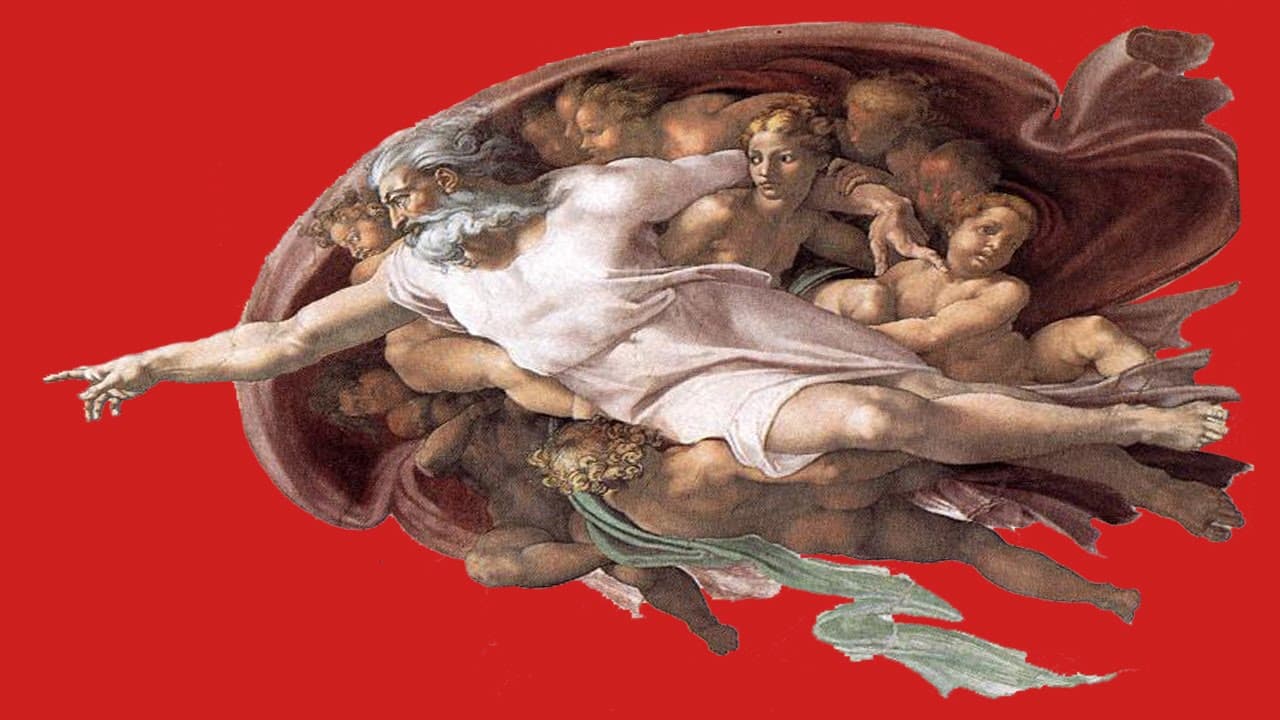
TL;DR
The universe's complexity and apparent order raise questions about whether it was designed by an intelligence or if it emerged through natural processes. While the teleological argument supports the idea of design, Darwin's theory of evolution and the fine-tuning argument challenge this notion. Ultimately, the existence and nature of a potential designer remain open to debate.
Transcript
OLLY: This episode is about... hm, everything. The universe. Where did it come from? Where will it go? Where did it come from... Cotton-Eye Joe? Since the Ancient Greeks, there have been people who think that the universe was designed by some sort of deity. Exactly what sort of deity depends on who you ask. Some say Jehovah, some say Allah, some sa... Read More
Key Insights
- 🎨 The teleological argument argues for a universe designed by intelligence, while the cosmological argument seeks a first cause.
- 👀 William Paley's watch analogy served as a powerful illustration of perceived design in nature, fundamental to defending the teleological perspective.
- 🪡 Darwinian evolution challenged the teleological argument by explaining complexity through natural selection without needing a designer.
- 💁 The fine-tuning argument introduces the idea that precise cosmological constants suggest intentionality but remains contentious due to unknown variables in universe formation.
- 🛟 Critics of the fine-tuning argument emphasize that life exists in a minuscule portion of the universe, questioning its being tailored specifically for life.
- 📣 The "God of the gaps" critique cautions against filling unknowable science with divine explanations, instead advocating for rigorous exploration and empirical testing.
- ❓ Philosophical considerations of a universe's designer prompt further inquiries regarding the designer's existence, character, and intentions.
Install to Summarize YouTube Videos and Get Transcripts
Explore YouTube Video Summarizer or Get YouTube Transcript Extractor
Questions & Answers
Q: What is the teleological argument, and how does it relate to the existence of the universe?
The teleological argument suggests that the universe exhibits signs of a design due to its complexity and functionality. Proponents claim its intricate features point to the existence of an intelligent creator, often differing based on religious beliefs. This argument contrasts with the cosmological argument, which asserts that the universe must have an initial cause.
Q: How did William Paley's watch analogy support the teleological argument?
Paley's analogy compares finding a watch to discovering the universe, suggesting that the watch's designed complexity indicates a designer. He argued that just as one recognizes the purposefulness of a watch from its parts, the intricacies of nature imply an intelligent creator. This analogy was pivotal in defending the teleological argument during an era of rising atheism.
Q: What influence did Darwin's theory have on the teleological argument?
Darwin's theory of natural selection presented a mechanism through which complexity and adaptation occur without the need for an intelligent designer. By explaining how organisms evolve through a mindless process, Darwin undermined Paley's assertion that complexity necessitates design, leading to renewed scrutiny of the teleological argument.
Q: What is the fine-tuning argument and its implications?
The fine-tuning argument states that the universe's fundamental forces are precisely calibrated, suggesting intentional design. It poses the question of improbability—if these forces were slightly different, life as we know it would not exist. Critics, however, point out that the exact nature of the universe's formation is not fully understood, complicating the argument.
Q: What are the criticisms of the fine-tuning argument?
Critics argue we lack comprehensive understanding of universe formation, suggesting our universe might emerge from a necessity rather than randomness. Further, the argument raises questions of why life is limited to a "tiny corner" of the universe if it were designed to thrive. These points challenge the assumption that the universe is intentionally fine-tuned for life.
Q: Why do some people still attribute the origins of life to a deity?
The gaps in understanding biological origins lead some to invoke a deity, as they equate uncertainty with a divine explanation. However, this "God of the gaps" approach lacks empirical support. Acknowledging our ignorance about life's beginnings does not inherently confirm divine intervention but emphasizes the need for scientific exploration.
Q: What philosophical challenges arise from asserting a designer for the universe?
The argument positing a designer raises further questions about the designer’s origins and abilities, leading to paradoxes. If the designer was uncaused, one might argue that the universe could equally exist uncaused, thus questioning the necessity of a divine intelligence in the universe's existence.
Q: How do philosophical inquiries about justice relate to the episode's themes?
The discussion highlights how philosophical inquiries extend beyond temporal boundaries, indicating that concepts like justice and purpose are still debated, similar to the universe's origins. Comments from the audience reflect ongoing engagement with fundamental questions, reinforcing the relevance of philosophy in understanding both the universe and ethical frameworks.
Summary & Key Takeaways
-
The episode discusses the teleological argument, which posits that the universe's complexity suggests design by an intelligence, contrasting with the cosmological argument that seeks a first cause.
-
The emergence of organisms through natural selection is presented as evidence against the teleological argument, revealing that complexity can arise through seemingly mindless processes without direct design.
-
The fine-tuning argument is explored, indicating that specific fundamental forces must be finely tuned for life, yet questions remain about the existence and nature of a potential designer.
Read in Other Languages (beta)
Share This Summary 📚
Summarize YouTube Videos and Get Video Transcripts with 1-Click
Try YouTube Summary with ChatGPT & Claude or YouTube Transcript Generator
Explore More Summaries from Philosophy Tube 📚
Summarize YouTube Videos and Get Video Transcripts with 1-Click
Try YouTube Summary with ChatGPT & Claude or YouTube Transcript Generator